The best time to visit Bethlehem depends on what you came for. October–November and March–April give you the best balance , mild 15–24°C weather, thinner crowds, full church access. Christmas (Dec 24 – Jan 7 Orthodox) is unforgettable but crowded. Summer is hot, oddly quiet, and underrated. Fall is the secret most pilgrims never get told about.
"I grew up here. I've watched the same star at the church of the nativity be touched by a tour group of 80 in December and by exactly one nun in February. It is not the same star on those two days. The season changes the place." , Elias Boaz
I'm a licensed local guide, born in Beit Sahour, ten minutes from Manger Square. I've worked through every season here , every kind of weather, every kind of crowd. People ask me "when should I come" more than any other question, and the honest answer takes more than a sentence. So heres the long answer.
How Bethlehem Changes Across the Year
Bethlehem sits at 775 meters above sea level. That single fact reshapes everything most travelers expect. We are not Tel Aviv. We are not Jericho , which is 250 meters below sea level, thats a 1,000-meter drop in 35 minutes by car, and you feel every bit of it. Bethlehem is a hill town. We get our own weather. Snow some years. Nights cool enough for sweaters in October. And summer days that are honestly bearable when Jerusalem feels like a furnace.
The other thing most people dont realize: Bethlehem doesn't have one Christmas. We have three. Catholic on December 25. Greek Orthodox on January 7. Armenian on January 19. The decorated tents in Manger Square stay up almost a month. Try doing that in any other town in the world.
So pick a season knowing the city is genuinely different in each one. Heres a table I use with clients before they book.
Christmas in Bethlehem , Magical, Crowded, Unlike Anywhere Else
There is no other Christmas like Bethlehem at Christmas. I'll just say that flat out. I have walked the Manger Square procession with my kids 30 years in a row and it still gets me. Still. The Latin Patriarch's motorcade comes down from Jerusalem mid-afternoon on December 24 , sirens, scout troops in full uniform playing bagpipes (yes, bagpipes , Palestinian Boy Scout bagpipe troupes are a Bethlehem thing, dont ask, just enjoy it). By 9 PM the square is shoulder-to-shoulder. Around 50,000 people. That's not exaggeration; that's the official count most years.
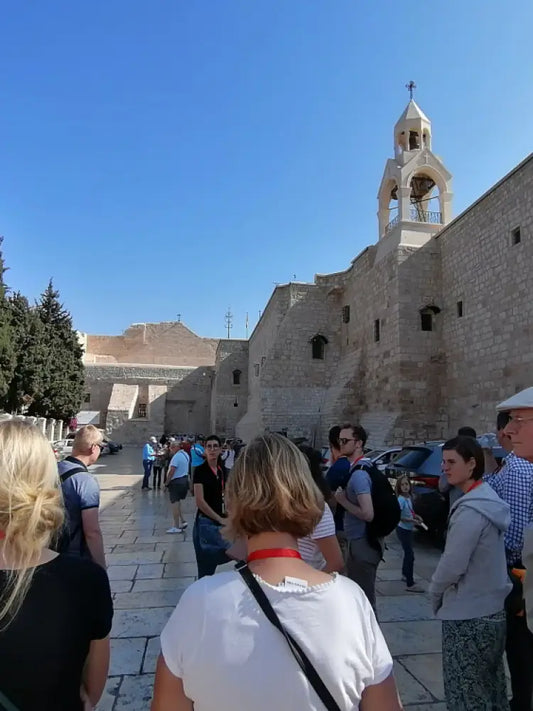
Midnight Mass at St. Catherine's , the Catholic church attached to the Basilica of the Nativity , is the one most pilgrims dream about their whole lives. Heres what most websites wont tell you: you need a ticket. Tickets are issued through the Latin Patriarchate or your tour operator and they go fast. Book 4–6 months ahead. The Basilica itself stays open and you can wait in the queue to touch the silver star , but expect a 2–3 hour wait on Christmas Eve. That's the reality.
The trade-offs nobody mentions
- Hotel rates jump 30–60% between December 20 and January 8. A -- you get the idea
- Weather is real winter. Five to ten degrees Celsius at night. About 8 rainy days in December. I've guided in snow flurries on Manger Square , once, in 2013, real snow.
- Security around the square tightens. Allow extra time for everything. (this one especially)
Who Christmas is right for
First-time Christmas pilgrims who want the iconic experience. Orthodox or Armenian families timing their trip to their calendar. Anyone who wants to say they were in Bethlehem on the night.
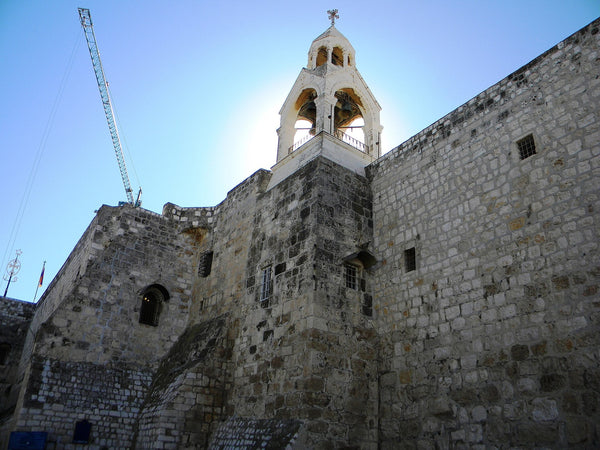
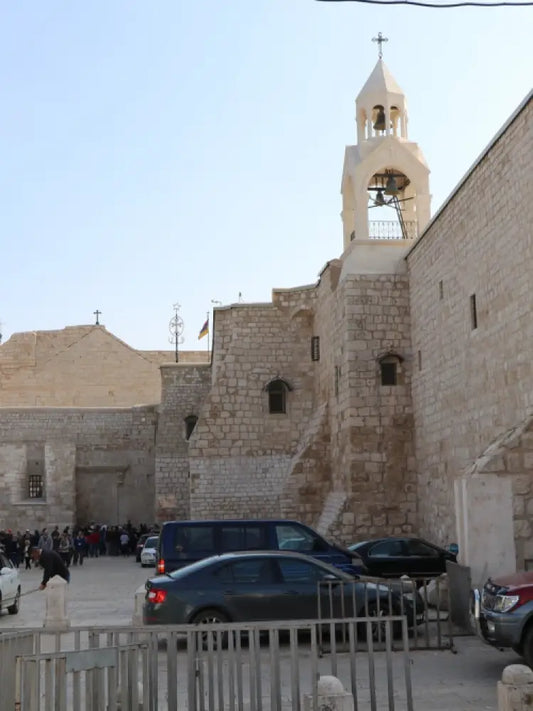
If Christmas pulls you, I'd also point you to what we wrote about the Church of the Nativity in winter , January and February are quieter than people expect, and the church looks different when its empty. I could be wrong here, but and it shows.
My phone is blowing up with messages from a group I guided last month -- they want to come back already. That's honestly the best feedback there is.
Easter & Holy Week , Maybe the Most Powerful Time
I'll be honest. Holy Week may be more powerful than Christmas here. It's also less crowded in Bethlehem itself, because most of Holy Week's drama happens in Jerusalem's Old City , Palm Sunday from Bethphage, the Stations of the Cross down the Via Dolorosa, the Holy Fire ceremony at the Holy Sepulchre. That last one , a 1,200-year tradition where the flame appears inside the tomb , I watched it once at age 14 and I still dont have words for it. Some things you just carry with you.
Western Easter and Orthodox Pascha dont always line up. In 2026, Western Easter is April 5, Orthodox Easter is April 19. That two-week gap actually helps , you can arrive for one and stay for the other if you have the time. Wildflowers bloom across the Judean Hills in those weeks. Temperatures in Bethlehem sit between 15 and 24°C, the most comfortable touring weather of the year. Big difference from December.
My father used to say that people dont come here to see stones -- they come to feel something they cant name. I think about that every time I start a new tour.
Practical Easter Notes
- Jerusalem hotels book solid 3–4 months out for Holy Week. Bethlehem is a smarter base , 25 minutes away, half the price, less chaos.
- Lent runs February through early April for Western Christians; Great Lent for the Orthodox starts a few weeks later. The city is reflective during these weeks. Quiet in a way that feels deliberate. The Greek and Armenian patriarchs hold special services. The light is softer somehow.
- If reflection is what you came for, here's our longer piece on why Great Lent is the most powerful time to visit Bethlehem & Jericho.
Summer in Bethlehem , Hot, Quiet, Underrated
People ask: "is it too hot to visit in July?" Honestly , no. Bethlehem in July averages 19–28°C -- and look, I get sidetracked on this topic easily because I grew up walking these streets, and that colors everything I say about the Holy Land. Jerusalem runs 4–6°C warmer than us. Jericho is brutal , 38–40°C. The elevation saves you here. I've taken pilgrims up Star Street at 2 PM in August and we've all been comfortable enough to walk slowly and stop and talk. Big difference.
What changes in summer is who shows up. The big diocesan groups, the church charters from America, the choirs , most of them book April or October. Summer is families on school break, independent travelers, retirees. The Basilica gets calm. The queue to touch the star drops from two hours to fifteen minutes some afternoons. That alone. Think about that.
Heat strategy that actually works
- Start mornings at 7 AM. Take a -- you get the idea
- Carry 1.5 liters of water per person, minimum. Two if youre walking the Mount of Olives.
- Dead Sea visits , go early. Salt plus sun plus 38°C at noon is no joke. We see one heat-exhaustion case a week from people who tried to float at lunchtime. (this one especially)
- Climbing Masada in summer? Only at 4:30 AM for sunrise. Not later. Ever.
If you're considering summer, my colleague and I wrote a full summer guide to the Holy Land , what's open, what to skip, what to pack.
It pairs with this one. That matters.
Who summer is right for
Families on school break. Pilgrims who want quieter sites and shorter church queues. Anyone who hates standing in lines. Skip summer if you cant tolerate sustained heat or if you're determined to climb Masada at midday , please dont.
Fall , The Secret Best Time
Heres the part that gets people. Fall is the best season in Bethlehem. October especially. I'd put it ahead of every other month in the calendar, and I'm not hedging on that.
Why: October daytime temperatures average 17–25°C. Crowds drop noticeably after the first week once summer family travel winds down. Hotel prices hit their lowest mid-September to mid-November because we're outside the Christmas window. And the olive harvest runs mid-October to mid-November , which means local life, the rhythm of villages around Bethlehem, is at its most alive. Every household pressing oil. The air actually smells different. Beit Sahour, Beit Jala, the Christian villages around us , its harvest season the way our grandparents lived it. That's not tourism. That's the place.
Fall logistics
- Pack layers. Warm days, cool nights , by November, 12–15°C after sunset.
- Light rain returns mid-November but rarely disrupts touring. Bring a light shell jacket, not an umbrella.
- Sukkot often falls in late September or early October , in 2026 its September 26 to October 3. That brings significant Jewish travel into Jerusalem; book Old City hotels early if your Holy Land trip overlaps. Bethlehem is unaffected.
I had a couple from Cork last October. The wife had been three times before , Christmas, Easter, summer. She told me on day four: "this is the trip I should have done first." The husband nodded -- not unlike what my mother always said about hospitality, that the best welcome doesn't need explanation, and honestly the same logic applies to guiding. He was tired, but the right kind of tired. That's what fall in Bethlehem gives you. Not even close. And I'm not just saying that because I've spent my life guiding people here.
How to Choose Your Season , A Decision Framework

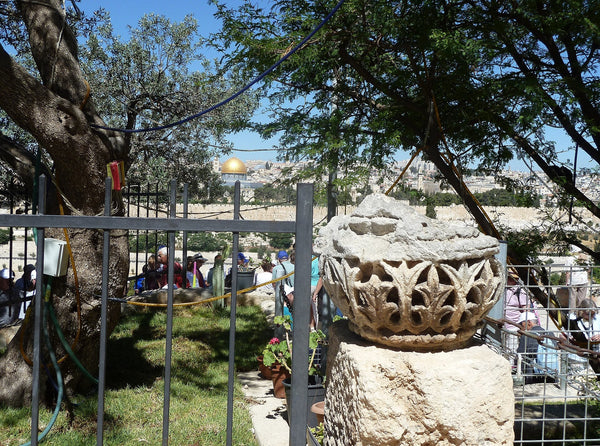
the dome of the rock in the middle of the city , Photo by Thales Botelho de Sousa on Unsplash
Look , most posts hedge here. I wont.
- If your trip is faith-led and you want the iconic crowded experience: Christmas or Holy Week.
- If your trip is faith-led and you want quiet, contemplative time: Lent (Feb–March) or fall (Oct–Nov).
- If you have school-aged kids: summer. Just plan around the heat.
- If you've been before and want to see Bethlehem the way locals know it: late September or November.
- If youre nervous about safety, weather, or first-time travel logistics: shoulder seasons , March or October. Fewer crowds, calmer atmosphere, full church hours, no extreme weather.
If you're still not sure, drop us a line via the contact page and we'll talk it through.
We dont push tours that dont fit your trip. No question.
What's Open When (The Question I Get Most)

a group of people standing next to each other , Photo by Levi Meir Clancy on Unsplash
- Church of the Nativity: open year-round. Christmas (Dec 24 – Jan 7) and Holy Week have restricted public hours during liturgies. Otherwise normal hours: roughly 6:30 AM to 6:30 PM.
- Milk Grotto: open daily, 8 AM – 6 PM (closes 5 PM in winter).
- Shepherd's Field: open all seasons. Christmas Eve sees a midnight Mass that's one of the more moving services in the region. (this one especially)
- Manger Square: never closed; security tightens around Dec 24 and Holy Week.
- Ramadan: in 2026 it falls February 17 to March 18 (approximate). Some restaurants close during the day; the evening iftar atmosphere is quietly beautiful and worth experiencing if your trip overlaps. Most pilgrim sites are unaffected.
To be honest, if you want a private tour that handles the seasonal differences for you , what to skip in summer heat, where to go for a Christmas Eve experience that isnt overwhelmed , our Bethlehem tours page is a starting point. We adjust itineraries by month. I'm not a theologian, but from what I understand, and it shows.
Booking Lead Times by Season

a man in a garment , Photo by shraga kopstein on Unsplash
- Christmas: 6 months ahead is comfortable; 4 months is the minimum if you want a good Bethlehem hotel; 8 months for Jerusalem-side hotels. Mass tickets at St. Catherine's go 3–6 months out.
- Holy Week / Easter: 4 months ahead. (which, honestly, should be higher on the list)
- Summer: 6–8 weeks is fine.
- Fall (Sept–Nov): 6 weeks is fine.
- Lent (mid-Jan to early March): 3–4 weeks is enough. Quietest stretch of the year.
Key Takeaways
- The best overall time to visit Bethlehem is **mid-October to mid-November -- you get the idea
- Christmas in Bethlehem is the most powerful experience for first-time pilgrims but requires booking 6 months ahead and tolerating heavy crowds Dec 24 – Jan 7.
- Summer (June–Aug) is hot but cooler in Bethlehem (775m elevation) than Jerusalem or Jericho , plan early-morning + late-afternoon touring. (I could write a whole post just about this)
- Fall is the underrated winner: best weather, lowest hotel prices, olive harvest depth, fewer competing pilgrim groups.
- Bethlehem is generally safe for pilgrims in 2026; private guided tours from a Bethlehem-based operator are the most efficient way to navigate any season.
🌱 Plan Your Holy Land Tour


Frequently Asked Questions

green plant on brown and gray rock wall , Photo by shraga kopstein on Unsplash
What is the best month to visit Bethlehem and Israel in 2026? October is the single best month for most pilgrims. Daytime highs of 22–25°C, summer crowds gone, and the lowest hotel rates of the year. April is a close second , Holy Week, wildflowers in the Judean Hills, similar comfortable temperatures. If your trip absolutely must be Christmas, December still works , just plan early and plan thoroughly.
How long does a Holy Land trip typically take, and does that change by season? A complete Holy Land pilgrimage runs 7–10 days regardless of season. Christmas and Holy Week add 1–2 days for processions, special Masses, and the slower pace that crowds force on you. Summer trips need earlier morning starts. Fall and Lent let you cover the same ground with more breathing room and better photos.
Is it safe to visit Bethlehem in 2026? Yes. Bethlehem is open and quiet in 2026, and private pilgrim tours run normally. Safety reads about the same regardless of season. Check your country's travel advisory and use a licensed local guide who knows the area , that's true any year.
How do I visit Bethlehem from Jerusalem, and is it different in winter vs summer? The route is the same year-round , about 25 minutes by private car from the Old City. In winter, allow extra time for occasional rain. In summer, bring water for any walking. Private pilgrim tours handle the crossing without you needing to step out of the vehicle. Public transport works too but takes longer.
When does Bethlehem celebrate Christmas? Three times. Catholic / Western on December 24–25. Greek Orthodox on January 6–7. Armenian on January 18–19. Manger Square has decorated tents and processions for nearly a month, which most visitors never realize. If you can stay through January, you'll see two of the three Christmases , and they look completely different.
What's the weather like in Bethlehem month-by-month? January 5–13°C. April 12–22°C. July 19–28°C. October 17–25°C. Bethlehem stays cooler than Jerusalem because of its 775m elevation. Snow is possible but rare in January–February. Rain is mostly November through March.
Do I need to book Christmas Mass at the Church of the Nativity in advance? Yes , for Midnight Mass at St. Catherine's (the Catholic church attached to the Basilica), tickets are issued through the Latin Patriarchate or your tour operator 3–6 months ahead. The Basilica itself is open without ticket; queues build by 9 PM on Christmas Eve.
What's the cheapest time to visit Bethlehem? Late January through early March. Lent rates, off-Christmas, off-Easter. Hotels drop 30–40% versus December, its justthe trade-off is cooler, occasionally wet weather and shorter daylight. For the trade-off you get a Bethlehem you'll never see in any tourist photograph.
Related Reading

a city with a lot of buildings and a cross on top of it , Photo by Jonny Gios on Unsplash
- The Church of the Nativity in Winter: Why January and February Are the Best Time to Visit
- Why Great Lent Is the Most Powerful Time to Visit Bethlehem & Jericho
- Visiting the Holy Land in Summer: Heat, Crowds, and How to Do It Right
The honest truth: every season here will change who you are while you're here. Christmas will undo you. Holy Week will rearrange what you thought you understood. Fall will quiet you. Summer will surprise you. Pick the one that matches what you came looking for, and come.
If you want to talk it through , when to go, how long, what fits your group , reach out. I'm a guide, not a salesperson. See what I'm getting at?
We'll figure out your trip together.
Elias Boaz is a licensed tour guide from Bethlehem , birthplace of Jesus Christ , and the founder of Elijah Tours. He has guided thousands of pilgrims through Bethlehem, Jericho, and the Jordan River Valley , and coordinates Holy Land tours with trusted licensed guides across the region. He writes to help visitors truly understand what they're seeing.