From a local guide's perspective, to be honest, yes, Christians can visit the Temple Mount in Jerusalem. Non-Muslim visitors access the platform through the Mughrabi Gate, Sunday through Thursday during restricted morning and afternoon windows. You walk the same stones where Jesus taught in the Temple courts. You cannot enter the mosques, but the platform itself is open to you. Here is everything you need to know before you go.
What the Temple Mount Actually Is (And Why Christians Care)
After guiding many groups through the Holy Land, the first thing I tell every group before we walk onto the Temple Mount is this: most people think the Dome of the Rock is the Temple. This is the kind of thing that drives me crazy about generic tour packages.
It is not. The Temple is gone. What you are walking on is the platform that once supported it.
The Temple Mount is a roughly 37-acre stone platform in the heart of Jerusalem's Old City. Herod the Great expanded and elevated it dramatically in the first century BCE to support his massive renovation of the Second Temple. The Romans destroyed that Temple in 70 CE. Every stone of it, as Jesus said they would.
What they could not destroy was the platform. So you walk where Herod built, on stones that were there when Jesus arrived for Passover, when Mary and Joseph brought their infant son for purification, when Jesus himself sat in the courts with the teachers and astonished them.
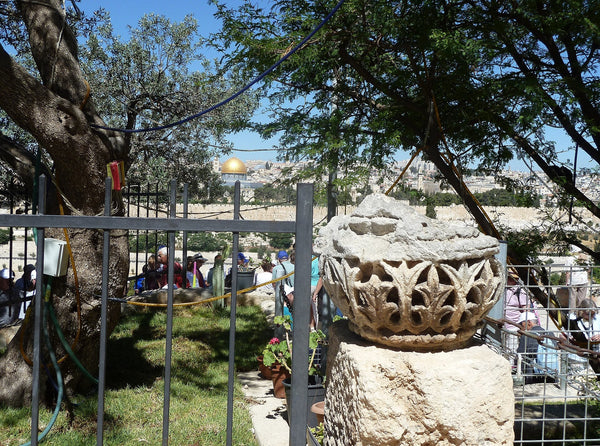
The Dome of the Rock, with its golden crown visible from almost every viewpoint in Jerusalem, was built in 691 CE by the Caliph Abd al-Malik. It is one of the oldest surviving Islamic buildings in the world, and it stands over the Foundation Stone. Jewish tradition holds that this is the rock upon which Abraham prepared to offer his son. Early Christians connected this same site with the Holy of Holies of Solomon's and Herod's Temples -- the innermost sanctuary where only the High Priest could enter, once a year, on Yom Kippur.
I am a guide, not a theologian. But I will say this: there is something particular about standing on ground where so many faiths have recognized something sacred. It does not diminish the Christian significance of this place. It concentrates it.
What You Can and Cannot Do on the Temple Mount
Let me be direct, because I get asked the same questions every week.
As a non-Muslim visitor, you are welcome to:
- Walk the full platform, including around the exterior of the Dome of the Rock and Al-Aqsa Mosque
- Photograph the exteriors of both structures (photography inside is not applicable since you will not be going inside)
- Sit on the benches and steps, reflect, take in the views, and stay as long as you like during open hours
- Bring water and light snacks
What you cannot do:
- Enter the Dome of the Rock or Al-Aqsa Mosque (interiors are restricted to Muslims)
- Pray openly or perform visible religious rituals -- the site's guards enforce this, and how strictly varies by day and timing
- Display prominent religious symbols during sensitive periods
The dress code is mandatory and enforced at the gate. Both men and women must have shoulders and knees covered. Bring your own lightweight wrap or scarf. Do not rely on what might be available at the gate.
One thing I always tell my groups before we enter: you do not need to speak to pray. The walls here have absorbed more prayers than any building on earth. Silence is enough, and it is welcome.
How to Get There and When to Go (Practical 2026 Guide)
Interested in seeing our collection? → Browse Tours to Jerusalem

Temple Mount Dome of the Rock , Photo by Levi Meir Clancy on Unsplash
Honestly, the Mughrabi Gate is the only entrance for non-Muslim visitors. You find it by entering the Western Wall plaza (through the main security checkpoint from Jaffa Gate or the Jewish Quarter), then looking for the wooden ramp that rises along the right side of the plaza wall. There is usually signage, but ask any guard if you are not sure. It is not hidden. It is just not obvious the first time.
Hours for non-Muslims are roughly: - Morning session: approximately 7:30am to 11:00am - Afternoon session: approximately 1:30pm to 2:30pm (verify current hours before your visit).
And I want to be clear about this , These hours change. The site closes on Fridays and Saturdays. It closes on Muslim holy days without advance notice. I have shown up with groups on what looked like a normal weekday morning and found the gate closed. Always check the current hours before you go.
The single best piece of practical advice I can give you: arrive early in the morning, on a weekday. Before 9am if you can manage it. The security line at the Mughrabi ramp can take 45 to 60 minutes on busy days, especially during peak season. Once you are inside, the platform is far less crowded in the early hours, the light on the Dome is better for photographs, and the temperature is still comfortable.
Not gonna lie , If you are building a full Jerusalem day, the Temple Mount pairs naturally with the City of David just below and south of the Old City walls. That is the original Davidic Jerusalem -- the tunnels, the excavated streets from Jesus' time, the Pool of Siloam. Do those together in one morning, then move to the Western Wall and the Old City in the afternoon. It is one of the best-structured days in Jerusalem.
What You Are Actually Looking At: A Guide's Walk Through the Platform

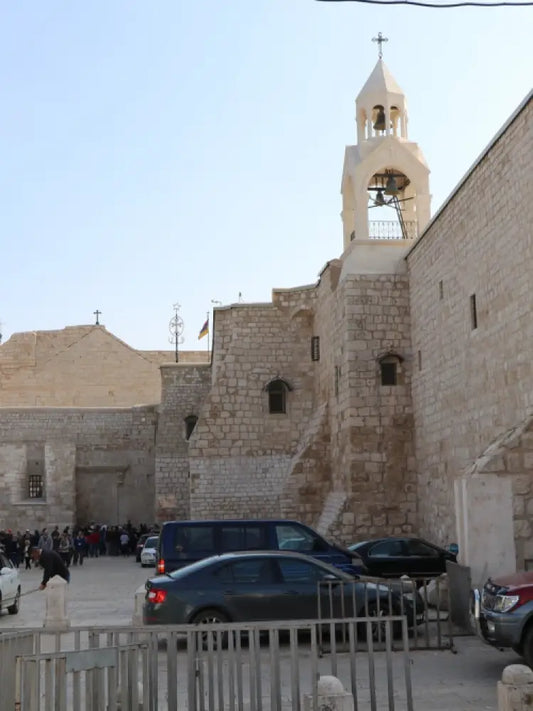
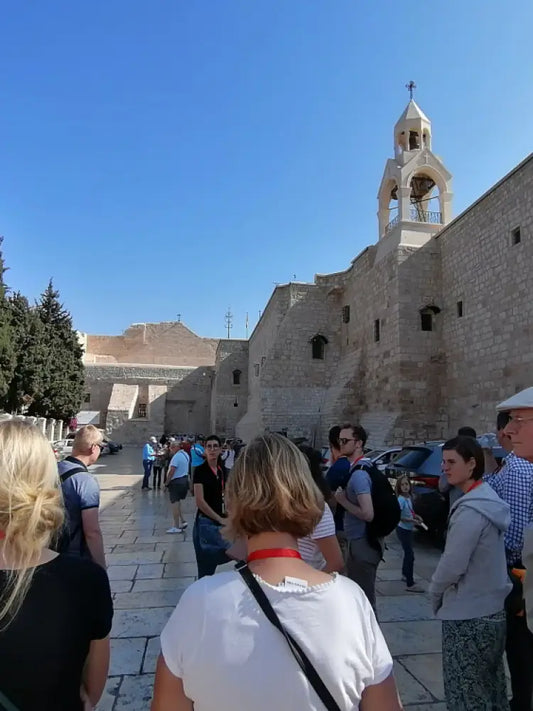
What to See in Bethlehem Church of the Nativity
The Dome of the Rock
The dome itself is aluminum coated in gold leaf. The original lead dome was replaced, and the gold has been restored multiple times. The most recent major restoration was funded by Jordan in the 1990s. So when you photograph it gleaming in the Jerusalem morning light, you are seeing a modern restoration over a 1,300-year-old structure. Both things are true at once.
What most visitors walk right past: the Iznik tilework on the lower exterior walls. It is honestly blue and white, floral and geometric, added in the sixteenth century under Suleiman the Magnificent. It is extraordinary close up. Most people photograph the dome from a distance and never get close enough to see the tilework. Stand next to it. Look at what they made without machines.
I had a call with a pastor from Georgia last week who wanted a route that avoided the crowds. We found one. He said it was the best day of his honestly life. I believe him.
The Dome stands over the Foundation Stone -- a large, exposed outcropping of bedrock that was, according to Jewish and Islamic tradition, the sacred center of the Temple. Christians walking here often connect this with the axis of the entire First and Second Temple: the place where heaven and earth were understood to meet.
The Al-Aqsa Mosque
The silver-domed mosque at the south end of the platform is Al-Aqsa. It sits on the foundations of a Byzantine basilica, which was itself built on the Temple platform. Sacred history layered on sacred history. That compression of time is everywhere in Jerusalem, but it is especially dense here. I'm no expert in this, but think about that.
The Platform Views
I always stop groups at the southeast corner of the Temple Mount platform and have them turn east.
Standing there, you look across the Kidron Valley to the Mount of Olives. If you know what you are looking at, the moment lands differently. The authentic garden of gethsemane is on the lower slope of that hill, directly ahead of you. That is where Jesus prayed the night before his arrest. He looked at this platform from there. And from here, standing where you are standing, he looked at that hill.
That view has not changed in 2,000 years.
The Biblical Moments That Happened on This Platform
Interested in seeing our collection? → Browse Tours to Bethlehem

What to See in Bethlehem Church of the Nativity
This is the part that matters most to most of my groups. Not the architecture. Not the photographs. The events.
The Presentation of Jesus (Luke 2:22-38). Forty days after his birth in Bethlehem, Mary and Joseph brought the infant Jesus to the Temple for the purification rites required by Mosaic law. This is where the elderly Simeon took the child in his arms and said, "My eyes have seen your salvation." This is where the prophetess Anna recognized him and spoke of him to all who were waiting for the redemption of Jerusalem. This happened on this platform.
Jesus at Age 12 (Luke 2:41-50). When the family traveled to Jerusalem for Passover and began the journey home, they realized Jesus was not with them. They returned and found him "in the Temple courts, sitting among the teachers, listening to them and asking them questions." Those courts -- the broad, colonnaded open spaces of the Temple Mount -- are where you are standing.
The Cleansing of the Temple (Matthew 21:12-13; John 2:13-16). When Jesus overturned the money-changers' tables, that happened in the outer court of the Temple -- the Court of the Gentiles, the broad area where non-Jewish visitors were permitted to come. That is the platform you are walking on.
Jesus' Prophecy of Destruction (Matthew 24:1-2). Leaving this platform, his disciples called his attention to the grandeur of the Temple buildings. He said, "Not one stone here will be left on another; every one will be thrown down." The Romans fulfilled that in 70 CE. The Temple is gone. You are walking on what the Romans could not destroy.
Combining the Temple Mount with the Rest of Jerusalem

What to See in Bethlehem Church of the Nativity
The Temple Mount is not an isolated stop. It sits at the physical center of the Old City, and almost every major Christian pilgrimage site is within walking distance.
If you are bringing a church group, the logistics of visiting all of these in sequence require real planning. Our guide on planning a church group pilgrimage to the Holy Land covers the practical side -- how to sequence the sites, what requires advance booking, and how to build a day that actually works for a group rather than grinding everyone into exhaustion by noon.
If you want to explore Jerusalem with a private guide who knows when the gates open, which approach avoids the worst crowds, and how to help your group actually understand what they are looking at, we run private Jerusalem tours built around your group's faith background and priorities. I've seen people tear up just standing in the doorway.
Key Takeaways
- Entry is free for non-Muslim visitors through the Mughrabi Gate, the wooden ramp at the right side of the Western Wall plaza
- Hours are restricted -- Sunday through Thursday only, in morning and early afternoon windows; always verify current hours in advance because they change seasonally and close without notice on Muslim holy days
- Platform access only -- the interiors of the Dome of the Rock and Al-Aqsa Mosque are not open to non-Muslims
- Dress code is enforced at the gate -- cover shoulders and knees, and bring your own wrap rather than relying on what might be available there
- Arrive 45-60 minutes before the window opens -- the security line in peak season can run 45 to 60 minutes, and the platform is quieter and cooler in the early hours
- The biblical events are specific to this place -- the Cleansing of the Temple, the Presentation of Jesus, his teaching at age 12, his prophecy of destruction: these all happened here, on the same stone platform you are standing on
If you want to understand what visiting Jerusalem for the first time actually feels like, this account of first-time pilgrims captures it well. Worth reading before you go, especially if it is your first trip.
And if you are weighing a private guide against a group tour, our private tours of Israel page explains what we offer and who it is built for.
There is one question people ask me on the Temple Mount that I never quite have a clean answer to: does being here change you?
I have watched it change some people, quickly and visibly. A retired pastor from Minnesota stood at the southeast corner of the platform for almost ten minutes without saying anything. His wife put her hand on his arm. He was fine. He just needed the time. And I'm not just saying that because I've spent my life guiding people here.
Others walk through, take photographs, and feel nothing particular. And that is fine too. The site does not owe you a spiritual experience. You bring what you bring.
But here is what I can tell you: the next time you read those passages -- Jesus sitting among the teachers, or the money-changers' tables going over, or "not one stone left on another" -- you will see a specific place in your mind. A wide, flat, sun-warmed platform of stone. The gold dome at the center of it. The Kidron Valley stretching east toward the mount of olives from Bethlehem.
You will know where you are in the story.
This is the part most people overlook: If you are planning to come and want help putting together a Jerusalem itinerary that makes every hour count, reach out through our contact page.
We will build something worth the trip.
Frequently Asked Questions

What to See in Bethlehem Church of the Nativity
Can Christians visit the Temple Mount in Jerusalem?
Yes. Non-Muslim visitors, including Christians, are permitted on the Temple Mount platform during designated visiting hours. Access is through the Mughrabi Gate, reached from the Western Wall plaza. You cannot enter the Dome of the Rock or Al-Aqsa Mosque, but you can walk the entire platform freely during open hours.
Do I need to pay to visit the Temple Mount?
No. Entry to the Temple Mount platform for non-Muslim visitors is free. There is no ticket and no booking required. Arrive during open hours, pass through security at the Mughrabi Gate, and follow the dress code.
What should I wear to visit the Temple Mount?
Both men and women must have shoulders and knees covered. Bring your own lightweight scarf or wrap -- fabric coverings are sometimes available at the gate but not reliably so. Avoid sleeveless tops, shorts, and anything with highly visible religious symbols.
What is the difference between the Temple Mount and the Western Wall?
The Temple Mount is the elevated stone platform that held the First and Second Temples. The Western Wall (the Kotel) is part of the retaining wall that supported the base of that platform -- it stands at the base of the Temple Mount, not on top of it.
They are two separate places with separate entrances, within five minutes' walk of each other. Most pilgrims visit both in the same morning.
Is the Temple Mount safe to visit?
In normal periods, yes. The site has a consistent security presence and is visited by large numbers of tourists daily. As with any location in the Old City of Jerusalem, check current travel advisories before your trip. Going with a licensed local guide is the most reliable way to navigate the area with context and confidence.
Why can't non-Muslims enter the Dome of the Rock?
The Dome of the Rock and Al-Aqsa Mosque are active Islamic sacred sites administered by the Jordanian Islamic Waqf. Access to the interiors is restricted to Muslims. This policy applies to visitors of all other faiths and has been in place for a long time.
When is the best time to visit the Temple Mount as a Christian pilgrim?
Early morning on a weekday, before 10am if possible.
This gives you the shortest security lines, the coolest temperatures, the best morning light for photographs, and the least crowded platform. The afternoon session is shorter and less predictable.
Can I pray on the Temple Mount?
Open prayer by non-Muslims is sensitive and can be asked to stop by the on-site guards. The rules vary in how they are applied day to day. Many Christian pilgrims choose to pray silently or reflect quietly. I always brief my groups on this before we enter. Silence here is not a lesser form of prayer.
Elias Boaz is a licensed tour guide from Bethlehem , birthplace of Jesus Christ , and the founder of Elijah Tours. He has guided thousands of pilgrims through Bethlehem, Jericho, and the Jordan River Valley , and coordinates Holy Land tours with trusted licensed guides across the region. He writes to help visitors truly understand what they're seeing.