Pack one broken-in pair of closed-toe walking shoes, modest layered clothing with a scarf, $200 in small US bills plus 500 NIS in cash, your prescriptions, a universal Type C/H adapter and a working eSIM. Leave the drone, the heels -- wait, no -- and the political T-shirt at home. The Holy Land rewards pilgrims who pack light, modest and practical — every single time.
📝 In This Article
- Why Most Holy Land Packing Lists Get It Wrong
- Clothing: What to Wear in the Holy Land, by Season
- Shoes: The Single Most Important Thing You Pack
- Documents, Money and the Things You'll Regret Forgetting
- Health, Medication and the Bethlehem Pharmacy Truth
- For the Sites: What Pilgrims Forget to Bring
- Crossing Checkpoints and the Things Nobody Tells You
- Technology: What Actually Works in the Holy Land
- What to LEAVE Home
- A Carry-On Survival Kit for the Flight In
- Summary Packing Table
- What You Should Know
- Frequently Asked Questions
- Related Reading
- One Last Thing
I'm Elias. Born five minutes from the Church of the Nativity. I've guided pilgrims through Bethlehem, Jerusalem, Jericho and the Galilee for more than fifteen years. I see somewhere around 200 groups a year walk off their bus into Manger Square. And honestly? Most of them brought the wrong things.
This isn't a list copied from another blog.
This is the list I send to my own pilgrims before they fly. Some of it will feel obvious. Some of it will save your trip. This is the kind of thing that drives me crazy about generic tour packages — the gap between what people pack and what they actually need.
Why Most Holy Land Packing Lists Get It Wrong
The packing lists you find online are written by people who visited once. They get the broad strokes — bring sunscreen, bring a hat, dress modestly. Fine. But they miss the things you only learn by walking through these sites several thousand times.
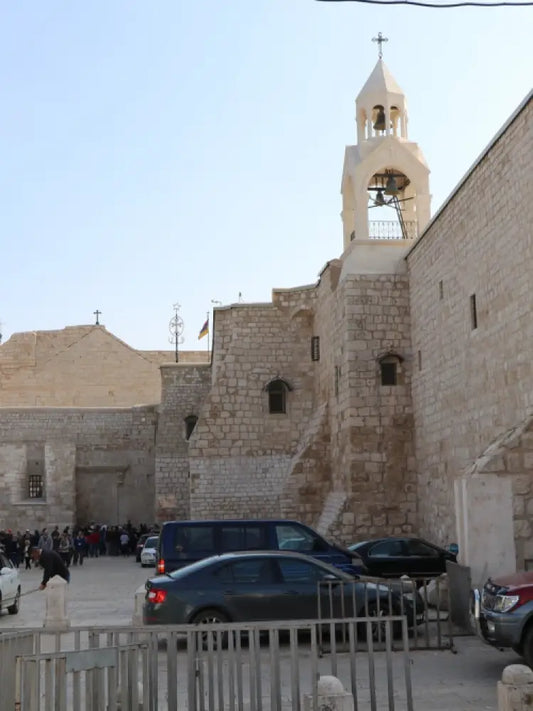
They dont tell you that the church of the holy sepulchre is freezing inside, even when its 35°C outside. That the Door of Humility at the Church of the Nativity is just 1.2 meters tall and you'll be carrying a daypack through it. That the ATM in Bethlehem might be completely empty on the one day you actually need it. That a pair of brand-new sneakers will give you blisters by lunchtime on the Via Dolorosa.
The Holy Land isnt Hawaii. Isnt Rome. Isnt a beach holiday. It is a working pilgrimage on cobblestone, in churches, across borders, at altitude — Jerusalem sits at 754 meters — and sometimes through a checkpoint. You pack for that, or you suffer for it. No middle ground.
Look — let me just walk you through what I tell people.
Clothing: What to Wear in the Holy Land, by Season
Start with the rule that quietly governs everything: modest dress is enforced at almost every major site. The Church of the Nativity, the Holy Sepulchre, the Cenacle on Mount Zion, the Church of All Nations in Gethsemane, the Basilica of the Annunciation in Nazareth — all of them expect covered shoulders and knees, for men and women. The Western Wall plaza is the same. You will be turned away or handed a paper shawl, which never feels good.
So everything else gets built around that.
Year-Round Essentials
- 3–5 modest tops (sleeves, or sleeveless -- you get the idea
- 2–3 pairs of long trousers or knee-length skirts
- 1 lightweight cardigan or button-down for layering -- and this is the one most people overlook
- 2 scarves (this is the one nobody packs — more on it below)
- 1 dressier outfit if you're attending Mass or a special service
Summer (May–September): 30–38°C and Bright
Linen, light cotton, breathable fabrics in pale colours. A brimmed hat — not a baseball cap, your neck will cook. Two refillable water bottles, not one. I'm serious about that. We lose two or three pilgrims to dehydration every summer. If you're coming between June and August, read this guide on visiting the Holy Land in summer before you finalize your bag — there are details there that genuinely change what you pack.
Winter (December–February): 5–15°C in the Bethlehem and Jerusalem Hills
This is the part that shocks people. They picture the Middle East and assume warmth. Bethlehem sits at 765 meters above sea level. It rains. It can snow. And the churches are stone and unheated — cold in a way that gets into your bones. A warm coat, a thick scarf, a beanie, gloves. I have watched pilgrims shiver through Midnight Mass in nothing but a windbreaker. Dont be that person.
Shoulder Season (March–April, October–November): The Sweet Spot
Layers. A light jacket for mornings, a t-shirt underneath, long pants. These are the months I tell pilgrims to come if they have any flexibility in their schedule — mild weather, fewer crowds, every site open and breathing. If you're still deciding when to fly, this comparison of the four seasons in Bethlehem will help.
The Two Scarves Rule
One for women's heads or shoulders inside churches. One for men's necks — which sounds odd until you've stood in the noon sun outside Capernaum and realize the back of your neck is quietly getting destroyed. A simple cotton keffiyeh from a Bethlehem shop costs about 30 NIS and doubles as both. Easiest souvenir you'll buy. Most useful thing in your bag.
Shoes: The Single Most Important Thing You Pack
If you read nothing else in this guide, read this paragraph.
Bring one pair of closed-toe walking shoes that you have already broken in. Not new. Not slightly used. Broken in. Two weeks of walking before the flight, minimum. Jerusalem's Old City is approximately 36 hectares of solid limestone cobblestone, polished smooth by 3,000 years of feet. You will walk between 15,000 and 22,000 steps a day on a normal pilgrimage. New shoes are a mistake you feel from the knee down. Think about that.
Then bring one pair of sandals — for the hotel, for the Dead Sea, for the evening walk in Manger Square. Not for the sites. Sandals on the Via Dolorosa will get you a blister and a stubbed toe.
If you're attending Midnight Mass at the Nativity or a special service at the Holy Sepulchre, throw in one pair of flat dressy shoes. Not heels. The stone floors are uneven enough that heels are genuinely dangerous, and the older Catholic and Orthodox traditions dont care about your formal footwear anyway.
I once had a pilgrim from Texas show up in brand new white sneakers. Three blisters by 11 a.m. on the Via Dolorosa. We bought her a pair of sandals at the little shop on Christian Quarter Road. She finished the week in those sandals — and by Day Three they were the most comfortable shoes she owned. But only because the trip had broken them in for her. Dont make that your story. Come broken in. It matters more than anything else in your suitcase.
Documents, Money and the Things You'll Regret Forgetting
Passport plus two paper copies
One copy in your checked bag, one with a travel companion. If your passport goes missing, you want options immediately. Photograph the inside pages too and email them to yourself — takes two minutes and has saved people I know.
Cash — and the mix matters
Carry about $200 USD in $5 and $10 bills. Carry roughly 500 Israeli shekels (NIS). If you're crossing to Jordan, add a small amount of dinars. Why so much cash? Because the ATM at the Bethlehem checkpoint is unreliable. Because small shops and taxis prefer it. Because tipping your guide and driver is done in cash, always. Because credit cards work fine in hotels and big restaurants but become nearly useless the moment you step into the Old City souk.
Small USD bills are gold here. A $5 tip in a Bethlehem olive wood shop will get you a discount the same way a 20 NIS note will. Big bills are harder to break and nobody loves them. No question.
(I should mention — Star Street is quiet today. Fridays are like that. But the messages from last month's pilgrims keep coming in, so I keep writing.)
Travel insurance
Print the card. Dont rely on the app on your phone. If you're in an emergency room in Jerusalem at 2 a.m. and your phone is dead, the paper card is what you hand the desk. That's not a hypothetical — I've seen it happen.
Vaccinations
No required vaccinations to enter Israel or visit Bethlehem in 2026. Routine boosters — tetanus, hepatitis A — are sensible for any international travel, but nothing is mandatory. If you're flying through Jordan or Egypt as well, your travel doctor may suggest typhoid. Ask them directly.
Phone setup
Get an eSIM before you fly. Holafly and Airalo both have plans that work across Israel and the West Bank — which is exactly what you need, because local Israeli SIMs can drop signal the moment you cross into Bethlehem. You dont want to be that pilgrim hunting for Wi-Fi in Manger Square at 9 p.m. Install WhatsApp before you leave home. It is how every Palestinian guide, driver, hotel and shop communicates. Not email. Not SMS. WhatsApp.
Health, Medication and the Bethlehem Pharmacy Truth
Pharmacies in Bethlehem and Jerusalem are well stocked — genuinely better than people expect. You can buy almost anything over the counter. But. Bring your own prescription medications in their original bottles, with a printed list of generic names. Dont rely on finding your specific brand in a Bethlehem pharmacy at 9 p.m. on a Friday before Shabbat. It isnt worth the stress.
The small things that save trips: - Electrolyte tablets (Nuun, Liquid IV — whatever you like) for hot months -- and this is the one most people overlook - Blister plasters — Compeed or equivalent. You will use them. - Sun cream SPF 50 minimum - Gentle stomach meds — Imodium and an electrolyte rehydration packet. The food is wonderful but the pace is intense and travelers' stomachs are touchy. - Ibuprofen — more than you think you need -- you get the idea - A small first aid kit — band-aids, antiseptic wipes, a tiny tube of antihistamine cream. Every single one.
I'm not a doctor, so check with yours if anything in your daily routine is non-negotiable. But this is the kit I see work, over and over. Trip after trip.
(A quick aside — Bethlehem before 8 a.m. is a different city. The bakeries are open, the smell of fresh za'atar bread from Furn Sitto on Star Street mixes with the cold air coming off the Judean Hills. Most pilgrims never see this. They arrive at 10 a.m. when the souvenir shops open and think that's what Bethlehem is. Pack so you can get up early. The trip you pack for is the trip you get. Think about that.)
For the Sites: What Pilgrims Forget to Bring

people walking on street near buildings during daytime — Photo by Diane Picchiottino on Unsplash
This is the section that separates the prepared from the rest.
- A scarf or shawl for the women — covering shoulders inside the Nativity, Holy Sepulchre, Cenacle. Some sites hand out paper shawls; you dont want to be the one wearing one.
- Long trousers or skirt for the men — yes, men too. Shorts above the knee get refused at several monasteries. I've seen grown men turned away at the door and it isnt pretty.
- A pocket Bible, rosary, or prayer card — small, meaningful. Not for show. Some pilgrims like to leave a rosary at the Stone of Anointing or touch a prayer card to the spot of the Nativity. Bring what matters to you.
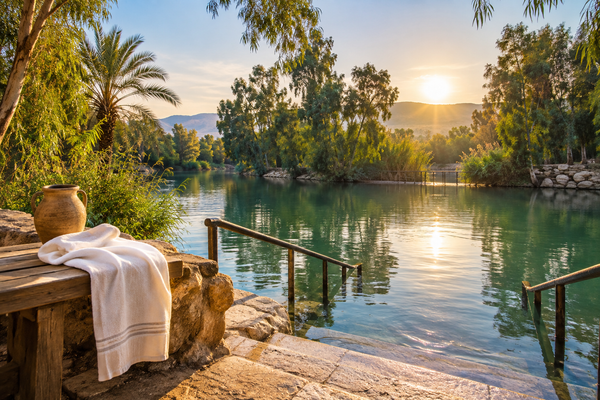
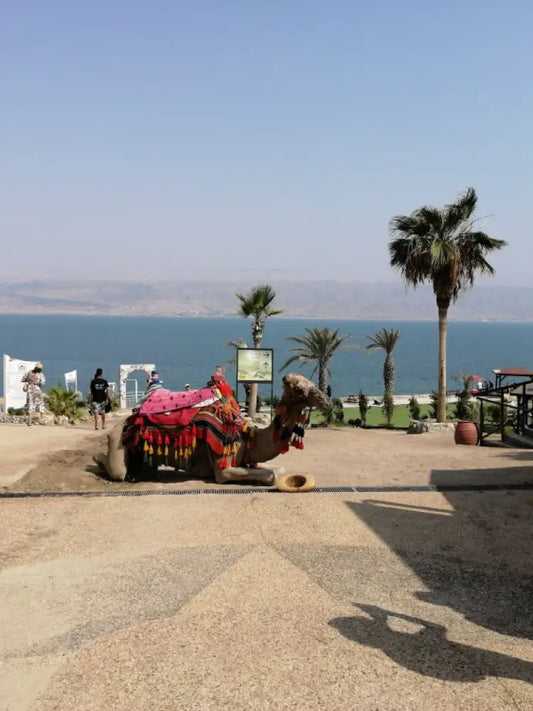
- One quick-dry towel + swimsuit — Dead Sea float, possibly a Jordan River baptism renewal at Yardenit or Qasr el-Yahud. The towel doubles as a beach towel and a back-of-the-bus blanket.
- A reusable water bottle — refill at your hotel, at the Jerusalem Old City fountains, at the Manger Square tap. Tap water is safe in both Jerusalem and Bethlehem, despite what you might have read.
- A small daypack, 15–20 liters max — anything bigger gets flagged at site security and is exhausting to carry up the Mount of Olives in August.
Crossing Checkpoints and the Things Nobody Tells You

the dome of the rock in the middle of the city — Photo by Thales Botelho de Sousa on Unsplash
The practical advice is short. Keep your passport accessible — not buried in a backpack. Be patient. Dont wear clothing with political slogans or flags of any kind (my father would have something to say about this -- he always said the best guides dont talk too much, they let the place speak for itself). Dont carry large knives or anything that could be misread as a weapon. Have your guide's number written on paper, not just saved in your phone. Phones die at inconvenient moments.
The crossing between Jerusalem and Bethlehem is the one most pilgrims ask about. Routine for tourists with a foreign passport, but it can feel unfamiliar the first time — the vehicle change, the crowd, the wait. I wrote a full guide on what to expect at Checkpoint 300 — you can read it here -- and if you've ever been to Bethlehem during pilgrimage season you know exactly what I mean, the streets are packed but theres this energy that's hard to describe. The guide covers the timing, the vehicle change, the way the whole process works. No question.
One packing note that matters at the checkpoint specifically: have small bills of cash on your person. Not buried in checked luggage. Not locked in your hotel safe. Just in case. Big difference. See what I'm getting at?
(Funny thing — I started writing this at 7 a.m. and it's almost noon. Got pulled into a long conversation with a first-time pilgrim who had a hundred questions. Worth it.)
Technology: What Actually Works in the Holy Land

a crowd of people standing in front of a stone wall — Photo by Bruno Aguirre on Unsplash
- Plug type: Israel uses both Type C and Type H sockets. A universal adapter is your safest bet.
- Voltage: 230V at 50Hz. US devices need a converter only if they aren't already dual-voltage — most modern phones, laptops and kindles are fine; hair tools often aren't, and your hotel has a hairdryer anyway.
- eSIM: Holafly or Airalo. Activate it before you fly so you have signal at Ben Gurion the moment you turn off airplane mode.
- Offline maps: Download the Jerusalem and Bethlehem areas on Google Maps before you leave. Signal in the Old City alleys is hit-or-miss.
- WhatsApp: install it. It is the communication app. Every guide, every driver, every shop you'll want to message uses it.
- Battery bank: a small 10,000mAh power bank. Days are long, you're using your phone for photos and translation and maps, and you wont always be near a charger.
What to LEAVE Home

beige wall — Photo by Anton Mislawsky on Unsplash
Pilgrims overpack. Every time. Without fail. Here's what to actually leave behind:
- Hairdryers — every hotel has one
- More than one pair of jeans — too heavy, too hot. Linen pants are better. (I could write a whole post just about this)
- Large or expensive jewelry — modesty plus plain common sense
- Drones — you will not be allowed to fly one. Dont bring it.
- Hiking poles — unless you have a knee or balance issue. The trails are not that demanding.
- Politically charged clothing — flags, slogans, anything that takes a side. Not the place.
- Anything you'd cry over losing — security checks, lost luggage -- you get the idea
A Carry-On Survival Kit for the Flight In

a group of people walking around a stone building — Photo by Jonny Gios on Unsplash
This one matters. Tel Aviv Ben Gurion arrival can take 60 to 120 minutes through immigration. Your checked bag may not appear immediately. I've had pilgrims whose checked bag arrived a full day late. They still made the Bethlehem tour the next morning — because of this kit:
- One change of clothes
- All medications -- you get the idea
- Phone, chargers, adapters, battery bank
- Passport copies
- Toothbrush, basic toiletries -- and this is the one most people overlook
- A scarf (women: also doubles as church cover; men: airplane warmth)
Here's the test. If only one piece of luggage made it through, could you survive a full day on what's in your carry-on? That is the standard. Big difference.
Summary Packing Table

a city with a lot of buildings and a cross on top of it — Photo by Jonny Gios on Unsplash
Key Takeaways
- Modest dress (covered shoulders and knees) is enforced at the Church of the Nativity, the Holy Sepulchre, the Cenacle and most major sites. Pack a scarf — always.
- Closed-toe walking shoes, broken in two weeks before the flight, matter more than any other single item. The Old City is solid cobblestone.
- Carry $200 USD in small bills plus 500 NIS in cash. ATMs in Bethlehem and at checkpoints are not reliable.
- Plug type C/H, 230V — a universal adapter and a working eSIM (Holafly or Airalo) prevent 90 % of first-day frustrations.
- The best months for a Holy Land pilgrimage are October–November or March–April — mild weather, smaller crowds, every site open.
🌱 Plan Your Holy Land Tour


Frequently Asked Questions
What should I pack for a Holy Land pilgrimage in 2026?
Pack modest layered clothing with a scarf, one broken-in pair of closed-toe walking shoes, your prescriptions, $200 USD in small bills, 500 NIS in cash, a universal Type C/H adapter and an eSIM. Add a swimsuit and quick-dry towel for the Dead Sea, a daypack 15–20 liters, and a printed copy of your passport. Skip jeans, heels, hairdryers and drones.
What is the dress code for the Church of the Nativity and the Church of the Holy Sepulchre?
Shoulders and knees must be covered, for both men and women. The same rule applies at the Cenacle, Church of All Nations, Basilica of the Annunciation and most monasteries. A lightweight scarf is the easiest fix — keep one in your daypack and throw it on at the door. Some sites hand out paper shawls if you're caught out, but you dont want to rely on that.
Do I need cash in the Holy Land or do credit cards work everywhere?
You need cash. Credit cards work in hotels, restaurants and large shops, but the Old City souk, taxis, small olive wood stores, tipping your guide and driver (if you can believe it), and crossings into Bethlehem all run on cash. Bring about $200 USD in $5 and $10 bills plus 500 Israeli shekels. The ATM at Checkpoint 300 is not always working — dont rely on it.
Is it safe to bring my passport through Checkpoint 300 between Jerusalem and Bethlehem?
Yes — it's required. Foreign passport holders cross routinely at Checkpoint 300 in both directions. Keep it accessible (not buried in checked luggage), carry one paper copy in your day bag and leave another in your hotel safe. Wear nothing political. The crossing is normal travel logistics for tourists, though it can take time during busy hours.
What is the best month to visit Israel and Bethlehem?
Look, October–November and March–April are the ideal pilgrimage months — daytime temperatures of 18–25°C, mild evenings, every site open and noticeably fewer crowds than Christmas or Easter. December is magical in Bethlehem if you can handle the cold and the crowds. Summer is hot (35°C+) but workable with early starts. January and February are quiet, cold and beautiful in their own way.
Do I need any vaccinations to visit the Holy Land in 2026?
No vaccinations are required to enter Israel or the West Bank in 2026. Routine boosters like tetanus and hepatitis A are recommended for any international travel, and travelers continuing on to Egypt or Jordan may want to discuss typhoid with their doctor. There are no malaria zones in Israel, the West Bank or the Galilee, so no antimalarials are needed.
What kind of shoes should I bring for a Holy Land pilgrimage?
One pair of closed-toe walking shoes, already broken in for at least two weeks before the flight. Jerusalem's Old City is solid limestone cobblestone, and you'll walk 15,000 to 22,000 steps a day. Add one pair of sandals for hotels and the Dead Sea, and one flat dressy pair if you're attending Mass or a special service. No heels, no brand-new sneakers — that's where blisters live.
Can I drink the tap water in Bethlehem and Jerusalem?
Look, yes — tap water is safe to drink in both Bethlehem and Jerusalem, despite what some older travel guides claim. Most locals drink it. If you prefer the taste of bottled, it's inexpensive and available everywhere. Carry a reusable bottle and refill at your hotel and at public fountains in the Jerusalem Old City — it saves money, plastic and your shoulder.
Related Reading
- Best Time to Visit Bethlehem in 2026: Christmas, Easter, Summer or Fall?
- Visiting the Holy Land in Summer: Heat, Crowds and How to Do It Right
- What Actually Happens at Checkpoint 300: A 2026 Guide From Your Bethlehem Host
- How to Plan a 7-Day Holy Land Pilgrimage Itinerary in 2026
One Last Thing
The pilgrim with the wrong shoes — the woman from Texas I mentioned earlier — wrote to me a year after she got home. She had been to the Holy Land twice since. She said the trip had changed something for her, and she still wore those sandals from Christian Quarter Road on long walks in Austin. She said they reminded her of the day she stopped trying to make her pilgrimage look perfect on Instagram and started actually being there.
Pack well so you can stop thinking about your bag.
That's the whole point of this guide. The Holy Land does the rest.
If you're planning a 2026 pilgrimage and want help building the itinerary — when to come, what to see, how long to stay — send me a message through our contact page and we'll figure it out together. Or take a look at the private Holy Land tours we run from Bethlehem. Either way, come. Pack like this. Then forget the bag and pay attention.
Elias Boaz is a licensed tour guide from Bethlehem — birthplace of Jesus Christ — and the founder of Elijah Tours. He has guided thousands of pilgrims through Bethlehem, Jericho, and the Jordan River Valley — and coordinates Holy Land tours with trusted licensed guides across the region. He writes to help visitors truly understand what they're seeing.