"I've brought pilgrims of every denomination to the Western Wall. Baptists, Catholics, Greek Orthodox, Pentecostals. Every single time, someone goes quiet in a way that has nothing to do with words."
From a local guide's perspective, here's the thing: The Western Wall in Jerusalem is honestly the last surviving retaining wall of the Second Temple compound, destroyed by Rome in 70 CE. It is the holiest accessible site in Judaism and a profoundly significant stop for Christian pilgrims, because Jesus prayed and taught in the Temple courts that once stood directly above this spot. It is free to visit, open 24 hours a day, and welcoming to people of all faiths.
📝 In This Article
- What Is the Western Wall, and Why Does It Exist?
- What the Western Wall Plaza Looks Like (And What to Do When You Arrive)
- Rules, Dress Code, and Etiquette at the Western Wall
- The Western Wall Tunnels (The Part Most Pilgrims Skip, and Shouldn't)
- Best Time to Visit and How to Get There
- Why the Western Wall Matters Specifically to Christian Pilgrims
- What You Should Know
- Frequently Asked Questions
What Is the Western Wall, and Why Does It Exist?
Having walked these routes with travelers, most people arrive thinking the Wall is the Temple. It is not.
Having grown up in Bethlehem, that is the single most common thing I have to explain.
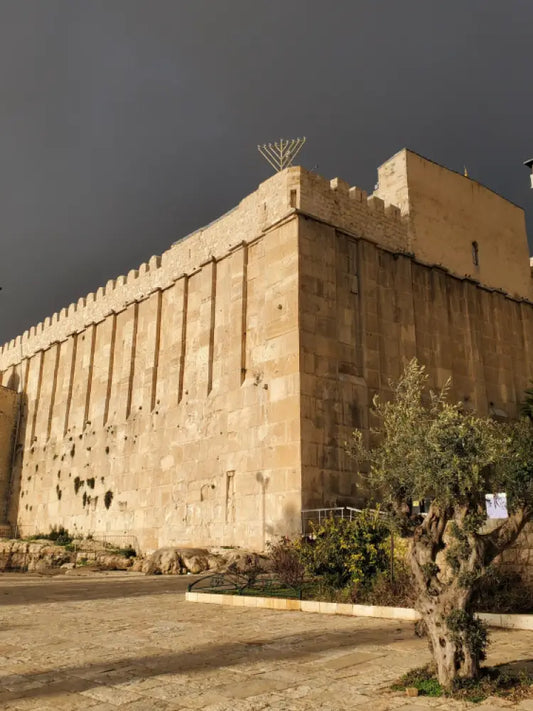
Honestly, the Wall is a retaining wall, part of the massive platform that Herod the Great built around 19 BCE to expand the Temple Mount. The Temple itself stood on top of that platform. When the Romans destroyed Jerusalem in 70 CE, they demolished the Temple building almost completely. But the retaining wall, the outer support structure, survived, partly through deliberate policy and partly because it was not the primary target. What you are looking at is the skeleton of what held the Temple up.
That changes how you understand it. This is not the Temple. It is what the Temple leaned against. And somehow, after two thousand years, it is still here. You know what I mean?
Four distinct layers of stone courses are visible if you look carefully. The lower courses, large smooth stones with a distinctive raised border running around each edge, are Herodian. Original. From the time of Jesus. Above those, you can see smaller, rougher stones added by later rulers, Umayyad, Crusader, Ottoman. History stacked literally on top of itself.
The Temple Mount Above It
The platform that the Wall supports, the Temple Mount, is directly above and behind you when you stand at the Wall. On that platform today stand the Dome of the Rock and Al-Aqsa Mosque. They were built centuries after the Temple's destruction. Access to the Temple Mount itself is through a separate entrance, the Moroccan Gate near the Dung Gate, and it has different visiting hours and rules from the Wall.
The Wall and the Temple Mount are connected physically but are two separate visiting experiences. Many pilgrims visit the Wall without going up to the Temple Mount at all, and that is a perfectly complete visit.
I have a group from Tennessee in my memory that I think about sometimes. Evangelical Christians, deeply familiar with the New Testament but less so with the physical reality of these sites. When I told them that authentic jesus walked into the Temple courts (Matthew 21:12-14) on the first day of Holy Week and overturned the money changers' (actually, let me rephrase that) -- tables, and that the Wall they were looking at was the retaining wall of that exact compound, one of the women in the group stopped walking. She said, quietly, "He was standing right here when he said it." She meant the prediction, the one from Matthew 24:2 where Jesus points to the Temple and says not one stone will be left on another. He said that standing on this ground. Looking at something that is now gone. And the Wall is what's left.
She wasn't wrong.
What the Western Wall Plaza Looks Like (And What to Do When You Arrive)
I'm no expert in this, but the security screening at the entrance is honestly similar to an airport: bags through a machine, walk through a metal detector. Then you step out and the Wall is there, a pale limestone cliff of ancient stone rising well above your head, stretching across the width of the plaza.
Not even close.
The plaza is divided. The larger right section (as you face the Wall) is for men. The left section, somewhat smaller, is for women. There is no barrier in the plaza itself, just a low mechitza (partition) closer to the Wall itself. You can stand anywhere in the open plaza.
You walk up to the Wall, touch it, and pray. That is it. No ticket, no queue, no guide needed at the Wall itself. Most pilgrims from Christian traditions place a hand on the stone and stand quietly. Some press their forehead to the stone. Some kneel. You do what feels right. Worth it.
The stones at the lower courses are enormous up close. A single Herodian stone weighs an estimated hundreds of tons. The texture is rough limestone, worn smooth in places from two thousand years of hands. The mortar between the stones is almost invisible because there isn't any, at least not in the original Herodian sections. Herod's engineers cut the stones so precisely they fit together under their own weight. No question.
Writing a Prayer Note
Pressed into almost every visible crevice between the stones is a piece of paper. Thousands of them. These are kvitlach, prayer notes, small folded slips where people write a prayer or a wish before tucking them into the Wall. The tradition is observed by Jewish worshippers and by pilgrims of every background. I have watched people of a dozen nationalities do this, and it never looks forced. And it works.
It's almost Easter as I write this and the messages are seriously absolutely non-stop. Groups coming from 20+ countries this month alone. Bethlehem becomes a different place entirely.
You write your prayer on a small piece of paper, fold it, and press it into a crack. That is all. Open to anyone.
The notes are collected twice a year, before Passover and before Rosh Hashanah, by the custodians of the Wall.
They are then buried at the Mount of Olives, in the ancient cemetery there. The idea being that the prayers continue to rest in sacred ground.
Rules, Dress Code, and Etiquette at the Western Wall
Interested in seeing our collection? → Browse Tours to Jerusalem

brown mosque at daytime — Photo by Toa Heftiba on Unsplash
The dress code is enforced. Covered shoulders, covered knees. Both men and women. If you arrive in shorts or a sleeveless top, there are loaner coverings at the entrance for the upper body, but there is nothing for bare legs. The simplest advice is: dress as you would for any place of worship. You would not walk into a cathedral in shorts. Same principle applies here. No question.
Men must cover their heads in the prayer area. Small cardboard kippot (yarmulkes) are available free at the entrance. You put one on, visit the Wall, hand it back on your way out, or keep it as a memento. That's the difference.
A few things most guides mention only after someone does them wrong:
When you leave the Wall after praying, the traditional custom is to back away from it rather than turning your back on it. Many non-Jewish visitors follow this out of respect (my father would have something to say about this -- he always said the best guides don't talk too much, they let the place speak for itself). You do not have to, but you will notice others doing it, and now you will know why. Not even close.
Photography is accepted during weekday hours.
On Shabbat (from Friday evening through Saturday night), photography is not permitted in the prayer area. If you are visiting on a Friday afternoon and the sun is getting low, put the camera away. No question.
Look, phones and loud conversation should be put away in the prayer zone. The area right at the Wall itself is a prayer space, not a viewing platform.
Keep that in mind. That's the difference.
The Western Wall Tunnels (The Part Most Pilgrims Skip, and Shouldn't)

What you see in the plaza is roughly 57 meters of exposed Wall. The full structure runs 488 meters. The rest of it is underground, buried under 2,000 years of accumulated city. And it shows.
The Western Wall Tunnels run north from the plaza, following the hidden length of the Wall below street level.
You walk through a narrow passageway that exposes the original Herodian construction from the inside, including aqueducts, vaulted halls, and stone courses that have never been rebuilt or touched since the Second Temple period. Big difference.
Look, The single most striking feature is the Western Stone, a single Herodian block that is approximately 13 meters long, 3.5 meters high, and estimated at around 570 tons. One stone. Quarried, moved, and placed two thousand years ago, without modern machinery. Engineers still disagree about exactly how it was done. And it works.
The tunnels require advance booking through the Western Wall Heritage Foundation. Tours run throughout the week except on Shabbat. Plan for roughly 75 to 90 minutes. If you are planning a Jerusalem visit and the tunnels interest you, book before you arrive, because they fill quickly. If you are traveling with Elijah Tours on one of our Jerusalem day trips, we can coordinate tunnel access as part of the day. Not even close. Makes sense?
Best Time to Visit and How to Get There
Interested in seeing our collection? → Browse Tours to Bethlehem

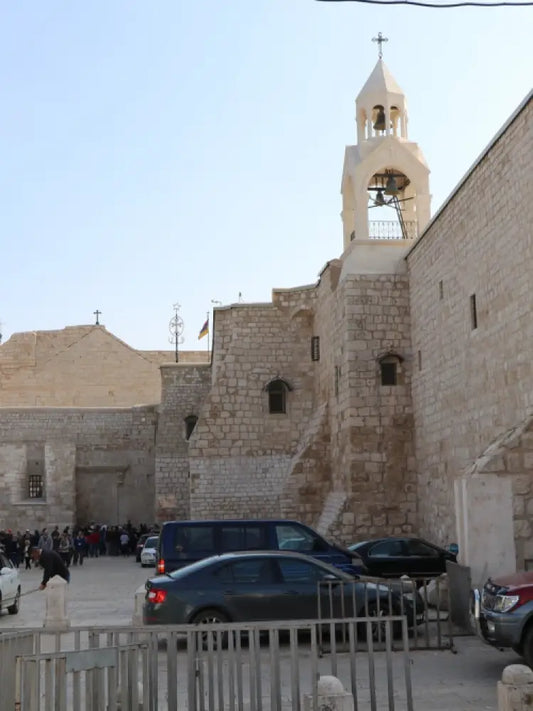
a church with a cross hanging from it's side — Photo by Lisa Forkner on Unsplash
The Wall is open around the clock. The experience shifts considerably depending on when you go. Not even close.
My honest recommendation for a first visit: weekday morning, between 8 and 10 AM. The light is good, the crowds are manageable, and you can actually stand at the Wall and think.
I tell every group the same thing before we go in -- put your phone down for five minutes. Just five minutes. Most of them thank me for it afterward.
Not even close.
Friday evening during Kabbalat Shabbat, the welcoming of the Sabbath, is one of the more remarkable things you can witness in Jerusalem. Hundreds of Jewish families and worshippers gather at the Wall as the sun goes down, singing the traditional prayers that welcome the Sabbath. It is loud, joyful, and genuinely moving. But no cameras, and plan for a large crowd. That's the difference.
Getting there. From the Dung Gate, it is a 5-minute walk directly into the Western Wall plaza. Most private tour drivers drop off at the Dung Gate. From the Jaffa Gate, you walk through the Armenian and Jewish Quarters, roughly 15 to 20 minutes on foot. The route through the Jewish Quarter passes the Cardo, the ancient Roman street. Worth knowing if you have time.
If you are building a full Jerusalem itinerary, the 10-Day Holy Land Itinerary guide covers how to structure your time across the Old City and surrounding sites. That matters.
Why the Western Wall Matters Specifically to Christian Pilgrims

brown mosque at daytime — Photo by Toa Heftiba on Unsplash
I am sometimes asked whether the Western Wall is really a site for Christian visitors, or whether it is "just a Jewish site." The question is understandable. It is also, I think, based on a misunderstanding of what you are actually looking at. Big difference.
Jesus was a Jewish man who observed Jewish law and prayed in the Temple. Multiple times in the Gospels, he enters the Temple courts. Matthew 21 describes him driving out the money changers. Luke 2 describes him as a twelve-year-old, sitting among the teachers in the Temple. John 10 describes him walking in Solomon's Colonnade (no joke), one of the porticoes of the Temple compound. All of this happened on the platform above this Wall. No question.
And then there is the prediction. In Matthew 24:2, Mark 13:2, and Luke 21:6, Jesus looks at the Temple and says that not one stone will be left on another. Forty years later, in 70 CE, the Romans fulfilled that prediction almost to the letter. The Temple is gone. The Wall is what remains. Worth it.
Standing at the Western Wall as a Christian pilgrim means standing at the point where the Old Testament, the New Testament, and verifiable history all converge in one physical location. I am a guide, not a theologian. But in my experience, the people who feel this most strongly at the Wall are often the Christians who were not sure they were supposed to be moved by it. Big difference.
The Wall connects the story you already know to the ground it happened on. That is rare.
That is worth something.
Here's something worth knowing: If you are planning a full day in Jerusalem and want to combine the Wall with other key sites, walking the Via Dolorosa ends at the Church of the Holy Sepulchre.
The Western Wall is a 15-minute walk from the Holy Sepulchre through the Jewish Quarter. Many pilgrims do all three in the same morning. It is a lot, but it is the core of Jerusalem.
Key Takeaways
- The Western Wall is the retaining wall of the Second Temple compound, destroyed by Rome in 70 CE, and the holiest accessible site in Judaism.
- It is free to visit, open 24 hours, and open to all faiths and nationalities. -- and this is the one most people overlook
- Men must cover their heads in the prayer area; free kippot (head coverings) are available at the entrance. Covered shoulders and knees are required for all visitors.
- Prayer notes written on slips of paper can be placed in the crevices of the Wall by anyone. They are collected twice yearly and buried at the mount of olives from Bethlehem.
- The Western Wall Tunnels extend the full 488-meter length of the Wall underground and require advance booking.
- Jesus prayed and taught in the Temple courts that stood on the platform directly above this Wall; his prediction of the Temple's destruction (Matthew 24:2) was fulfilled here in 70 CE.
- Best first-visit timing: weekday mornings for quiet reflection, or Friday afternoon to experience the lead-up to Shabbat.
There is something I return to every time I bring a group to the Wall. It is a ruin. That is the thing most people do not say out loud. The Temple is gone. What stands here is what survived because it was load-bearing, because it was the outer wall, the less sacred part in ancient Jewish understanding. And yet this is the site that billions of people across two faiths point to as the place closest to the Holy of Holies. No question.
The most sacred thing that once stood here is absent. What remains is the wall that held it up.
That matters.
I find that either empty or profound, depending on the day -- this actually reminds me of a conversation I had with a first-time pilgrim named Susan who came back a second time just because of this, but I'll save that for another post. But I have watched enough pilgrims arrive skeptical and leave unable to speak to believe that the Wall, the ruin, the remnant, has its own kind of presence. Something is there. I cannot tell you what. And it works.
If you are planning to come to Jerusalem, reach out to us at Elijah Tours and we will help you plan a visit that gives you time to actually experience it, not just photograph it.
Frequently Asked Questions

people gathered near pole — Photo by Sander Crombach on Unsplash
Is the Western Wall free to visit?
Yes, access to the Western Wall plaza is completely free and open to visitors of all faiths and nationalities, 24 hours a day. The Western Wall Tunnels need a separate paid booking through the Western Wall Heritage Foundation.
Can Christians pray at the Western Wall?
Yes. The Western Wall is open to visitors of all religious backgrounds. There is no requirement to be Jewish to approach the Wall, touch it, or pray there. The only requirements are modest dress and a head covering for men, which is provided free at the entrance. Many Christian pilgrims find it one of the most personally significant moments of their Holy Land visit.
What should I wear to the Western Wall?
Cover your shoulders and knees. Men must also cover their heads while in the prayer area, and free cardboard kippot are available at the entrance gate. There are shoulder coverings available to borrow if you arrive in a sleeveless top, but nothing is provided for bare legs, so plan ahead. Dressing modestly is the only real requirement.
How close is the Western Wall to the Temple Mount?
Honestly, the Western Wall sits at the base of the Temple Mount's western retaining wall.
The Temple Mount platform, on which the Dome of the Rock and Al-Aqsa Mosque now stand, is directly above and behind the Wall when you face it. They are physically connected. Access to the Temple Mount itself is through a separate entrance near the Dung Gate and has its own hours and visiting rules.
What are the Western Wall Tunnels?
The Western Wall Tunnels are an underground passageway that follows the full 488-meter length of the Wall northward from the plaza.
The section exposed in the plaza is only about 57 meters. Inside the tunnels, you can see the full scale of Herod's original construction, including the Western Stone, a single ancient block estimated at around 570 tons, one of the largest building stones ever quarried. Advance booking is required and the tour takes about 75 to 90 minutes.
Can you leave a prayer note at the Western Wall?
Yes. Writing a prayer on a small folded slip of paper and pressing it into a crevice between the stones is one of the most widely practiced traditions at the Wall, observed by visitors of every faith and background. The notes are collected twice a year, before Passover and before Rosh Hashanah, and then buried at the Mount of Olives cemetery. There is nothing you need to do except write your prayer and find a space in the stone.
What is the best time of day to visit the Western Wall?
Weekday mornings, particularly between 8 and 10 AM, are the best time for a first visit. The crowd is manageable, photography is allowed, and there is space to stand at the Wall without being pressed. Friday late afternoon brings a festive pre-Shabbat energy that many visitors find memorable. Friday evening Kabbalat Shabbat is powerful but no longer allows photography and draws large crowds. The Wall is also worth visiting late at night on weekdays, when it is very quiet and warmly lit.
Elias Boaz is a licensed tour guide from Bethlehem — birthplace of Jesus Christ — and the founder of Elijah Tours. He has guided thousands of pilgrims through Bethlehem, Jericho, and the Jordan River Valley — and coordinates Holy Land tours with trusted licensed guides across the region. He writes to help visitors truly understand what they're seeing.