That place is still there. You can stand in it.
Having walked these routes with travelers, the Upper Room, also called the Cenacle, is a Gothic hall on Mount Zion in Jerusalem, just outside Zion Gate. Don't quote me on the exact number, but christian tradition identifies it as the site of the Last Supper (Luke 22), the post-resurrection appearances of Jesus, and the first Pentecost (Acts 2). It is open to visitors, free to enter, and requires no booking.
📝 In This Article
- What Is the Upper Room - And Why Does It Matter?
- The History of the Building You Will Actually See
- What You Will See Inside the Upper Room
- The Three Biblical Events That Happened Here
- Practical Guide: How to Visit the Upper Room in 2026
- A Mount Zion Morning: How to Combine These Sites
- What You Should Know
- What the Plain Room Does
- Frequently Asked Questions
What Is the Upper Room - And Why Does It Matter?
One room. Three moments that changed the world.
The Last Supper happened here (Luke 22:7-20, Matthew 26, Mark 14). The disciples broke bread with Jesus the night before his arrest, and Jesus instituted the Eucharist. After the crucifixion and resurrection, the disciples gathered here behind locked doors, and Jesus appeared among them. Thomas put his fingers in the wounds and said, "My Lord and my God" (John 20:19-29). And then, fifty days later, Pentecost. Wind. Fire. The birth of the Church (Acts 2:1-4).
You'd expect the room to feel like something enormous. Most people do.
Having grown up in Bethlehem, the thing is, it doesn't. Not at first. You walk in and it's just a stone hall. Gothic arches. Columns. A lamp hanging in the center. No altar. No candles. No icons on the walls. Some pilgrims look around and feel confused, like they missed a turn somewhere.
From years of guiding visitors here, they didn't miss anything. That's the room.
"Cenacle" and "Upper Room" are the same place. Cenacle comes from the Latin cenaculum, meaning dining room. The Gospels describe a large upper room in the city, prepared for the Passover meal. This is where Christian tradition has placed that room for nearly two thousand years. I am a guide, not a theologian. But from what I've seen, the tradition is old, and it runs deep.
The History of the Building You Will Actually See
Nothing from the first century survives here. That is worth saying plainly, because it surprises people.
The site itself was remembered by the early Jerusalem church. A 4th-century pilgrim named Egeria visited and described a church here called "the Mother of all Churches." Later pilgrims confirmed it. So the tradition is old and continuous. But the building? What you see today is the work of the Crusaders.
The Byzantine-era structure, "Hagia Sion," that stood here was genuinely destroyed and rebuilt several times over the centuries. The Franciscan order, under Crusader patronage, rebuilt the hall in the 12th to 14th centuries. The Gothic pointed arches, the vaulted ceiling, the carved capitals on the columns - that is all Crusader work.
Then came the Ottoman period. In the 16th century, the building was converted into a mosque. That is why, on the south wall, there is a mihrab - a prayer niche pointing toward Mecca. It was not removed when the site was opened to Christian pilgrims again. It is still there.
Today, the site sits under a complex jurisdictional arrangement. No single church owns it. Access is generally open to visitors of all faiths. Jews also pray at the Tomb of King David on the floor below.
Jerusalem works like this.
Layers on layers. That is never clearer than here.
If you're planning a full day in Jerusalem, the City of David is another extraordinary layer, just a short walk from the Old City walls, where Jerusalem's earliest history lives underground.
What You Will See Inside the Upper Room
Walk through the door and let your eyes adjust. The hall is large. The vaulted ceiling is held up by columns, and on the capitals of those columns, you'll find carved stone pelicans feeding their young from their own chests. That image - the pelican piercing her own breast to feed her young with her blood - was adopted by the medieval Church as a symbol of Christ and the Eucharist. Almost nobody notices the pelicans. I always point them out.
On the south wall, the mihrab is easy to miss if you don't know what to look for. It is a small decorative niche. When this was a mosque, the imam would stand in front of that niche to lead prayers, facing Mecca. Stand in front of it and you're standing where the imam stood, facing south. The Last Supper table was somewhere in this same room. Jerusalem gives you both in one moment.
A lamp hangs near the center of the hall. The floor is stone. There is nothing to buy, no gift shop, no ticket window. You just walk in.
What the room does not have can be as striking as what it does have. No altar. No permanent religious decoration in the Christian sense. Groups sometimes set up portable items to celebrate a service, and then they leave. The room returns to its plain self.
That plainness does something to people. I've watched it happen hundreds of times.
The Three Biblical Events That Happened Here
Interested in seeing our collection? → Browse Tours to Jerusalem

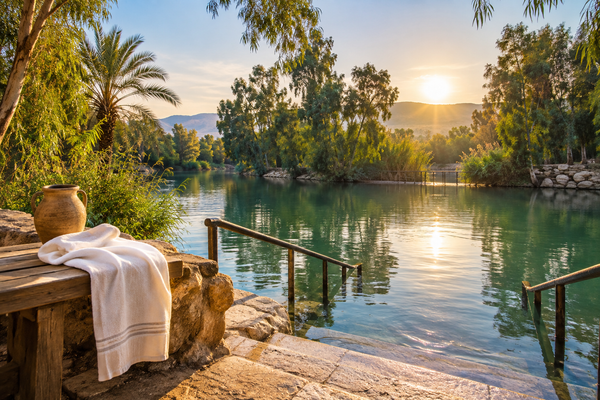
Mount of Olives Jerusalem Sunrise — Photo by David Holifield on Unsplash
The Last Supper
I'll be straight with you: The night before Jesus was arrested, he sent two disciples ahead to prepare seriously a room. "A large upper room," Luke 22:12 says, "furnished and ready." This is that room, or at least the place tradition has remembered as that room.
Honestly, the Passover meal. The breaking of bread, the sharing of the cup. Jesus washing his disciples' feet (John 13). Judas identified. The prayer in John 17. The whole weight of what was coming.
The Eucharist began here. Whether you receive communion weekly or once a year, the meal that gave it meaning was held in a room like this one.
The Post-Resurrection Appearances
After the crucifixion, the disciples locked themselves in. The doors were shut. And then Jesus was among them. John 20:19-29 puts this scene in a room in Jerusalem. The locked doors. Jesus showing his hands and his side. Thomas, who was not there the first time, insisting he would not believe unless he could touch the wounds himself. Then, eight days later, Jesus appearing again. Thomas touching. And saying the words: "My Lord and my God.".
That phrase - "my Lord and my God" - has been prayed in this room by pilgrims for nearly two thousand years.
Pentecost
Here's the thing: This is what surprises people the most. Many Christians know the Upper Room as the Last Supper location. Fewer realize that Acts 2 places Pentecost in the same room.
Fifty days after Passover. The disciples gathered. Wind like a rushing current filling the house. Tongues of fire resting on each person. Three thousand people baptized in Jerusalem that day.
The early Church began in this room.
I've had pilgrims stand in silence when they realize that -- and if you've ever been to Bethlehem during pilgrimage from Bethlehem season you know exactly what I mean, the streets are packed but theres this energy that's hard to describe. They came thinking "Last Supper." They leave having added Pentecost and Thomas and the resurrection appearances to what this room holds. It is more than one moment.
Practical Guide: How to Visit the Upper Room in 2026

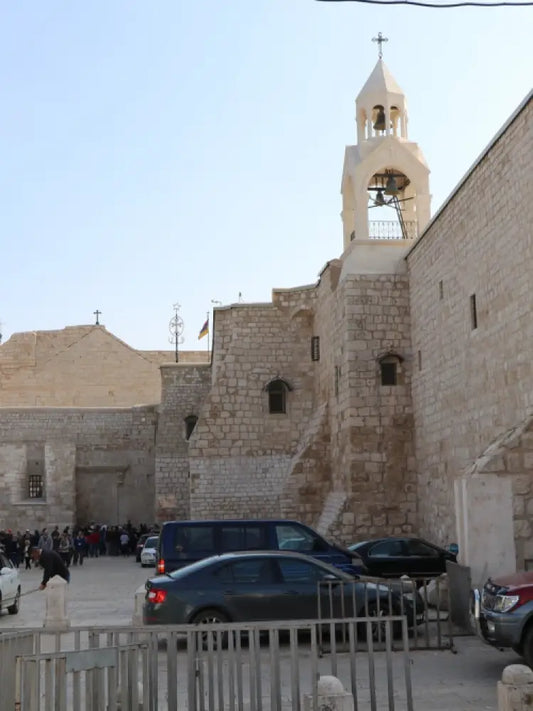
What to See in Bethlehem Church of the Nativity
Getting there. Mount Zion is outside the Old City walls. The easiest way is to walk through the Armenian Quarter and exit via Zion Gate, then follow the road up the slope for about ten minutes. If you are staying in the Old City, that walk is easy. If you're arriving by taxi, ask for Zion Gate.
Hours. The site is generally open Sunday through Friday. It is not open on Saturdays (the Jewish Sabbath) and may be unavailable on some Jewish holidays. Hours shift seasonally, and I would not trust any specific hour listed anywhere online. Check at your hotel the morning you plan to go.
Best time. Come before 9am on a weekday. By 10:30am, organized tour groups begin arriving and the room fills. The early morning there, before the crowds, is quiet in a way that does something different to a person.
Dress code. Modest clothing. Shoulders covered, knees covered. No special religious garment is required.
How long. If you are visiting alone or with a small group, 30-45 minutes is enough to take it in. If your group wants time for prayer or a service, allow 45-60 minutes.
Combining sites. The Tomb of King David is directly below this room, in the same building. The Dormition Abbey is adjacent. The Church of Peter in Gallicantu is a ten-minute walk away. A Mount Zion morning can hold all of these comfortably.
If you want a private guide who can bring you to the Upper Room early and read the biblical accounts in the room itself, we run private Jerusalem tours that cover this site along with the Old City's other passion narrative locations.
Look, thinking about how to allocate days between Jerusalem, Bethlehem, and Galilee? Our guide on how long your Holy Land pilgrimage should be breaks it down by trip length.
A Mount Zion Morning: How to Combine These Sites

What to See in Bethlehem Church of the Nativity
Mount Zion rewards a half-morning devoted to it entirely. Do not rush through on your way somewhere else.
The practical sequence I recommend: Arrive at the Upper Room before 9am. Spend 30-45 minutes. Then walk down one floor to the Tomb of King David (allow 20-30 minutes, separate entrance, head covering required for men). From there, cross to the Dormition Abbey - the Benedictine church where Mary is said to have fallen asleep before her assumption. It is quiet, beautifully lit, and usually uncrowded. Then walk ten minutes to the Church of Peter in Gallicantu, which marks the site of the high priest Caiaphas's house, where Peter denied Jesus three times. The church has a preserved Byzantine-era courtyard and ancient steps that pilgrims have walked for centuries.
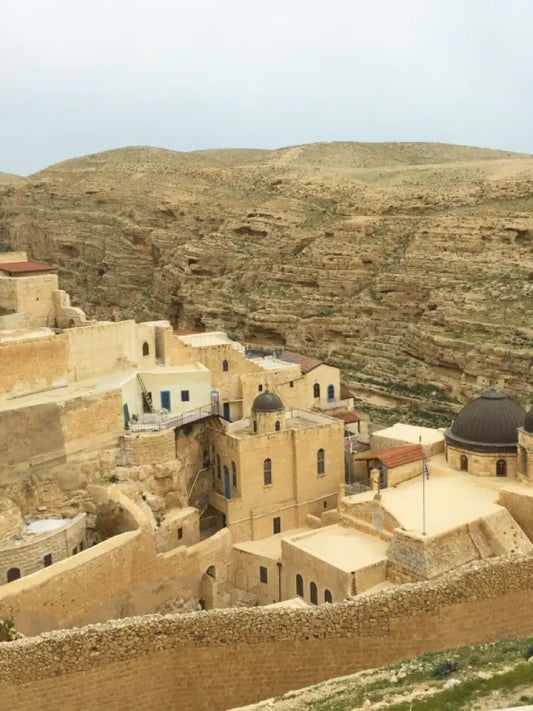
From the Church of Peter in Gallicantu, you can walk back into the Old City and continue toward the authentic garden of gethsemane or the Via Dolorosa to follow the full passion narrative in sequence. That is a long day, but one that holds together in a way that the fragmented approach never does. For those combining a visit to Bethlehem with the broader pilgrimage, Rachel's Tomb is another deeply significant biblical site a short distance from Jerusalem, well worth including in a multi-day itinerary. And if you're exploring more hidden corners of the Holy Land, Saint George's Monastery in Wadi Qelt is the kind of place that stops people cold - a monastery built into a desert cliff, still active after fifteen centuries.
I should mention -- Star Street is quiet today. Fridays are like that. But the messages from last month's pilgrims keep coming in, so I keep writing.
Key Takeaways
Interested in seeing our collection? → Browse Tours to Bethlehem
- The Upper Room (Cenacle) is free, open Sunday through Friday, and requires no booking.
- The building you see today dates to the Crusader period (12th-14th century). No first-century structure survives, but the tradition of the site is early and unbroken. -- and this is the one most people overlook
- Pentecost happened here, not just the Last Supper. Many pilgrims don't realize this until they're standing in the room.
- The room contains a mihrab, a Muslim prayer niche from the Ottoman period when the building served as a mosque. It is still there.
- The Tomb of King David is directly below the Cenacle, in the same building, but accessed separately.
- Best time to visit is before 9am on a weekday; organized tours begin arriving by mid-morning.
What the Plain Room Does

What to See in Bethlehem Church of the Nativity
A group from North Carolina came to hold a communion service in the Upper Room. They had been planning it for two years. Twenty-two people, a Baptist congregation, and their pastor. When they arrived, the room was just stone walls and Gothic arches. No altar. No candles. No decoration. One of them turned to me and said quietly, "Is this really it?".
I said yes. By the time their pastor finished speaking, half the group was in tears. The plainness had done what no ornate chapel could have done. It put them in the position of the disciples. No spectacle. Just the room. Just the words. Just the weight of what happened there.
That is the Upper Room.
Now here's what I find interesting: It doesn't perform. It doesn't need to. It just holds what it holds, and lets you stand inside it.
Look, If you're planning your Jerusalem itinerary and want a local guide from Bethlehem who has brought groups into this room for years, reach out and we'll plan it together. Our Jerusalem day tours include the Upper Room and Mount Zion as a full morning, paired with whichever other sites matter most to your group.
Frequently Asked Questions

What to See in Bethlehem Church of the Nativity
Where exactly is the Upper Room in Jerusalem?
To be honest, the Upper Room (Cenacle) is on Mount Zion, just outside the Zion Gate on the south side of Jerusalem's Old City walls. From inside the Old City, walk through the Armenian Quarter to Zion Gate and follow the road uphill for about ten minutes. The site is inside a stone complex that also contains the Tomb of King David on the ground floor.
Is the Upper Room free to visit?
Yes. The Upper Room is free to enter and open to visitors of all faiths.
No ticket or advance booking is required. The dress code requires modest clothing with shoulders and knees covered.
What is the difference between the Upper Room and the Cenacle?
They are the same place.
"Cenacle" comes from the Latin cenaculum, meaning dining room. "Upper Room" is how English translations of the Gospels describe it. Both names refer to the traditional site of the Last Supper, post-resurrection appearances, and Pentecost, located on Mount Zion in Jerusalem.
Is the Tomb of King David in the same building as the Upper Room?
Yes. The Tomb of King David is on the ground floor of the same building, directly beneath the Cenacle. They are accessed through separate entrances.
Men are required to wear a head covering at the Tomb; paper kippot are available at the entrance.
Can my group hold a prayer service or communion at the Upper Room?
Groups do pray and celebrate informal services in the Upper Room. There is no permanent altar, no resident clergy, and no advance coordination required. Groups enter, use the space respectfully, and leave as they arrived. It functions as a shared, non-denominational site.
Why is there a Muslim prayer niche (mihrab) inside the Upper Room?
In the 16th century, the Ottoman authorities converted the building into a mosque. The mihrab, a niche in the wall pointing toward Mecca, dates from that period. It was not removed when the site was reopened to Christian visitors and remains visible today on the south wall of the hall.
How long should I spend at the Upper Room?
Plan 30 to 45 minutes if visiting independently. If your group wants time for prayer, scripture reading, or a short service, allow 45 to 60 minutes.
Combine it with the Dormition Abbey (adjacent, 20-30 minutes) and the Tomb of King David on the floor below (20 minutes) for a complete Mount Zion morning.
What other sites are close to the Upper Room?
Within easy walking distance: Dormition Abbey (where Mary is said to have fallen asleep before the Assumption, immediately adjacent), the Tomb of King David (ground floor of the same building), and the Church of Peter in Gallicantu (ten minutes on foot, marking the site of Caiaphas's house and Peter's denial). All four together form a natural half-morning.
Elias Boaz is a licensed tour guide from Bethlehem — birthplace of Jesus Christ — and the founder of Elijah Tours. He has guided thousands of pilgrims through Bethlehem, Jericho, and the Jordan River Valley — and coordinates Holy Land tours with trusted licensed guides across the region. He writes to help visitors truly understand what they're seeing.