- Elias Boaz, licensed guide, Bethlehem
Having walked these routes with travelers, Qumran is the ruined desert settlement on the northwestern shore of the Dead Sea where, starting in 1947, a Bedouin shepherd found the Dead Sea Scrolls, the oldest known manuscripts of the Hebrew Bible.
As a Bethlehem-based tour guide, visitors can walk the ruins, look across a ravine at the cave where most of the fragments were hidden, and understand why these texts permanently changed how we understand the Bible. Plan 90 minutes to two hours at the site.
Who Found the Scrolls - and What They Are
As local guides often point out, in 1947, a Bedouin shepherd named Muhammad edh-Dhib was searching for a lost goat in the cliffs above the Dead Sea. He threw a stone into a cave opening and heard something break. What broke was a clay storage jar.
Inside were ancient leather scrolls.
That is not a story I added for drama. That is what happened.
Over the next nine years, archaeological expeditions and Bedouin searchers working the same cliff face found scroll material in eleven separate caves. I'm not a theologian, but from what I understand, the collection turned out to include some of the oldest known copies of virtually every book of the Old Testament, along with community rule texts, hymns, commentaries on the prophets, and something called the Copper Scroll, which is engraved on sheets of copper and appears to list locations of hidden treasures.
The most big piece is the Great Isaiah Scroll, recovered from Cave 1. It dates to roughly 125 BCE, making it the oldest complete book of the Hebrew Bible known to survive. It is on display today at the Israel Museum in Jerusalem. I will come back to that. If you ask me, this is what makes the Holy Land different from any other destination.
Look, The rest of the scroll material, thousands of fragments, was divided across international institutions and academic research projects.
Reassembling the fragments and publishing them took scholars decades. The project is still ongoing.

The Community That Hid Them: What Qumran Was
The settlement at Qumran was not just a place where someone happened to store old scrolls. It was a functioning community for roughly two centuries.
Most scholars identify the group as the Essenes, a Jewish sect who separated themselves from what they saw as the corrupted religious establishment in Jerusalem. They came to the desert deliberately. This stretch of Judean wilderness, a dry plateau above the northern tip of the Dead Sea, was their chosen home.
They built cisterns to collect rainwater. They constructed stepped ritual baths, called mikvaot, for purification. They ate communal meals together in a large hall. And they wrote. Or more precisely, they copied: the room archaeologists identify as the scriptorium has the remains of long, low plastered benches, and bronze inkwells were found in the debris nearby. That is where the work was done, one letter at a time, on prepared leather.
The community lived this way from roughly the 2nd century BCE until approximately 68 CE, when Roman forces moving through the region during the First Jewish-Roman War destroyed the settlement.
Before the Romans arrived, someone hid the scrolls. They rolled them carefully, placed them in clay jars, sealed the jars, and carried them into the cliff caves above the settlement. This is the kind of thing that drives me crazy about generic tour packages.
Then they were gone. And the scrolls stayed hidden in that cliff for nearly nineteen centuries.
"I always find it remarkable that this community knew they were in danger. They sealed those scrolls in clay jars and hid them in the cliffs. They were protecting something they believed needed to survive. Whatever else you say about them, that decision turned out to matter more than anyone could have imagined." > - Elias Boaz
What You'll Actually See When You Visit
Let me be direct about what Qumran is and is not. It is an archaeological ruin in a desert setting. The actual scrolls are seriously not here. I'm not a theologian, but from what I understand, there is no grand museum, no theatrical reconstruction of ancient life. What you get is the real thing: the physical place where it all happened, in a landscape that has barely changed.
Here is what to expect:
The visitors center is your entry point. A short orientation film runs about 15-20 minutes and is genuinely useful. There is also a detailed scale model of the site that makes the layout of the ruins much easier to read when you are out walking in them. Do not skip the film.
The ruins themselves are more legible than you might expect, especially once you know what you are looking at. The scriptorium, where the scrolls were likely copied, is visible as a long plastered room with lower bench foundations along the walls. The ritual baths are the most striking architectural feature: deep stepped pools with a narrow dividing wall running from top to bottom, one side for entry before washing, the other for exit after. The communal hall has a large plastered floor, and archaeologists found pottery there that matched the storage jars recovered from the caves. That connection between the everyday dishes and the scroll jars is a detail that tends to land for people.
The Cave 4 overlook is the moment of the visit. Cave 4 is visible across a chalk-white ravine just beyond the main site, close enough that you can clearly see the cave opening in the cliff face. This one cave yielded scroll fragments from roughly 80% of all the material found at Qumran. You cannot enter it. A separate hiking trail runs outside the main site boundary, and the cave openings are not developed for visitors. But standing at the overlook and looking across at the cave where all of that was hidden, in that stark desert light, is enough.

Where Are the Scrolls Now?
Interested in seeing our collection? → Browse Tours to Jerusalem

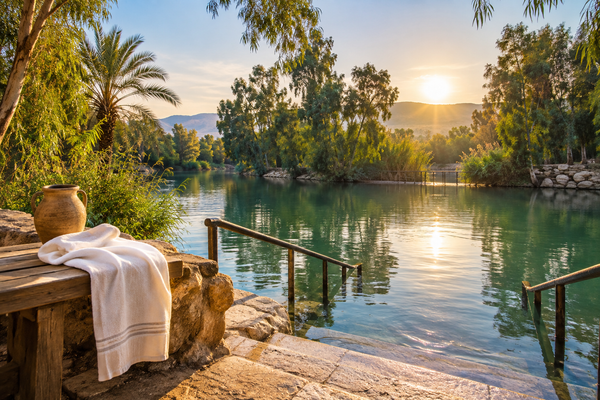
Mount of Olives Jerusalem Sunrise , Photo by David Holifield on Unsplash
This is the question I get in the parking lot nearly every time. If the scrolls are not at Qumran, where are they?
Most of the Dead Sea Scrolls are housed at the Israel Museum in Jerusalem, in a dedicated wing called the Shrine of the Book. The building is unmistakable: a low white dome shaped to echo the lids of the ancient clay storage jars. Inside, the Great Isaiah Scroll is displayed on a continuous circular case under controlled conditions. Walking around it and reading the Hebrew columns, knowing this was written more than two thousand years ago, is a different kind of experience than standing in a ruin. Both matter.
If you are spending time in Jerusalem, the Shrine of the Book is worth adding to your Jerusalem day. Our Jerusalem Old City Guide covers how to organize a full Jerusalem visit.
Some fragments also sit in the Jordanian Archaeological Museum in Amman, held from the years when that side of the Dead Sea region was under Jordanian administration. Publishing and reassembling the complete collection has occupied scholars for decades.
My father used to say that people don't come here to see stones -- they come to feel something they can't name. I think about that every time I start a new tour.
The point for pilgrims is this: Qumran is where the scrolls were hidden. The Shrine of the Book is where you read them. Visiting both gives you the complete story.
Why This Matters to Christian Pilgrims

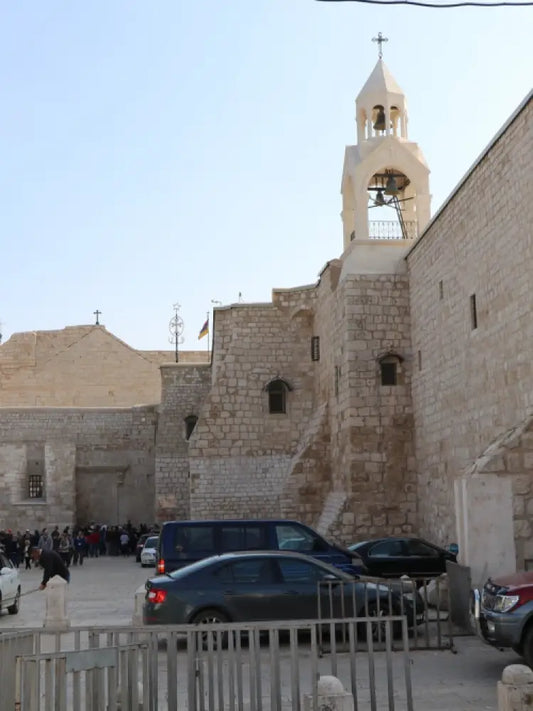
What to See in Bethlehem Church of the Nativity
I am a guide, not a theologian. But from what I have seen standing next to hundreds of pilgrims at this site, I want to explain why I think Qumran earns more attention on a christian pilgrimage than it usually gets.
Before the Dead Sea Scrolls were found, the oldest complete manuscript of the Hebrew Old Testament dated to around the 10th century CE. That is the Masoretic Text, the version Jewish scribes maintained across generations of careful copying. It was the foundational text for both Jewish and Christian translations of the Old Testament. It was old, but it was not ancient. There had always been a theoretical question about what might have changed across a thousand years of copying -- this actually reminds me of a conversation I had with a first-time pilgrim named Susan who came back a second time just because of this, but I'll save that for another post.
I tell every group the same thing before we go in -- put your phone down for five minutes. Just five minutes. Most of them thank me for it afterward.
The Dead Sea Scrolls answered that question.
The Great Isaiah Scroll predates the Masoretic Text by roughly a thousand years. And when scholars compared the two texts, they found them remarkably consistent. The words Christians read in Isaiah 53, the suffering servant passage ("he was wounded for our transgressions, he was bruised for our iniquities"), appear in the Qumran scroll with virtually no significant difference from what you read in your Bible today.
For pilgrims who care about the reliability of scripture, that is meaningful. It was not transmitted by accident. It was transmitted by communities, across centuries, who treated the work as sacred.
And here is the detail that stays with people:
The Essenes were contemporaries of Jesus. They were alive and writing here while Jesus was growing up in Nazareth.
The scroll containing Isaiah 40:3, "a voice crying in the wilderness, prepare the way of the Lord," the text Christians read as prophecy about John the Baptist, was sitting sealed in a clay jar in that cliff while John was preaching at the Jordan River, roughly ten kilometers from where we are standing.
That is not a spiritual metaphor. That is geography.
A pastor from North Carolina once asked me in the parking lot after the site visit: "Do you think they knew what they were hiding?" I told him the honest answer: we do not know. But they sealed those jars carefully. They carried them into the cliff. They must have believed someone would need them someday.
He was quiet for a long moment. Then he said: "Well. Someone did."

Practical Guide: Visiting Qumran

What to See in Bethlehem Church of the Nativity
Getting there. Qumran sits on Route 90, the main road running south from Jericho along the Dead Sea coast. There is no convenient public bus stop at the site. The practical options are a private car, a rental car, or coming as part of a guided tour. From Jerusalem or Bethlehem, the drive takes 45-50 minutes.
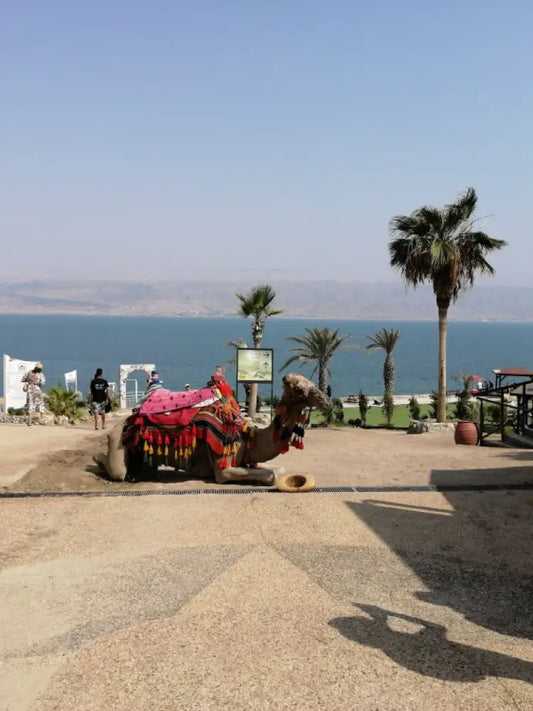
Combining with the Dead Sea. This is the most natural pairing. Qumran is at the northern end of the Dead Sea, and most groups do Qumran first (early, before the heat peaks), then continue south along Route 90 to a beach for the float. Our full Dead Sea guide explains which beaches work best for different itineraries. If you are planning a longer trip and want to fit both into a broader journey, the 10-day Holy Land itinerary guide shows where Qumran and the Dead Sea sit in a full trip.
What to bring:
- Water, more than you think you need. The Judean Desert is dry year-round and the ruins have very little shade.
- A hat and sunscreen, especially from April through October.
- Comfortable walking shoes. The paths are gravel and uneven stone. (which, honestly, should be higher on the list)
- A Bible or a Bible app on your phone. Reading Isaiah -- you get the idea
Timing. The site is best visited in the morning, particularly from May through September. Arrive early and you will have the ruins largely to yourself before tour buses arrive.
Photography. Permitted throughout the site.
If you want to build a full Qumran and Dead Sea day from Bethlehem or Jerusalem with a local guide from Bethlehem, our private tours can be tailored to fit. We also run guided day tours that combine both sites in one well-paced day. Questions about planning? Reach out through our contact page and we will help you build the right day.
Key Takeaways
Interested in seeing our collection? → Browse Tours to Bethlehem
- The Dead Sea Scrolls were found between 1947 and 1956 in eleven caves near the Qumran settlement, on the northwestern shore of the Dead Sea. -- trust me on this one
- The Great Isaiah Scroll, dated to roughly 125 BCE, is the oldest complete book of the Hebrew Bible. It is on permanent display at the Shrine of the Book, Israel Museum, Jerusalem.
- The Qumran community is widely identified as the Essenes, a Jewish sect active from the 2nd century BCE until approximately 68 CE.
- Comparing the Dead Sea Scrolls with later biblical manuscripts revealed remarkable consistency in the transmitted text, including key passages that Christians read as messianic prophecy.
- Qumran is approximately 9-10 km south of Jericho and about 45-50 minutes from Jerusalem by car. Most visitors combine it with a Dead Sea float on the same day.
Related Reading

What to See in Bethlehem Church of the Nativity
- Visiting the Dead Sea in 2026: A Complete Guide - the natural same-day pairing with Qumran
- How to Plan a 10-Day Holy Land Itinerary in 2026 - where the Dead Sea day fits in a full trip
- Jerusalem Old City Guide 2026 - for seeing the scrolls at the Shrine of the Book on your Jerusalem day
Frequently Asked Questions

What to See in Bethlehem Church of the Nativity
Can you visit the caves where the Dead Sea Scrolls were found?
Yes, partially. Cave 4, the most famous of the scroll caves and the source of roughly 80% of all fragments, is visible from a dedicated overlook at the Qumran site. You look across a chalk ravine and clearly see the cave opening in the cliff face. Some other cave areas are accessible via hiking trails outside the main site boundary. The caves are not set up for entering, but the view across the ravine to Cave 4 is one of the more affecting moments at the site.
Where are the Dead Sea Scrolls now?
Most of the Dead Sea Scrolls are housed at the Israel Museum in Jerusalem, in a wing called the Shrine of the Book. The Great Isaiah Scroll, the oldest complete book of the Hebrew Bible, is on permanent display there under climate-controlled conditions. Some scroll fragments are held at the Jordanian Archaeological Museum in Amman. Visiting both Qumran (where they were hidden) and the Shrine of the Book (where the main collection is displayed) gives you the complete experience. Call me biased, but nothing beats being here in person.
How long do you need at Qumran?
Plan 90 minutes to 2 hours. The orientation film at the visitors center runs about 15-20 minutes and is worth watching. Walking the ruins takes another 40-60 minutes. The Cave 4 overlook adds another 10-15 minutes. If you are combining the visit with a Dead Sea float, Qumran works well as the first morning stop: go early while it is cool, then continue south to the beach.
Who wrote the Dead Sea Scrolls?
The Dead Sea Scrolls were produced by the community that lived at Qumran, widely identified as the Essenes, a Jewish sect. They appear to have both written original texts (community rules, hymns, scriptural commentaries) and carefully copied existing manuscripts. Some scrolls may have been brought to Qumran from elsewhere for safekeeping as Roman pressure on the region increased in the 1st century CE.
Why do the Dead Sea Scrolls matter to Christian pilgrims?
The scrolls pushed back the known manuscript record of the Hebrew Bible by roughly a thousand years. The most significant finding for Christians is that the biblical text has been transmitted with remarkable consistency across more than two millennia. The Great Isaiah Scroll, written around 125 BCE, reads essentially the same as the Isaiah in your Bible today, including the passages Christians read as messianic prophecy.
For pilgrims who care about the reliability of scripture, that confirmation, found in a clay jar in a desert cliff, tends to settle something.
Is Qumran worth visiting if you only have limited time in the Holy Land?
If you are already visiting the Dead Sea, yes, add Qumran. They are on the same road and the sites complement each other naturally. If you are not visiting the Dead Sea, it depends on your priorities. The ruins themselves are modest; what was found there is not. For pilgrims with a serious interest in the biblical text and its history, Qumran earns its place. For groups on tight schedules focused mainly on Jerusalem and Bethlehem, it may be a better fit on a return visit.
Elias Boaz is a licensed tour guide from Bethlehem , birthplace of Jesus Christ , and the founder of Elijah Tours. He has guided thousands of pilgrims through Bethlehem, Jericho, and the Jordan River Valley , and coordinates Holy Land tours with trusted licensed guides across the region. He writes to help visitors truly understand what they're seeing.