A Jerusalem private tour can work very well for a family because one group shares the guide, vehicle, and daily plan. The real advantage is not simply seeing more places. It is being able to shape the day around your family's interests, walking ability, attention span, and need for breaks.
The current Elijah Tours Jerusalem Full Day Private Tour is listed at approximately seven to eight hours. It includes a licensed English-speaking guide, transportation, and hotel pickup and return for the selected departure option. The published route combines the Mount of Olives with guided walking through Jerusalem's Old City.
That is a full day. Families usually enjoy it most when they choose priorities before arrival instead of treating every listed stop as equally essential.
Use the plan below to turn a long list of Jerusalem sites into a day your family can actually enjoy.
Start With the Family, Not the Site List
Begin by describing the group honestly. A family with two teenagers can usually handle a different pace from a family with a six-year-old. Grandparents may enjoy the same holy places but need more seated breaks, easier vehicle access, or less time on steep lanes.
Send the ages of all children and explain any limits that affect walking or standing. Mention strollers, canes, wheelchairs, hearing needs, or anxiety about crowded spaces before you pay. Do not assume that the word private automatically makes every lane or doorway accessible.
Next, ask each traveler to name one priority. A parent may care most about the Church of the Holy Sepulchre, a teenager may want the Old City markets and views, and a younger child may need shorter explanations with more movement. The guide can work with that information much better than a request to see everything.
The article on what you can see on a private Jerusalem day tour gives a broader route overview. Use it as a menu, not as a promise that every stop will receive the same amount of time.
Choose Three Must-See Priorities
A good family plan has three levels:
- Must see: no more than three places that define the day.
- Important if time allows: places that fit naturally along the route.
- Optional: stops that can be shortened or removed when the group is tired.
This simple ranking prevents the afternoon from becoming a race. Jerusalem's Old City rewards attention. A family often remembers one meaningful explanation, one quiet moment, and one shared view more clearly than a dozen rushed photo stops.
The current private tour page lists the Mount of Olives, the Garden of Gethsemane, the Western Wall, the four quarters of the Old City, the Via Dolorosa, the Church of the Holy Sepulchre, the Byzantine Cardo, King David's Tomb, and the Room of the Last Supper. Ask which of those places are most important for your family's faith, history interests, or first visit.
Access, queues, religious services, and local conditions can change the order and time available. A priority list helps the guide make sensible choices without guessing what your family would regret missing.
Start With a Quiet Priority

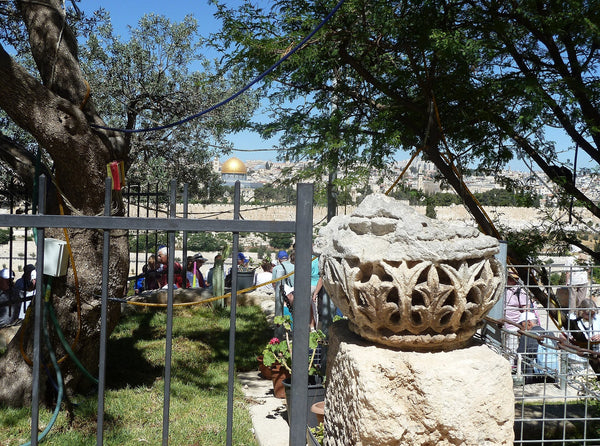
Garden of Gethsemane in Jerusalem. Photo: Chris Yunker via Wikimedia Commons (CC BY-SA 2.0).
The published route begins with the Mount of Olives area before continuing toward the Old City. For many families, an overlook is a useful starting point because the guide can show how the places relate to one another before the group enters the narrow streets.
The Garden of Gethsemane can also give the day a reflective beginning. Children and teenagers are more likely to understand why a place matters when they first see its location and hear one clear story. Long lectures at the start can drain attention before the main walking begins.
Tell the guide whether your family wants the morning to feel devotional, historical, or introductory. That small choice changes the kind of explanation that will be most useful.
Plan Old City Walking Realistically

Steps in Jerusalem's Old City. Photo: -jkb- via Wikimedia Commons (CC BY-SA 3.0).
The Old City is not a flat attraction with a single entrance and exit. The route can include stone lanes, steps, slopes, uneven surfaces, busy passages, and periods of standing. Even active children may tire when walking is combined with heat, crowds, waiting, and listening.
Read how much walking a Jerusalem Old City tour involves before deciding on the day's pace. Comfortable walking shoes are essential. New shoes, slippery soles, and heavy bags make a long route harder.
Use the private vehicle for the parts where it adds real value, but understand that many Old City sites are reached on foot. Ask where the vehicle can meet the group and what happens if one traveler needs to stop early. If a family member cannot manage repeated steps, the route may need a different entrance, fewer stops, or a shorter walking section.
Plan one intentional pause before anyone becomes exhausted. A ten-minute reset at the right time can save the rest of the day.
Match Explanations to the Children's Ages
Planning your visit? → Explore Tours to Jerusalem
Young children usually need short stories, visible details, and a clear next step. Teenagers can handle more history but may engage better when the guide connects each place to a question, decision, or contrast rather than delivering a continuous lecture.
Before the tour, tell the guide what the children already know. A family on a Christian pilgrimage may want biblical context. Another family may be more interested in architecture, daily life, or the different communities of Jerusalem. There is no benefit in pretending everyone has the same background.
Give children a small role. They can look for a symbol, follow the route on a simple map, choose the next photo, or remember one question for the guide. The goal is participation, not a school assignment.
For teenagers, include one part of the day that they helped choose. This creates ownership and makes it easier to ask for patience during the places chosen by other family members.
Protect Time for Food, Water, and Rest
Food and drinks are not included in the current private tour offer. Decide whether the family wants a seated meal, a quick lunch, or snacks carried through the day. A long restaurant stop reduces sightseeing time, but skipping food can make the afternoon difficult, especially for children.
Tell the tour team about dietary needs before the date. Carry water, simple snacks, personal medication, tissues, and sun protection when conditions require them. Keep the day bag small enough that an adult can manage it while helping a child on steps.
Do not schedule the meal only by the clock. Place it near the point where the family will genuinely need a break. If the group starts early, a midmorning snack may be as important as lunch.
Build in restroom questions as well. Ask the guide at the beginning when the next practical stop is likely to be. Families should not wait until the need becomes urgent.
Prepare Children for Active Holy Sites
Jerusalem's churches and prayer areas are living religious spaces. Explain before the tour that voices may need to be lower, photography may be restricted in some places, and religious services can affect access. Children do better when the rules are explained as respect for other people rather than as a surprise punishment.
The current tour page asks visitors to wear modest clothing at holy sites, with shoulders and knees covered. Choose clothing that meets that standard without making children uncomfortable during a full walking day. A light layer can help when the same outfit must work outdoors and inside religious buildings.
Families should also be ready to change the plan. A queue may become too long, a service may be underway, or one child may simply reach a limit. A private tour is still a real day in a living city, not a closed attraction controlled by the guide.
Discuss Mobility and Strollers Before Paying
A stroller can help on smooth sections but become a burden on steps and crowded lanes. Wheelchairs and other mobility aids require route-specific planning. Send the exact dimensions of any equipment and describe what the traveler can manage independently.
The current product page specifically asks guests to contact the company before booking if anyone has mobility requirements. Take that instruction seriously. Ask which parts can be approached by vehicle, which sections require walking, and whether the family should shorten or replace a stop.
Avoid vague descriptions such as "walks slowly." Explain how long the traveler can stand, whether steps are possible, whether a handrail is needed, and how often seated breaks are required. Clear information gives the tour team a better chance to propose a realistic day.
If mobility is the family's main concern, compare the route with the practical advice in planning a Bethlehem day tour with older parents. The destination is different, but the questions about pace, standing, vehicle transfers, and honest limits are useful for any family tour.
Use the Private Format Well
Planning your visit? → Explore Private Tours
Private does not mean unlimited. The current tour is approximately seven to eight hours, and traffic, pickup arrangements, queues, and site access all affect the day. It does mean that the guide is working with your group rather than balancing the needs of unrelated travelers.
Use that advantage to request the right emphasis. Ask for shorter explanations for younger children, more time at one holy place, a planned rest, or a simpler afternoon. Send those requests before booking so the tour team can say what is practical.
Do not wait until the guide arrives to reveal a major change. A different pickup city, a wheelchair, an infant seat, a strict return time, or a religious appointment can affect transport and routing. Early information protects the family and the guide from an impossible plan.
The current booking options cover private groups of different sizes, including options for up to three, six, or eighteen people. Check the live page for the current option that matches your group and departure point.
Send a Clear Family Brief
One short message can prevent many problems. Include:
- Travel date and preferred start time.
- Pickup city and exact hotel or agreed address.
- Number of adults and children, with children's ages.
- Three must-see priorities.
- Faith or history interests that should shape the explanations.
- Walking, standing, hearing, sensory, or mobility needs.
- Stroller, wheelchair, child seat, or other equipment.
- Dietary needs and preferred meal style.
- Any fixed return time or later reservation.
- The best contact method for the day.
Use the detailed checklist in what to send when requesting a private Jerusalem tour if you want a ready-to-copy inquiry format.
Family Booking Checklist
Before paying, confirm the live details for your date:
- The selected departure option, pickup point, and expected return area.
- Guide availability and the language required by the family.
- Group-size option and the number of children included.
- The family's three priorities and which requests are realistic.
- The expected walking, steps, and vehicle meeting points.
- Mobility equipment and child-seat arrangements, if needed.
- Meal plan, dietary needs, and what is not included.
- Clothing expectations at religious sites.
- Any fixed return deadline.
- The cancellation terms shown for the booking.
Save the confirmation offline. On the day, bring only what the family can carry comfortably and arrive ready to adjust the order if site conditions require it.
Frequently Asked Questions
How long is a private Jerusalem family tour?
The current Elijah Tours Jerusalem private tour is listed at approximately seven to eight hours. Actual timing depends on the confirmed pickup arrangement, traffic, walking pace, queues, religious services, and site access.
Can the route be adjusted for children?
You can ask the tour team to discuss changes before booking. Share the children's ages, interests, and limits, then choose three priorities. Any adjustment still depends on transport, guide availability, site access, and the time available.
Is a stroller practical in Jerusalem's Old City?
A stroller may help on smoother sections but can be difficult on steps, uneven lanes, and crowded passages. Send the stroller dimensions and ask how the proposed route would handle it before paying.
What should children wear at Jerusalem holy sites?
The current tour page asks visitors to cover shoulders and knees at holy sites. Choose comfortable walking clothes and shoes that meet those expectations, and bring a light layer if it helps the family move between outdoor and indoor spaces.
Is food included on the private tour?
No. Food and drinks are not included in the current offer. Decide before the day whether your family prefers a seated meal, a quick lunch, or carried snacks, and tell the tour team about dietary needs.
A Good Family Day Leaves Room to Notice Jerusalem
The best family plan is not the one with the most stops. It is the one that protects the places your family truly cares about while leaving enough energy to listen, ask questions, and be present together.
Choose three priorities, describe the group honestly, plan the walking and breaks, and send the practical details before booking. A private guide can then build the day around real people instead of an imaginary family that never gets tired.
Elias Boaz is a licensed tour guide from Bethlehem, birthplace of Jesus Christ, and the founder of Elijah Tours. He has guided thousands of pilgrims through Bethlehem, Jericho, and the Jordan River Valley, and coordinates Holy Land tours with trusted licensed guides across the region. He writes to help visitors truly understand what they're seeing.