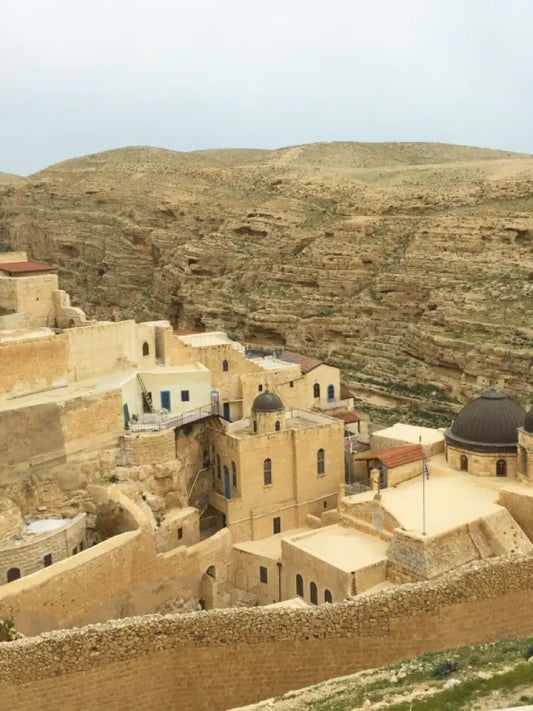
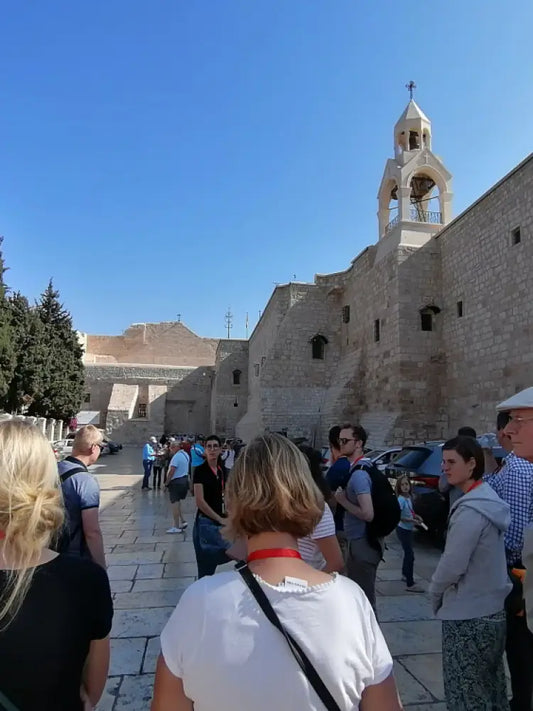
"The Old City of Jerusalem is one square kilometer. Four religions. Three thousand years of history. You can walk across it in twenty minutes, or spend a lifetime inside it. The people who rush through get a checklist. The people who slow down get something else entirely."
As a Bethlehem-based tour guide, jerusalem's Old City contains the Church of the Holy Sepulchre, the Western Wall, the Via Dolorosa, and the Dome of the Rock, all within one square kilometer divided into four quarters: Christian, Jewish, Muslim, and Armenian. Most visitors need two to three full days to cover it properly without feeling like they rushed past everything that matters.
| Fact | Detail |
|---|---|
| Size | Approx. 1 km², enclosed by 16th-century Ottoman walls |
| Four Quarters | Christian, Jewish, Muslim, Armenian |
| Main Gates | Jaffa Gate, Damascus Gate, Dung Gate, Zion Gate, Lions Gate |
| Key Christian Sites | Church of the Holy Sepulchre, Via Dolorosa (14 Stations) |
| Key Jewish Sites | Western Wall, Jewish Quarter, Cardo Maximus ruins |
| Temple Mount | Open to non-Muslims via Mughrabi Gate (limited hours) |
| Armenian Quarter | Cathedral of St. James (vespers only), Armenia in Jerusalem Museum |
| Best Time to Visit | Early morning weekdays; avoid Friday midday and Saturday |
| Recommended Days | 2-3 days minimum for a meaningful visit |
I have walked through these gates more times than I can count. I was born in Beit Sahour, a few kilometers from here. My father took me to the Western Wall as a child. Later, as a guide, I started walking the Via Dolorosa professionally, sometimes twice a day during Holy Week. I still notice things I didn't notice the time before.
In my experience leading tours, what follows is honestly not a tourist pamphlet. It is what I tell people before they arrive.
The Four Quarters: What They Are and What You'll Find There
Having walked these routes with travelers, most visitors arrive at Jaffa Gate and walk directly toward whichever site is on their itinerary. That is fine, but it misses something. The Old City is not just a collection of religious sites. It is a living city organized into four distinct neighborhoods, and understanding the logic of each one changes how you experience all of them.
The Christian Quarter
The Christian Quarter occupies the northwest corner of the Old City, centered on the Church of the Holy Sepulchre. The Via Dolorosa ends here, after passing through the Muslim Quarter. You will find Franciscan monasteries (if you can believe it), Eastern Orthodox churches, pilgrimage hostels, and shops selling olive wood crosses and ceramic tiles.
I have guided hundreds of groups through this quarter. What still surprises me is how many people arrive expecting silence and find instead a living neighborhood: children on their way to school, delivery trucks squeezing down alleyways, the smell of freshly baked bread. People sometimes look confused by that. As if the quarter is supposed to stop for them.
It doesn't. That's part of what makes it real.
The Jewish Quarter
Now here's what I find interesting: The Jewish Quarter sits in the southeast corner of the Old City and feels noticeably different from the other three.
It was rebuilt almost entirely after 1967, so the streets are wider, cleaner, and more orderly than anywhere else inside the walls. That contrast is its own kind of historical fact.
Here's something worth knowing: The Western Wall is the most visited site in this quarter, but there is more here than the Wall. The Cardo Maximus, a colonnaded Roman street from the Byzantine -- well, actually, era, is partially excavated and visible beneath a modern shopping arcade. The Burnt House is a small museum preserving a 2,000-year-old home destroyed in 70 CE during the Roman siege. I'm not a theologian, but from what I understand, it is one of the most honest places in the city: you are looking at an actual room from the Second Temple period, preserved under the street. This is the kind of thing that drives me crazy about generic tour packages.
The Broad Wall, a section of the First Temple period fortification from the 8th century BCE, is visible at street level in the open air. No ticket, no line. People walk past it constantly.
The Muslim Quarter
The Muslim Quarter is the largest and most densely populated. It runs from Damascus Gate in the north down through the market streets to the Dome of the Rock plaza. This is where the city feels most alive and most commercial at the same time.
Damascus Gate (called Bab al-Amud in Arabic, the Gate of the Column) is worth pausing at just to look. The steps below it lead into a souq that has been operating continuously for centuries. Khan al-Zeit is the main market street: dried fruits, spices, fresh bread, plastic goods, religious items, and the knafeh shop I have been going to for twenty years.
Real talk: The Ecce Homo Arch, built by the Romans in the 2nd century CE, crosses the Via Dolorosa near the Convent of the Sisters of Zion. Tradition holds this as the place where Pilate presented Jesus to the crowd, though the archaeology suggests the arch was built later. Both things can be true: the tradition is old and the site is real, even if the exact identification is disputed. You know what I mean?
The Armenian Quarter
The Armenian Quarter is the smallest of the four, occupying the southwest corner of the Old City. It is also the least visited, and that is a consistent loss for everyone who skips it.
Here's the thing: The Armenian Christian community here is one of the oldest Christian communities in the world. The Cathedral of St. James (Surp Hagop) was built in the 12th century over a site traditionally identified as the house of James, the brother of Jesus, and the tomb of James, son of Zebedee. The cathedral is closed to general visitors except during daily vespers at 3pm.
That thirty-minute service, with Armenian liturgical chant echoing in a candlelit medieval church, is one of the best things you can experience in the Old City.
The Armenia in Jerusalem Museum is small and undervisited. It tells the story of the Armenian community's centuries of presence here and their survival after 1915. Almost no one knows it exists. That's the difference.
I always take groups to the Armenian Quarter last, after the Holy Sepulchre and the Western Wall, when they think they've seen the Old City. The look on their faces when we walk into the cathedral courtyard is one of my favorite things about this job.
The Church of the Holy Sepulchre: What Every Pilgrim Should Know Before They Enter
Not gonna lie, the Church of the Holy Sepulchre stands on the site identified since at least the 4th century CE as the location of Golgotha, the crucifixion, and the tomb of Jesus. For most Christian pilgrims, this is the single most big destination in the world. See what I'm getting at?
It is also more complicated, more crowded, and more emotionally overwhelming than people expect. So let me tell you what to know before you walk in. Big difference.
For the full site guide with visiting logistics, see our Church of the Holy Sepulchre in Jerusalem 2026: A Complete Visitor Guide.
Six Denominations, One Building
The Church is shared by six Christian communities: Greek Orthodox, Roman Catholic (Franciscan), Armenian Apostolic, Coptic, Ethiopian, and Syriac Orthodox. Each denomination controls specific areas, specific altars, and specific times for liturgies. That matters.
This arrangement is governed by the Status Quo, a set of rules established in the 19th century, formally recognized in the 1852 Ottoman firman, and still in effect today. It specifies which denomination can clean which window, who holds the key to the main door (a Muslim family, the Joudeh family, has held it since the Crusades), and who is allowed to add or change what. The key is physically delivered to the Nuseibeh family, another Muslim family, who use it to unlock the door.
No question.
This is not a curiosity.
It is a window into the living complexity of the Holy Land. That matters.
Here's something worth knowing: The main spaces inside: the Stone of Anointing is on the ground floor immediately inside the entrance, a flat marble slab where pilgrims kneel and press rosaries, photographs, and prayer intentions. Above it hangs a mosaic depicting the preparation of Jesus's body for burial. The Rotunda holds the Edicule, the small chapel built over the tomb itself. The queue for the Edicule can run 45 to 90 minutes on busy days. Golgotha (Calvary) is up a steep staircase from the main door, now housing two chapels: the Latin Chapel and the Greek Orthodox Altar of the Crucifixion. No question.
How to Visit Without Getting Overwhelmed
Come before 8am. In summer, the church opens for Orthodox liturgy before dawn, and arriving then gives you the building in near-silence. By 9:30am, the organized tours have started arriving. And it works.
Weekday mornings are significantly quieter than weekends. Sunday mornings are the hardest: multiple liturgies running simultaneously, large tour groups arriving, and the emotional weight of what the day means for Christian visitors. Every single one.
Don't try to rush through everything. I have a pastor I guide every few years, the same man, coming back for his twelfth or thirteenth visit. He still cries at the Edicule. He told me once that it takes him longer to feel it now, not shorter. I think he means the weight of it builds up. I believe him. And it shows.
The Via Dolorosa: Walking the Way of the Cross
To be honest, the Via Dolorosa, the Way of Sorrows, is the route authentic jesus walked from his judgment by Pontius Pilate to the crucifixion at Golgotha. Christians have walked it in prayer since at least the early centuries of the Church, and the current 14-station format became standard in the late medieval period.
No question.
For the complete station-by-station walking guide, see our post on how to walk the Via Dolorosa in Jerusalem in 2026. And it works. Right?
The route is about 600 meters long. Stations I through IX are seriously in the streets of the Old City, beginning near the Lions Gate in the Muslim Quarter. Stations X through XIV are inside the Church of the Holy Sepulchre (this reminds me of something my grandfather always said about this land -- 'it doesn't need introduction, it just needs showing' -- but that's a story for another day). Walking it takes between one and two hours depending on how long you pause at each station. And it shows.
(Full disclosure: I'm biased. I've been walking these streets my whole life. But I think that makes me more qualified to write about them, not less.)
Here is what surprises first-time walkers: the route passes through a busy market the entire way. And it shows.
Pilgrims who arrive expecting a quiet processional path find instead a souq at full operation. Street vendors, grocery carts, schoolchildren. I have seen pilgrims get genuinely distressed by this. They feel it interrupts the experience. And I understand that reaction. But here is the thing: the streets of Jerusalem in the first century CE were not quiet either. Jesus walked to his death through a city going about its business. The market is not an interruption of the sacred experience. In a strange way, it is the condition of it. Every single one.
Honestly, The Franciscan procession walks the Via Dolorosa every Friday afternoon at 3pm. It is not a tourist performance. It is a real liturgical observance that has been happening continuously for centuries. Joining it is possible and, for many pilgrims, among the most affecting experiences of their trip. And it works.
The Western Wall and the Jewish Quarter
The Western Wall (HaKotel HaMa'aravi in Hebrew, the Kotel for short) is the largest surviving structure from the Second Temple compound, destroyed by the Romans in 70 CE. It is the most visited Jewish holy site in the world and is open to visitors of all faiths.
The plaza in front of the Wall is open 24 hours a day, 7 days a week. There is no entrance fee. The Wall is divided into separate sections for men and women. Men are expected to cover their heads; kippot are available at no charge at the entrance. And it shows.
Non-Jewish visitors are welcome. The practice of writing prayers on small pieces of paper and placing them in the cracks of the Wall is open to everyone. The Wall is full of paper prayers; they are collected twice a year and buried on the mount of olives from Bethlehem. Think about that. See what I'm getting at?
Tuesday and Thursday mornings often have Bar Mitzvah celebrations happening in the men's section: families gathered, music playing, Torah scrolls carried through the crowd. If you happen to arrive on one of these mornings, it is a specific kind of life in this place that you won't find on any other morning.
What most visitors miss in the Jewish Quarter:
- The Cardo Maximus excavation beneath the modern arcade on Cardo Street -- trust me on this one
- The Burnt House Museum (small admission fee, genuinely affecting)
- The Broad Wall section visible outdoors near Plugat HaKotel Street
- The Ramban Synagogue, one of the oldest active synagogues in the Old City
The Western Wall Tunnel Tour
Running beneath the Old City along the buried length of the Western Wall is a tunnel that reveals what lies underground.
The surface plaza shows only a portion of the Wall; below street level, the structure continues for several hundred meters, including massive Herodian stones of extraordinary size. And it works.
Real talk: The tunnel tour is guided, requires advance booking (limited capacity), and runs approximately 75 to 90 minutes. It is among the most fascinating archaeological experiences in the Old City. Not recommended for children under 9 or for those who have difficulty with narrow, enclosed spaces.
Big difference.
The Garden of Gethsemane and the Mount of Olives

a narrow tunnel with steps leading up to it , Photo by Viktor SOLOMONIK on Unsplash
The Mount of Olives is a ridge directly east of the Old City, visible across the Kidron Valley from the Eastern Wall. It is not inside the Old City walls, but it is inseparable from any serious visit to Jerusalem. No question.
For a full guide to what to see, how to get there, and what each site means, see our post on the Garden of Gethsemane in Jerusalem 2026.
The Garden of Gethsemane
The Garden of Gethsemane sits at the base of the Mount of Olives, just across the Kidron Valley from Lions Gate.
It is where Jesus prayed the night before his arrest and crucifixion, according to all four Gospels. No question.
Eight ancient olive trees stand in the garden today. Their exact age is subject to ongoing research; their roots are clearly very old. The Basilica of the Agony (Church of All Nations) adjoins the garden, a striking Byzantine-revival building with a gold mosaic facade and a deliberately dim interior designed to evoke the darkness of the Garden on that night. Inside, the rock where Jesus is believed to have prayed is preserved behind an iron fence. Big difference.
Come before 9am if you can. Groups begin arriving on organized tours by mid-morning, and the garden fills quickly. In the early morning, when it is quiet, the eight olive trees and the low light make the garden feel unlike anywhere else in the city.
The Mount of Olives Panoramic View
At the top of the Mount, the panoramic view of the Old City is the best available from any ground-level vantage point. The Dome of the Rock, the Church of the Holy Sepulchre, the minarets, and the ancient walls all visible at once.
Early morning, with the sun behind you and low on the horizon, is when the light is best for both seeing and photographing. That matters.
The path down from the summit to Lions Gate takes 10 to 15 minutes on foot. It is steep and cobblestoned.
Wear shoes you trust. And it works.
Along the way: the Dominus Flevit chapel ("the Lord wept"), a small teardrop-shaped Franciscan church built in 1955 on the site where Jesus is believed to have wept over Jerusalem (Luke 19:41). Its window behind the altar frames the Old City in a way that stops most people cold. And the Jewish Cemetery, one of the largest and oldest in the world, stretches across the hillside: 150,000 graves, with some sections dating back 3,000 years. That matters.
Can Non-Muslims Visit the Temple Mount?
The Temple Mount (known to Muslims as Haram al-Sharif, the Noble Sanctuary) is accessible to non-Muslims, but with restrictions and a schedule that changes seasonally.
One of the things I always say -- this place doesn't need explaining. It just needs showing. Every group figures that out within the first hour.
Non-Muslim visitors enter through the Mughrabi Gate, which is located along the Western Wall plaza ramp to the right of the main Wall area. Entry is generally available from approximately 7:30 to 11am and 1:30 to 2:30pm on Sunday through Thursday. The Temple Mount is closed to non-Muslim visitors on Fridays and on Muslim public holidays. Think about that.
Once on the platform, you can walk freely and photograph the Dome of the Rock from the exterior. The Dome of the Rock is not a mosque. It is a shrine, built in 691 CE by the Umayyad Caliph Abd al-Malik, over the Foundation Stone, which Jewish tradition identifies as the site where Abraham prepared to sacrifice Isaac and where the Holy of Holies of the Temple stood. The interior of the Dome and the interior of Al-Aqsa Mosque are not open to non-Muslim visitors. That matters.
What surprises most people about the Temple Mount is its scale. The platform is large, much larger than expected when you arrive from the narrow streets below. And the view from it, looking back toward the Mount of Olives and across the rooftops of the Old City, is one of the best in Jerusalem. No question.
Dress code applies: shoulders and legs covered. Modest dress is required for entry.
How to Plan Your Visit: Day by Day

people gathered near pole , Photo by Sander Crombach on Unsplash

a view of the old city of jerusalem , Photo by David Holifield on Unsplash
| Day | Focus | Key Sites | Best Entry Gate | Start Time |
|---|---|---|---|---|
| Day 1 | Christian Quarter | Via Dolorosa (I know, I know), Church of the Holy Sepulchre | Jaffa Gate | 7:30am |
| Day 2 | Jewish Quarter + Gethsemane | Western Wall, Wall Tunnels, Mount of Olives, Garden of Gethsemane | Dung Gate (morning), Lions Gate (return) | 8am |
| Day 3 | Muslim Quarter + Armenian Quarter | Damascus Gate market, Temple Mount, Cathedral of St. James, Garden Tomb | Damascus Gate | 9am |
How to Enter the Old City
The Old City has eight gates, but visitors typically use four. Jaffa Gate is the main western entrance, closest to the Christian and Armenian Quarters and to most hotels in the New City. Damascus Gate is the main northern entrance, leading directly into the Muslim Quarter market. Dung Gate is on the southern wall, the closest gate to the Western Wall plaza. Lions Gate (St. Stephen's Gate) is on the eastern wall, the starting point for the Via Dolorosa and the closest gate to the Garden of Gethsemane. No question.
Taxis can drop you outside any of the main gates. Municipal buses serve multiple stops around the Old City perimeter. Walking from many New City hotels to Jaffa Gate takes 15 to 25 minutes on flat ground.
What to Wear
Modest dress is required at all religious sites inside the Old City.
No shorts, no sleeveless shirts. Women need head coverings at the Western Wall and at most churches; a lightweight scarf or shawl that you can keep in your bag covers almost every requirement (side thought: most people who book a tour have no idea how much of the experience is about the in-between moments -- the walks, the conversations, the unexpected stops). Kippot for men are available free at the Western Wall entrance.
Wear flat, comfortable shoes with good grip. The Old City streets are entirely cobblestone. They are uneven, sloped, and wet after rain. In a full day's visit, you will walk 8 to 12 kilometers, with elevation changes. I have seen people in sandals and dress shoes try it and regret it. Wear the right shoes. And it works.
What Not to Do
Don't try to cover all four quarters in a single day. People do this, and what they get is a vague impression of having been somewhere important while understanding almost nothing. The sites require time to absorb. Two hours inside the Holy Sepulchre and one hour at the Western Wall is not excessive. That is what the sites ask of you. That matters.
Don't skip the Armenian Quarter. I include it here as a direct instruction because most visitors, and most tour operators, leave it out. It is the smallest quarter, yes. It is also the most historically intact, and the Cathedral of St. James vespers at 3pm is the most atmospheric single experience the Old City has to offer that almost no one has told you about. Worth it.
Worth saying: If you are planning to see Jerusalem and Bethlehem together on a private tour, look at our Jerusalem [day tour](/collections/day-tours-israel)s or our private Jerusalem tours for options that give you time to actually see rather than just move. That's the difference.
The Garden Tomb: The Other Resurrection Site
Just outside the Old City, a 10-minute walk from Damascus Gate, is the Garden Tomb: a Protestant alternative identification for the site of the crucifixion and resurrection. It is a garden enclosure surrounding a First Temple-period rock-cut tomb and a hill that, from certain angles, resembles a skull (Golgotha literally means "place of the skull"). And it works.
The Garden Tomb was first proposed as the authentic site in the 19th century by General Charles Gordon. Most archaeologists consider it inconsistent with the site's period, but the Protestant tradition that identifies it has maintained a beautiful garden here for more than a century, and the site draws hundreds of thousands of visitors each year. And it shows.
Whether or not it is the historically correct site, I can tell you what I have seen happen to people inside it. The quiet, the garden, the open tomb with its stone rolling channel visible outside the entrance: it affects people. I have seen this as a guide for a long time. The setting does something that archaeological debate doesn't entirely address. Big difference.
Entry is free. Donations are welcomed. The Garden Tomb is run by a British charitable trust.
For a full account of what to see and what to expect there, see our guide: The Garden Tomb in Jerusalem 2026: What It Is, What You'll See, and Why It Moves People.
What You Should Know
- Jerusalem's Old City is divided into four quarters (Christian, Jewish, Muslim, Armenian), all contained within approximately one square kilometer of 16th-century Ottoman walls.
- The Church of the Holy Sepulchre is jointly controlled by six Christian denominations under the 1852 Status Quo agreement; the key to the church's main door is held by a Muslim family. -- trust me on this one
- Non-Muslims can visit the Temple Mount platform and photograph the Dome of the Rock exterior through the Mughrabi Gate during limited morning hours; the interiors of the Dome and Al-Aqsa Mosque are not accessible to non-Muslims.
- The Via Dolorosa is approximately 600 meters long, runs through the Muslim Quarter -- you get the idea
- A meaningful visit to all four quarters requires at least two full days; three days allows you to slow down, revisit what moved you, and include the Armenian Quarter and Garden Tomb.
If you are planning your visit and want help thinking through an itinerary, contact us here. I am happy to answer questions directly.
Frequently Asked Questions
What are the four quarters of Jerusalem's Old City?
Jerusalem's Old City is divided into four quarters: the Christian Quarter (home to the Church of the Holy Sepulchre and the Via Dolorosa), the Jewish Quarter (Western Wall, Cardo ruins, Burnt House), the Muslim Quarter (largest quarter, Damascus Gate market, Ecce Homo Arch, route of the Via Dolorosa through its streets), and the Armenian Quarter (Cathedral of St. James, Armenia in Jerusalem Museum). All four are accessible on foot within the same square kilometer, separated by history and culture but not by walls or barriers.
How many days do you need to visit Jerusalem Old City?
Two full days is the minimum for a meaningful visit to the Old City: one day for the Christian and Jewish Quarters (Via Dolorosa, Holy Sepulchre, Western Wall), and one day for the Muslim and Armenian Quarters, the Temple Mount, and the Mount of Olives and Garden of Gethsemane just outside the walls. Three days is more comfortable and allows time to revisit, to sit, and to include the Garden Tomb and the Western Wall Tunnels without rushing.
Can Christians visit the Dome of the Rock?
Non-Muslims can visit the Temple Mount platform and view the Dome of the Rock from the exterior. Entry is through the Mughrabi Gate near the Western Wall, generally available Sunday through Thursday from approximately 7:30 to 11am and 1:30 to 2:30pm. The site is closed to non-Muslims on Fridays and on Muslim holidays. The interior of the Dome of the Rock and Al-Aqsa Mosque are not open to non-Muslim visitors. The platform visit is free, takes 30 to 45 minutes, and provides one of the best views of the Old City rooftops available at ground level.
What is the best time to visit the Church of the Holy Sepulchre?
Before 8am on a weekday is consistently the best time. The church opens early for Orthodox liturgies, and arriving before the organized tours gives you the building in near-silence, which is a fundamentally different experience from visiting at midday. The queue for the Edicule (the tomb chapel) can reach 45 to 90 minutes by late morning. Friday and Sunday mornings are the busiest; Thursday mornings are typically quieter. In summer 2026, the church has been fully accessible and open to visitors. I've seen people tear up just standing in the doorway. No joke.
Is the Via Dolorosa hard to walk?
The Via Dolorosa is approximately 600 meters on a gradual incline through narrow cobblestone streets. It is not physically demanding for most visitors, though uneven surfaces can be challenging for those with mobility limitations. The route passes through an active market (the Muslim Quarter souq), which surprises many pilgrims who expect quiet streets. The Friday afternoon Franciscan procession at 3pm is the most atmospheric time to walk the route, but also the most crowded. Budget one to two hours depending on how long you stop at each of the nine outdoor stations.
What should I wear in Jerusalem Old City?
Modest dress is required at all religious sites: no shorts, no sleeveless tops. Women need a head covering at the Western Wall and most churches; a lightweight scarf kept in your bag handles almost every situation. Men can get a free kippah at the Western Wall entrance. More importantly: wear good walking shoes. The streets are entirely cobblestone, often sloped and uneven, and a full Old City day involves 8 to 12 kilometers of walking. Sandals and dress shoes are common mistakes.
What is the Western Wall Tunnel Tour?
And this part matters: The Western Wall Tunnels is a guided archaeological tour that runs beneath the Old City along the buried length of the Western Wall, which extends far beyond the open plaza. The tunnel reveals the full scale of the Herodian structure, including the largest stone in the entire wall (estimated at over 500 tons) and a section of the wall running directly alongside an ancient aqueduct. The tour runs approximately 75 to 90 minutes, is guided only (no self-guided option), and requires advance booking as capacity is very limited. Not suitable for children under 9 or visitors with claustrophobia.
Is it safe to visit Jerusalem Old City in 2026?
Yes. The Old City of Jerusalem has remained accessible and functioning for tourism throughout 2026. Security is visible at entry points and major holy sites. All primary sites including the Via Dolorosa, Western Wall, Church of the Holy Sepulchre, Garden of Gethsemane, and Temple Mount are operating normally. Common sense applies: keep your passport or ID accessible at checkpoints, be aware that certain sites have restricted hours on religious days, and use a local guide on your first visit if you want to make sense of what you are seeing rather than just moving through it.