After guiding many groups through the Holy Land, ten days is enough to cover Jerusalem's Old City, a full day in Bethlehem, the baptism site on the Jordan River, the Dead Sea, Masada at sunrise, the Sea of Galilee with Capernaum and the Mount of Beatitudes, and Petra in Jordan. It is the minimum to leave feeling complete rather than rushed, and the itinerary below is built around that reality.
I have been guiding private groups through the Holy Land for over twenty years. I grew up in Beit Sahour, minutes from the Church of the Nativity. I have walked the Via Dolorosa more times than I can count. I know which mornings are seriously quiet at the Church of the holy sepulchre and which are not. This itinerary is not built from a travel website. It is built from watching what works and what leaves people at the airport gate wishing they had stayed longer.
One more thing before we start. A couple from Texas - I still see them clearly - were waiting to board at Tel Aviv airport. They had booked six days. The wife turned to her husband as they sat at the gate and said: "We never saw the Sea of Galilee." He didn't say anything. Neither did I; I was genuinely nearby with another group. That conversation, in some version, happens constantly. Ten days is how you avoid it.
Why 10 Days Is the Sweet Spot
As a Bethlehem-based tour guide, seven days forces too many trade-offs. You spend the whole week rushing, and you leave Jerusalem wondering if you really saw it or just walked past it. Fourteen days is more than most pilgrims can take in - physically and spiritually. After about ten days, people stop arriving at sites and start absorbing them. That shift is the whole point.
As local guides often point out, ten days also allows Petra without sacrificing depth at Jerusalem and Bethlehem. And this matters, because Petra is one of the most extraordinary places on earth. The Nabataean city carved into rose-red sandstone, connected by the Bible to Edom and to Aretas IV (the king mentioned in 2 Corinthians 11:32), deserves at least a full day. A rushed half-day visit is genuinely disappointing.
Not gonna lie - The rhythm I've found works best: front-load Jerusalem, where the energy of arrival is useful. Save the quieter and longer-distance days for the middle. Petra closes the trip on a note that's different from everything else - geologically, archaeologically, spiritually - and that contrast is good. You know what I mean? I've seen people tear up just standing in the doorway. No joke.
Before You Go - The Three Decisions
Where to Base Yourself
Most tour operators book Jerusalem hotels as the default. I recommend Bethlehem instead, and not because I live there.
A Bethlehem hotel costs noticeably less per night than an equivalent Jerusalem property, and the drive to the Old City takes about 20 minutes by private car. From Bethlehem, Jericho is 30 minutes east, the Dead Sea is 45 minutes, and the Masada access road is about 90 minutes south. The logistics work better from here than most people expect.
The only real trade-off is for Day 8 (Galilee). Galilee is 2.5 hours north, which means a 7am departure. Some groups prefer to overnight in Tiberias after the Galilee day to avoid the return drive, then come back to Bethlehem on Day 9. Both approaches work. You know what I mean?
For the Bethlehem-Jerusalem shuttle logistics - how to use Bus 231, what the checkpoint is like, and what to expect on your first crossing - our guide on getting from Jerusalem to Bethlehem covers it in detail.
Private Guide vs Self-Guided
You do not need a guide every day. That would be expensive and also exhausting.
The days where a local guide makes the most difference are: Day 2 (Jerusalem's Old City - the history and context are dense enough that self-guiding through the Via Dolorosa without preparation leaves most people confused), Day 3 (Bethlehem, for the Church of the Nativity's layers and the Shepherd's Field context), and Day 8 (Galilee, where knowing which sites are which and what the lake meant to the disciples changes the experience entirely). If you ask me, this is what makes the Holy Land different from any other destination.
Dead Sea float, Masada cable car, and Petra's self-guided walk are all straightforward on your own.
Jordan - Day Trip vs Overnight to Petra
This question comes up with almost every group.
A Petra day trip from Jerusalem or Bethlehem is technically possible. You leave at 5am, cross at Wadi Araba, reach Wadi Musa by late morning, spend roughly six hours at the site, and drive back. You will arrive home exhausted and will have spent a significant portion of the day traveling.
Overnight is better. You gain Petra by Night on certain evenings - Monday, Wednesday, and Thursday - which involves walking the candlelit Siq to the Treasury at 8:30pm (which is honestly my favorite part), about 2,000 candles placed along the path. It is quieter than the day crowds and genuinely different. Morning light on the Treasury is also the best photography window. Two days at Petra is not excessive.
For a detailed breakdown of the border crossing logistics, visa process, and what to see first, our full guide on visiting Petra from Jerusalem goes through everything step by step.
The Day-by-Day Itinerary
Interested in seeing our collection? → Browse Tours to Jerusalem

brown rock formation near body of water during daytime , Photo by Craig Vodnik on Unsplash
Day 1 - Arrive and First Old City Walk
Fly into Ben Gurion Airport near Tel Aviv. Transfer to your hotel in Bethlehem or Jerusalem - the drive from the airport is about 40-50 minutes to Jerusalem, another 20 minutes to Bethlehem.
Not even close.
In the afternoon, if you have energy, walk into the Old City through Jaffa Gate. The Christian Quarter, the Armenian Quarter, the street market smell - incense and cardamom and stone. Don't try to see everything on Day 1. You won't be able to absorb it anyway.
Evening in Bethlehem: Manger Square, dinner at a local restaurant, early to bed. Jet lag is real. The whole trip depends on how you use Day 1 - and the answer is: use it gently. Every single one.
Day 2 - Mount of Olives, Via Dolorosa, and the Church of the Holy Sepulchre
This is the most demanding day of the trip, and the most important. Start early.
Arrive at the Mount of Olives viewpoint by 8am, before the buses. The panorama across the Kidron Valley to the Old City - the Dome of the Rock, the Church of the Holy Sepulchre's dome, the ancient Jewish cemetery below - is cleaner and quieter than it will be at 10am. Stand there for a few minutes. This is where Jesus wept over Jerusalem (Luke 19:41). The Dominus Flevit chapel, shaped like a teardrop, is right here. Think about that.
Down the slope, the Garden of Gethsemane. The olive trees in the garden are among the oldest in the world - scientists who tested them found some root systems that may date to the first century.
I have stood next to those trees hundreds of times and I still feel something I cannot name. The Church of All Nations (also called the Church of the Agony) marks the rock where Jesus is said to have prayed the night before his arrest.
Our full guide to the Mount of Olives covers every site on the slope, from the Tomb of the Virgin Mary to the Chapel of Ascension, with opening hours and what to prioritize.
Descend through Lion's Gate. Walk the Via Dolorosa. Fourteen stations, from the place of Pilate's judgment to the Church of the Holy Sepulchre. The Franciscans lead a formal procession every Friday afternoon - joining it, even briefly, changes the walk. If you're planning your own route through the stations, the detail and context in our Via Dolorosa complete guide is worth reading before you go. That's the difference.
To be honest, the Church of the Holy Sepulchre receives pilgrims from every Christian denomination on earth. Calvary is on the upper right as you enter. The Edicule - the shrine over the tomb - is in the center of the church. The Stone of Anointing is at the entrance, where tradition says Jesus's body was prepared. Give this church at least two hours. More if you can. No question.
Day 3 - Full Day in Bethlehem
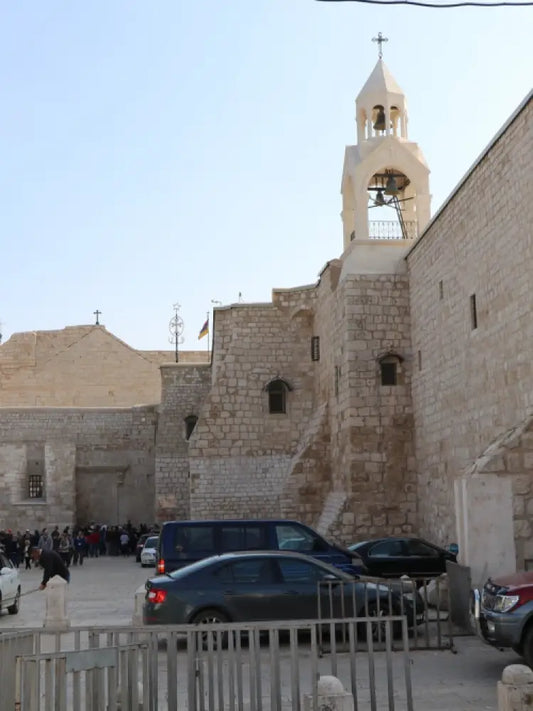
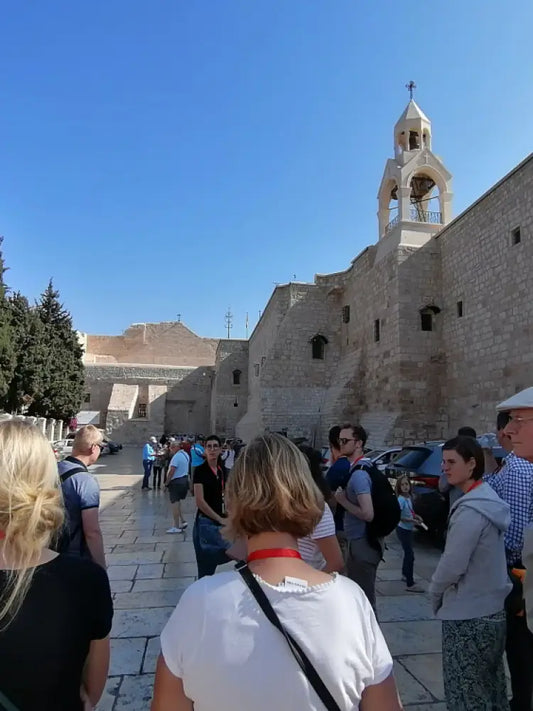
Bethlehem is where I grew up. It is different from Jerusalem in ways that take a moment to understand. Smaller, quieter, more worn. The Church of the Nativity is the oldest continuously operating church in the world. The Door of Humility, the low entrance that forces you to bow to enter, is not architectural - it was reduced in size during the Crusades to prevent horses being ridden inside. Every single one.
Look, The Grotto below the church is where the nativity is traditionally placed. The silver star marks the spot. The Greek Orthodox and Catholic altars are both down there. There are mornings when pilgrims wait in a long queue and mornings when it is nearly empty. If you come before 9am, the wait is usually short. And it shows.
Five minutes' walk from the Nativity is the Milk Grotto. Most visitors don't know about it. It is a cave church maintained by the Franciscans (and trust me, it makes a difference), quiet, with white chalky stone walls and a tradition of prayers for fertility and family. Coptic Christian families come here on specific feast days. It is one of the places I bring groups where people slow down without being asked to. Worth it.
Shepherd's Field is on the edge of Bethlehem, in the village of Beit Sahour where I grew up. The Franciscan site has a cave church and Byzantine mosaics marking where Luke 2:8 places the shepherds ("And there were shepherds living out in the fields nearby, keeping watch over their flocks at night"). Our detailed guide to Shepherd's Field covers both the Franciscan and Greek Orthodox sites and how to visit both in one morning. Every single one. You get the idea.
Lunch in Bethlehem. There are a few good local restaurants near the Old City. Ask your hotel.
Afternoon: the Old City market and, if you want to see it, the Banksy wall sections around Bethlehem are accessible on foot or by car.
Day 4 - Garden Tomb, Muslim Quarter, and More Jerusalem
Day 4 is intentionally lighter. The first three days are intense; this day allows you to go deeper in places you only passed through. And it works.
The Garden Tomb is in East Jerusalem, near the Damascus Gate. It is a Protestant alternative site to the Holy Sepulchre - not a competing claim so much as a different tradition, one based on General Gordon's 19th-century identification of a skull-shaped hill nearby. The garden itself is genuinely peaceful. The tomb is carved from stone. Entry is free. Protestant groups often find this site more emotionally accessible than the crowded Sepulchre. The Garden Tomb guide covers the archaeology, the controversy, and what people actually experience when they arrive. Every single one.
Afternoon: the Muslim Quarter souk. The best knafeh I know is from a vendor near the Khan al-Zait intersection - I am not going to tell you where exactly, because that changes. Ask your guide or your hotel. Walk slowly through this market. It is not a tourist zone. It is a neighborhood that has been operating as a market for centuries. That matters.
Optional evening: the Western Wall at dusk. The plaza is accessible from Dung Gate. Bring something modest to wear. Big difference.
I tell every group the same thing before we go in -- put your phone down for five minutes (my father would have something to say about this -- he always said the best guides don't talk too much, they let the place speak for itself). Just five minutes. Most of them thank me for it afterward.
Day 5 - Jericho and Qasr el-Yahud Baptism Site
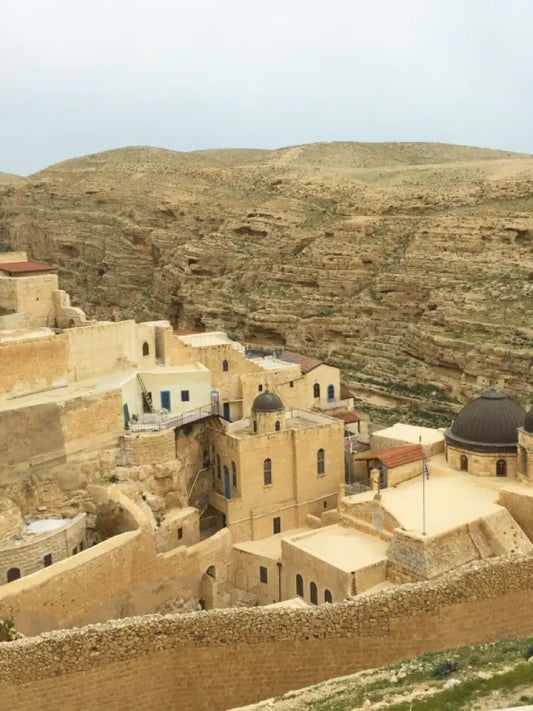
Drive east from Bethlehem, down through the Judean Desert. The drop in elevation is something you feel in your ears. Jericho sits roughly 250 meters below sea level - the lowest inhabited city on earth. The air is thicker and warmer. People notice it before they can explain it. Think about that.
authentic tell es-sultan is the archaeological mound of ancient Jericho, the city whose walls fell in Joshua 6. The excavations have found settlement layers going back to around 10,000 BCE, making this one of the oldest human settlements we know of anywhere. Most visitors walk through in an hour. The interpretive signs are modest. But standing on that mound, looking at those ancient mud-brick walls, the biblical story stops being abstract. No question.
The Mount of Temptation cable car takes about 15 minutes each way and puts you at the summit where tradition says Jesus fasted for 40 days (Matthew 4:1-11). The Greek Orthodox monastery is built into the cliff face. The views down over the Jericho plain and the Dead Sea are striking. Think about that.
Zacchaeus's sycamore tree - or its claimed descendant - stands near the center of Jericho, marked by a small sign. Luke 19:1-10. Worth a brief stop. And it shows. Right?
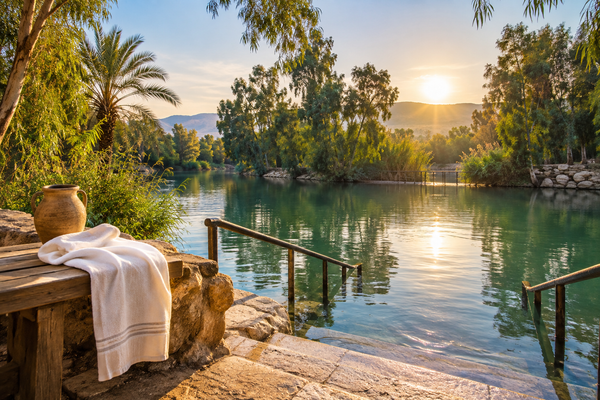
The most important site of the day, and one of the most overlooked in the Holy Land, is Qasr el-Yahud. This is the traditional site of Jesus's baptism on the Jordan River - not the commercial Yardenit site in northern Galilee, but the southern site where the Gospels place the event (Matthew 3:13-17). The site was largely inaccessible for decades due to landmine clearance. It reopened fully to visitors after clearance was completed in 2019. Facilities include changing rooms, white robes are available, and there are steps into the water. Pilgrims who want to be baptized or renew their baptism can do so here. It is free to enter and usually quiet.
Drive from Qasr el-Yahud to the Dead Sea hotel (45 minutes) or back to Bethlehem.
Day 6 - Dead Sea and Ein Gedi
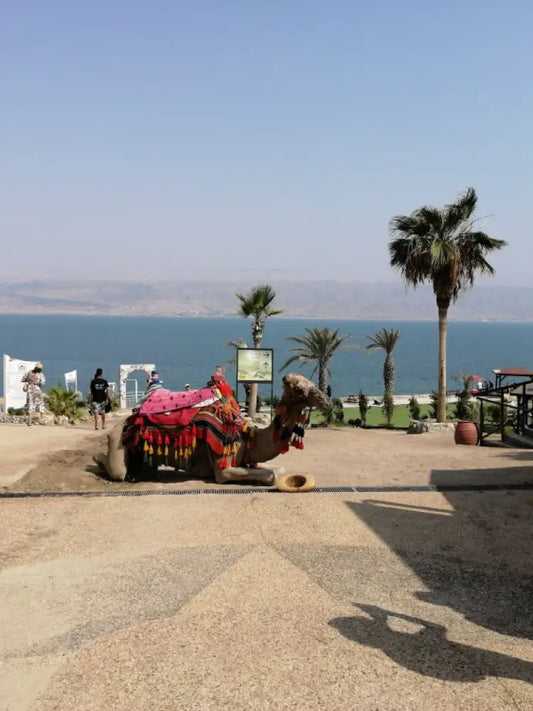
The Dead Sea float. Every group I have ever taken there has the same reaction: they get in skeptical and get out smiling. The buoyancy is unlike anything else. The salt concentration is so high that you can sit in the water like an armchair. Bring flip flops - the salt crystals along the shore cut bare feet.
Tip that most guides skip: don't touch your face. The salt stings badly if it reaches your eyes. Rinse off at the freshwater showers immediately after floating. No question.
Ein Gedi is a nature reserve about 15 minutes north of the main Dead Sea beach areas. 1 Samuel 24 places David hiding in the caves here from Saul, and the caves are visible on the hillside. The Nahal David trail leads up to a waterfall - about an hour's walk round trip, more if you explore.
In spring and autumn, the ibex come down to drink near the trail.
Qumran is worth a stop on the way back toward Bethlehem.
This is where the Dead Sea Scrolls were discovered in 1947 - not everyone in the group realizes that. The site is easy to visit, about 30 minutes, and the context of seeing where the scrolls were actually found changes how people think about the texts. That's the difference.
Day 7 - Masada Sunrise Hike
4:30am departure. This is the start time I recommend, and yes, it is early.
The Snake Path hike takes roughly 40 minutes up. It is not technically difficult - it is a clear, well-maintained trail - but it is steep and the last quarter feels long -- this actually reminds me of a conversation I had with a first-time pilgrim named Susan who came back a second time just because of this, but I'll save that for another post. The cable car is the alternative if your group has mobility concerns; it runs from 8am.
Why 4:30am? Because the top of Masada at dawn, before a single cable car has run, before any bus has parked below, is a different experience from the midday visit. The Dead Sea is below you, about 450 meters down. The light shifts from dark to grey to rose. The silence before the first tourists arrive is complete. Think about that.
Look, the Northern Palace built by Herod at the edge of the cliff is one of the more audacious architectural achievements of the ancient world. Three tiers cut into the north face of the rock. The Roman siege ramp on the western side - the only time Rome built a siege ramp against an elevated position in this region - is visible from the top. The synagogue at Masada is one of the oldest identified in the world. That's the difference.
Our full guide to Masada covers everything in detail - what to see, how long each section takes, cable car vs Snake Path, and what the Masada complex actually looked like under Herod. Every single one.
Return to Bethlehem by midday. Afternoon rest. Day 7 is physically demanding; you need the afternoon.
Big difference.
Day 8 - Galilee: Capernaum, Tabgha, Mount of Beatitudes
7am departure from Bethlehem. The drive to the Sea of Galilee region is about 2.5 hours. Every single one.
Capernaum was Jesus's base of operations during his Galilean ministry (Mark 1:21). The synagogue ruins at the site date to the 4th or 5th century, built over what was likely an earlier synagogue. The octagonal Byzantine church marks the site of St. Peter's house, where Jesus healed Peter's mother-in-law (Mark 1:30). The Sea of Galilee is visible from the shore here. You know what that actually means to stand at? And it shows.
Tabgha has two sites. The Church of the Multiplication of the Loaves and Fishes stands over a 5th-century mosaic floor - the famous image of two fish flanking a basket of bread. The smaller Church of the Primacy of St. Peter (the Mensa Christi) marks the shore where the Risen Jesus appeared to the disciples after the resurrection (John 21). The flat black basalt rock inside the church, the "table" of the title, extends to the water's edge. This is my favorite spot in Galilee. I have seen people stand here for a long time without speaking. And it works.
Why is the Sea of Galilee important to Christians? Because this 21-kilometer-long freshwater lake is where Jesus called his first disciples, where he walked on the water, where he calmed the storm, where he appeared after his death. The Sermon on the Mount was delivered on the hillside above it. The lake itself has not changed dramatically from what it looked like then. That is not nothing. That matters.
The Mount of Beatitudes is the traditional site of the Sermon on the Mount (Matthew 5-7). The Franciscan church at the top has a circular design, each of the eight windows inscribed with one of the Beatitudes. The panoramic view of the Sea of Galilee below is one of the better ones in the region. Call me biased, but nothing beats being here in person.
A boat ride on the Sea of Galilee adds 45-60 minutes and is worth it if your group wants it. We run private day tours to Galilee - contact us through our inquiry page if you would like to discuss the itinerary. See what I'm getting at?
Option: overnight in Tiberias to avoid the 2.5-hour return drive after a long day.
Come back to Bethlehem on the morning of Day 9. Worth it.
Day 9 - Travel to Petra, Jordan
This is a travel day. But a worthwhile one.
Now here's what I find interesting: The Wadi Araba border crossing (near Eilat) is the most common crossing for this route.
You drive to the Israeli side, cross on foot through the crossing, and take a Jordanian taxi on the other side to Wadi Musa, the town adjacent to Petra. The drive from the crossing to Wadi Musa is about 2 hours through the desert. Not even close.
Buy the Jordan Pass before you travel. It covers the Petra entrance fee and the Jordanian tourist visa in one purchase, and you can buy it online before you leave home. Without the Jordan Pass, you pay for both separately. With it, you present your pass at the border and at the Petra gate. Not even close.
Arrive in Wadi Musa in the afternoon. Check in to your hotel. If it is Monday, Wednesday, or Thursday evening, go to Petra by Night. The event runs from 8:30pm - you walk the Siq (the 1.2km canyon entrance to Petra) by candlelight, roughly 2,000 candles placed along the path, and arrive at the Treasury lit against the dark. It is not the same as a daytime visit. It is quieter, stranger, and people tend to go silent when they reach the Treasury. Makes sense?
Not gonna lie - The old streets of Bethlehem are somewhere between 2000 and 3000 years of continuous walking. Let that sit for a second. You're stepping where generations before you stepped.
Day 10 - Full Day at Petra, Return
Start early. The Siq at 7am, before the first organized groups arrive, gives you the Treasury almost to yourself. That matters.
OK so The Siq itself is worth 20 minutes of slow walking. The canyon walls are up to 80 meters high. The light changes as you move through it. The Treasury (Al-Khazneh) appears suddenly at the end - no gradual reveal, just a sharp turn and there it is, 43 meters tall, carved from a single face of sandstone. Most people stop moving when they first see it. Every time. Think about that.
From the Treasury, the main Petra basin opens up. The Royal Tombs stretch along the cliff face to the right. The colonnaded street runs through the center of what was once a prosperous Nabataean trading city.
The High Place of Sacrifice is a 2-hour hike up to an ancient altar on the ridge. The views from there take in the whole Petra basin, the Siq entrance, and the surrounding desert mountains. Aaron's tomb on Jabal Harun is visible on the highest peak to the southwest - Moses's brother is traditionally buried there. And it shows.
The Monastery (Al-Deir) requires climbing about 800 steps up from the main basin but has fewer crowds than the Treasury and is, if anything, more impressive in scale. Not everyone can manage the climb. If your group is able, it is worth it. Worth it.
Return to the Wadi Araba crossing in the afternoon. Drive back to Tel Aviv. Flight home.
10-Day Itinerary at a Glance

calm green sea beside brown sand under green sky , Photo by Sammy Leigh Scholl on Unsplash
Logistics: What Most People Get Wrong
Interested in seeing our collection? → Browse Tours to Bethlehem

Accommodation Strategy
Days 1 through 8: Bethlehem. The nightly rate difference compared to central Jerusalem hotels is real and meaningful over eight nights. The 20-minute drive to the Old City is not a significant trade-off. The only inconvenience is remembering to carry your passport every time you cross - which you should be doing anyway. Big difference.
Day 8 optional: overnight in Tiberias after Galilee to avoid the 2.5-hour return. This is worth doing if your group is older or has anyone with back pain. And it shows.
Days 9 and 10: Wadi Musa, Jordan. Book in advance if you are traveling March through May. The town fills up. Budget hotels, mid-range hotels, and one or two genuinely comfortable places are all available. The choice matters less than the location - you want to be close enough to the Petra gate to walk in at 7am. Think about that.
Transport
Private car with a driver is the most efficient option for this itinerary.
For a group of 2-8 people, the cost shared across 10 days is manageable. For days 5-7 especially (Jericho, Dead Sea, Masada), public transport options are slow and often impractical. Not even close.
Rental cars: most rental companies prohibit taking vehicles into Palestinian Authority areas, which includes Bethlehem. Check the rental agreement carefully.
I mean, bus 231 from Jerusalem runs to Bethlehem and is a reasonable option for Day 3 if you want a day without a driver. For all other days with big distances, private transport is the right call. That's the difference.
For those who want organized private Holy Land tour packages that cover multiple days and regions, we build those itineraries as fully private tours - same sites, same depth, but with logistics handled from pickup to return. No question.
Money and Practical Notes
Carry USD cash. It is accepted at most hotels, markets, and restaurants in Israel and Bethlehem. Israeli shekels are useful for smaller purchases and public transport.
NIS is the official currency in Israel; most ATMs in Jerusalem and Tel Aviv dispense shekels.
For Jordan: bring Jordanian dinar or use ATMs at Wadi Musa or at the Wadi Araba border crossing. The Jordan Pass (buy online before you travel) covers the Petra entrance fee and the Jordan tourist visa - both are included in one pass. Check the Jordan Pass website for current pricing and how far in advance you need to buy it before arrival.
Sun protection: taken seriously, even in October. The Dead Sea is 400 meters below sea level and the UV reflection off the water is intense. Masada at sunrise is cool but the walk back down in full morning sun is not. Petra has almost no shade in the main basin between 10am and 3pm.
Key Takeaways
- A 10-day Holy Land itinerary can cover Jerusalem's Old City (Mount of Olives, Via Dolorosa, Church of the Holy Sepulchre, Garden Tomb), Bethlehem (Church of Nativity, Milk Grotto, Shepherd's Field), the Jordan Valley (Jericho and Qasr el-Yahud baptism site), the Dead Sea and Ein Gedi, Masada at sunrise, the Sea of Galilee region (Capernaum, Tabgha, and the Mount of Beatitudes), and Petra in Jordan. (which, honestly, should be higher on the list)
- Basing in Bethlehem for days 1-8 reduces hotel costs and gives efficient access to Jerusalem (20 min), Jericho (30 min), the Dead Sea (45 min), and Masada (90 min) by private car.
- The Jordan Pass, purchased online before travel, covers both the Petra entrance fee and the Jordanian tourist visa - buy it at least one day before crossing into Jordan.
- Three sites most commonly missed on shorter Holy Land trips: Qasr el-Yahud (the authentic baptism site on the Jordan River, free to enter, rarely crowded), Mensa Christi at Tabgha (where the Risen Christ appeared to disciples on the Sea of Galilee, John 21), and Qumran (where the Dead Sea Scrolls were actually discovered in 1947).
- Private transportation is required for Masada, Ein Gedi, Jericho, and Qasr el-Yahud - no -- you get the idea
Related Reading

brown mosque at daytime , Photo by Toa Heftiba on Unsplash
- How to Walk the Via Dolorosa in Jerusalem in 2026 - complete station-by-station guide with the Franciscan Friday procession schedule
- Visiting Masada in 2026: Sunrise Hike, Cable Car, and What You'll Actually See - full site guide including what to see at the top and how long each section takes (this one especially)
- Shepherd's Field in Bethlehem 2026 - Franciscan site vs -- you get the idea
- The Garden Tomb in Jerusalem 2026 - what it is, what the archaeology says, and why it moves Protestant pilgrims
- Visiting Petra from Jerusalem in 2026 - day trip vs overnight, border crossing logistics, what to see first
Frequently Asked Questions

a view of the old city of jerusalem , Photo by David Holifield on Unsplash
Is 10 days enough for the Holy Land?
Yes. Ten days is enough to cover Jerusalem's main holy sites across two full days, a complete day in Bethlehem, the Jordan Valley (Jericho and the baptism site), the Dead Sea and Ein Gedi, Masada at sunrise, the Sea of Galilee region, and Petra in Jordan. It is the minimum for a trip that feels complete rather than abbreviated. Seven days requires cutting either Galilee or Petra - two sites that most pilgrims later say they regret missing.
What is the best time of year for a 10-day Holy Land itinerary?
October through November is the best window. Temperatures in Jerusalem are comfortable (typically 18-25°C), sites are open, and crowds are smaller than the summer peak. March through April is the second-best option, though Holy Week brings significant crowds to Jerusalem and Bethlehem. Avoid July and August for the Dead Sea and Masada - temperatures at the Dead Sea regularly exceed 40°C, and Masada in midday summer heat is genuinely uncomfortable.
Do I need a private guide for all 10 days?
No. A local guide makes the biggest difference on the days with the most context: Day 2 in Jerusalem (Via Dolorosa, Holy Sepulchre), Day 3 in Bethlehem (Church of the Nativity), and Day 8 in Galilee. The Dead Sea, Masada cable car, and Petra are all manageable independently with some preparation. Hiring a guide for four or five days and self-guiding the others is a reasonable and cost-effective balance.
Can I visit both Israel and Jordan on the same trip?
Yes. The Wadi Araba border crossing near Eilat is the standard route for this itinerary, allowing you to cross into Jordan for Petra and return to Israel the same trip.
Most Western passport holders receive a Jordanian visa on arrival, but the Jordan Pass (purchased online before travel) includes the visa fee plus the Petra entrance fee - it is worth buying before you go. Israeli exit and entry stamps are handled at the crossing itself.
Where should I stay for a 10-day Holy Land itinerary?
Bethlehem for days 1-8 is the most cost-effective and logistically practical base. It is 20 minutes from the Old City of Jerusalem, 30 minutes from Jericho, 45 minutes from the Dead Sea, and about 90 minutes from Masada. For Day 8 (Galilee), you can either return to Bethlehem after a long day or overnight in Tiberias and return the following morning. For days 9 and 10, stay in Wadi Musa, Jordan - the town adjacent to Petra.
Is Petra worth the extra day on a Holy Land trip?
Yes. Petra is one of the best-preserved ancient cities in the world, carved from sandstone by the Nabataean people between roughly the 4th century BCE and the 2nd century CE. Its biblical connections (the region of Edom in Genesis 36, Aretas IV in 2 Corinthians 11:32) are genuine. The site takes 6-8 hours to visit properly. A day trip from Israel is exhausting; one overnight in Wadi Musa adds Petra by Night (a candlelit walk through the Siq) and allows a fresh-morning start before the crowds arrive.
How far is it from Bethlehem to Masada?
Masada is about 90 kilometers from Bethlehem by road - about 1.5 hours by private car, heading south along the Dead Sea shore. There is no direct public bus from Bethlehem to Masada. The Masada National Park cable car begins running from 8am. To reach the top via Snake Path before sunrise, you need to begin climbing by about 5:30am, which means a 4am-4:30am hotel departure from Bethlehem.
What should I NOT miss on a 10-day Holy Land trip?
The single most-skipped site by first-time pilgrims is Qasr el-Yahud, the authentic baptism site on the Jordan River, where the Gospels place Jesus's baptism by John (Matthew 3:13-17). It is free to enter, often nearly empty, and allows baptism and baptism renewal in the Jordan itself. Most tours don't include it unless you ask for it specifically. The second most-skipped site is Mensa Christi at Tabgha on the Sea of Galilee - the small church over the shore where the Risen Jesus appeared to the disciples and prepared a meal (John 21). Both are quiet, both are free, and both are among the most affecting places I have taken groups in twenty years of guiding.
If you are planning your first 10-day trip to the Holy Land and want to think through the itinerary, we plan private tours for individuals and small groups. The contact page is here.
We can shape the schedule around what matters most to you - the sites, the denomination, the physical pace.
Ten days in the Holy Land. Most people who come for the first time wish they had booked longer. Most people who come for the second time do.
Elias Boaz is a licensed tour guide from Bethlehem , birthplace of Jesus Christ , and the founder of Elijah Tours. He has guided thousands of pilgrims through Bethlehem, Jericho, and the Jordan River Valley , and coordinates Holy Land tours with trusted licensed guides across the region. He writes to help visitors truly understand what they're seeing.