Jericho is honestly the oldest continuously inhabited city on earth. It sits 250 meters below sea level in the Jordan Valley, with archaeological layers carbon-dated to roughly 9000 BCE. For Christian pilgrims in 2026, this is the geography of the Gospels , Joshua's walls, Jesus passing through with Zacchaeus, the wilderness of the Temptation, the road of the Good Samaritan , all within a 30-minute drive from Bethlehem.
I live thirty minutes away from Jericho. I take pilgrims down there almost every week. And honestly, most of them don't realize they're about to stand in the oldest city on the planet , they just want to float in the Dead Sea on the way back. That's a mistake I want to fix.
OK so if you're planning your Holy Land trip and looking at what to see in Bethlehem and beyond, do not let Jericho be a forty-minute photo stop on the way to somewhere else. Give it a full day. Here's why, and how. You know what I mean?
Why Jericho Matters to Christian Pilgrims
Look , the Holy Land is full of sites where you stand and try to feel something.
Jericho is different. The land does the work for you.
You're below sea level. The air sits heavier. The light has this dusty gold quality after about three in the afternoon. And the Gospel stories are seriously right there in the geography: Joshua marching around the walls (Joshua 6), Jesus walking up to Jerusalem from this exact valley (Mark 10:46-52, blind Bartimaeus), Zacchaeus in his sycamore tree (Luke 19:1-10), the parable of the Good Samaritan on the road that climbs back up to the holy city (Luke 10:25-37), and behind it all the Mount of Temptation, where Jesus fasted forty days (Matthew 4, Luke 4).
Five major Gospel scenes. One valley. You wont find that density anywhere else in the country except maybe Galilee.
Most group tours give Jericho 40 minutes. They stop at the cable car, take a picture, buy a postcard, move on to the Dead Sea. I've watched it happen more times than I can count, and it genuinely bothers me. Not because it's bad for business. Because they're leaving the best part on the table.
Worth saying: if you're putting together a serious holy land bucket list for Christians, Jericho deserves better than that.
Tell es-Sultan: Standing on 10,000 Years of History

Tell es-Sultan is the mound , the archaeological "tell" , of ancient Jericho. Walk on it and you are literally standing on layers of human settlement going back roughly 11,000 years. The Neolithic stone tower preserved on the site is about 8.5 meters tall and dates to around 8000 BCE.
It is, as far as anyone knows, the oldest known free-standing stone structure of its kind on earth.
Read that again. Older than the pyramids by about 5,000 years. Older than writing itself.
Then there's the Joshua question. Joshua 6 says the walls of Jericho fell down. Did they? Kathleen Kenyon excavated here in the 1950s and concluded the city was already a ruin by the time Joshua's army would have arrived. Bryant Wood, a generation later, looked at the same pottery and dated it differently. Pilgrims ask me about this constantly. My honest answer: I'm a guide, not an archaeologist. What I will tell you is that standing on the tell and reading Joshua 6 out loud , even with the academic debate unresolved , does something to a person. Something real. The site is also a UNESCO World Heritage candidate as part of "Ancient Jericho/Tell es-Sultan," formally inscribed in 2023.
Practical: entry is around 10 NIS (about 3 USD), open roughly 8 AM to 5 PM, allow 45 to 60 minutes. Wear closed shoes , the surface is uneven and chalky, and there's no shade anywhere on that mound. Bring water. While you're in the area, the broader Jericho ruins corridor includes another stunning Umayyad-period site I've written about separately , see my guide to Hisham's Palace, the desert masterpiece a few kilometers north.
The Mount of Temptation and the Cable Car

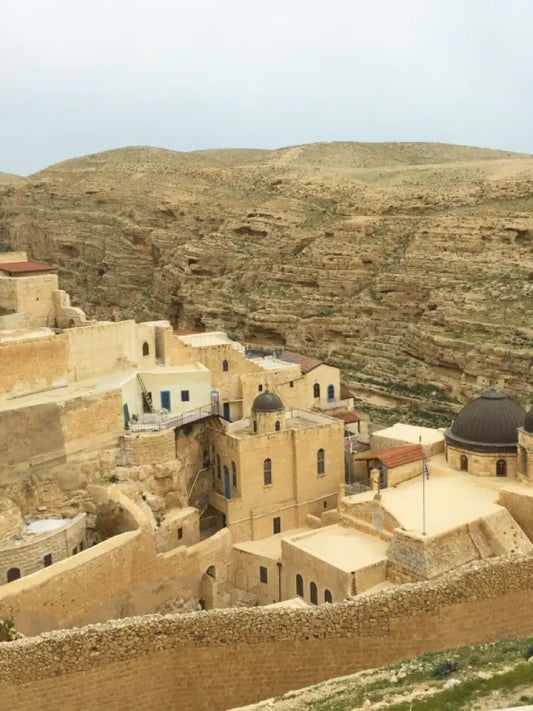
The Mount of Temptation , Jebel Quruntul in Arabic, from the Latin quarantena meaning "forty" , rises straight out of the valley floor on the western edge of the city. Tradition has placed the wilderness of the Temptation here since at least the 4th century. The Greek Orthodox monastery of Deir al-Quruntul began as a network of cave hermitages in the 6th century and was built into its present cliff-cut form mostly in the 19th. Every generation left something behind up there.
Most people see it now by cable car , and that's one of my favorite questions to answer when we're on the route together, because the answer surprises people. The Teleférico opened in 1998. It runs 1,330 meters from the city floor up to the monastery terrace. Because Jericho sits at -250 meters, this is technically the lowest cable car in the world. Runs roughly 8 AM to 6 PM, costs about 70 NIS (around 20 USD) round trip, takes about five minutes. That's the whole ride. Five minutes.
Here's the honest version though. The cable car drops you at a restaurant terrace with a panoramic view. The monastery itself is a five-to-ten-minute walk along a cliffside path with steep stone steps. The monastery interior is sometimes closed for prayers or shut entirely on Sundays. The monks live there. They dont owe anyone a tour.
But you go anyway. Because that view , all of Jericho spread out beneath your feet, the date palm groves along Route 90, the Jordan Valley flattening east toward the mountains of Moab on a clear morning , is one of the great views in this country. Full stop. Bring water. No shade on that path. Call me biased, but nothing beats being here in person.
Zacchaeus and the Sycamore Tree
Luke 19:1-10. The short tax collector who climbs a tree to see Jesus, gets called down by name, and ends up giving back four times what he stole. One of the most human moments in the whole Gospel.
There are actually two sycamore tree contenders in Jericho today. The most famous is in the Russian Orthodox Compound near the city center, fenced off and labeled. The other is an older tree on the main road , less photogenic, but some locals will tell you quietly that one is the real one. Think about that for a second.
I get asked which is "real" almost every visit. Look, the answer is neither, probably. The original tree is gone , it was 2,000 years ago. But the story isnt about the tree anyway. It's about a man who climbed for a better view because he could not see, and the one being looked at saw him first. You dont need an authentic tree for that. You just need to stand under one in Jericho and read the chapter. That's enough. See what I'm getting at? This is what makes the Holy Land different from any other destination on earth , the story keeps happening in the place where it happened.
The Wadi Qelt and the Road from Jerusalem
The road from Jerusalem to Jericho is about 27 kilometers and drops more than 1,000 meters in elevation. Above it cuts the Wadi Qelt , a deep gorge in the Judean Desert with a small stream still running through it most of the year.
This is the geography of the Good Samaritan parable. Luke 10:25-37. "A man was going down from Jerusalem to Jericho." That word "down" is exact , Jerusalem sits around 800 meters above sea level, Jericho at 250 meters below. The land does the parable's work. You feel it in your ears on the drive down, actually.
About halfway along, clinging to the cliff face, is St. George's Monastery , Mar Jiryis al-Khozeba. 5th century. Still active. Greek Orthodox monks still live there. There's a viewpoint pullout off Route 1 where you can see the monastery across the wadi, and a steep walking trail down for anyone who wants to actually reach it , about 30 to 40 minutes each way, not for the unsteady.
(Had a group from Texas last week who almost skipped Bethlehem entirely , they had no idea what they were missing.)
For a private tour from Bethlehem to Jericho, this 20-minute Wadi Qelt stop is the single best add-on I can recommend. Every single time.
Browse our Jericho and Jordan Valley day tours , they all include it. Not even close.
Where Jericho Fits Into a Bigger Pilgrimage Day

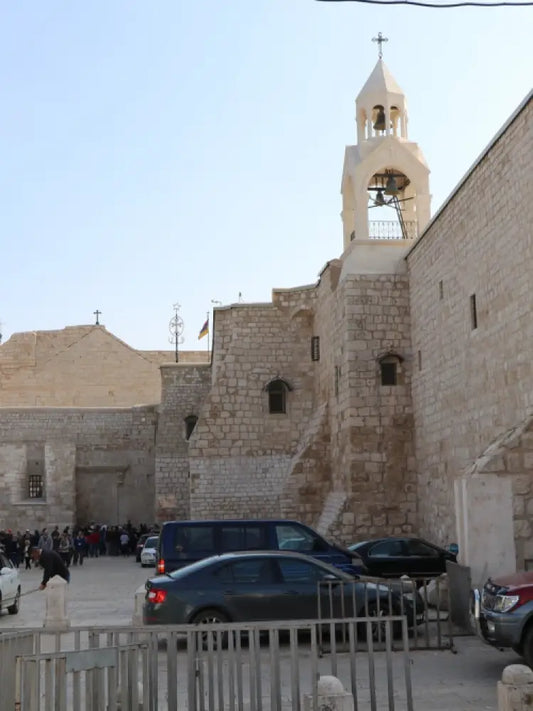
a church with a cross hanging from it's side , Photo by Lisa Forkner on Unsplash
The classic combination is Jericho plus Qasr el-Yahud plus the Dead Sea. From Bethlehem you can do all three comfortably in one day , door-to-Tell-es-Sultan in 30 to 45 minutes, another 15 minutes to the baptism site, then 30 minutes south to the Dead Sea. It flows naturally. The geography cooperates.
If you're planning a multi-day trip, my full 7-day Holy Land pilgrimage itinerary builds Jericho into Day 4 alongside the Jordan River and the Dead Sea. For the baptism site specifically , what you can do there, what to bring, how to actually get baptized , read my detailed guide to Qasr el-Yahud, the Jordan River baptism site where Jesus was baptized. And it works.
Optional add-ons for the same loop: Masada is 90 minutes south, Bethany Beyond the Jordan on the Jordanian side is a separate trip requiring a border crossing. No question.
Actually, hold on , someone just messaged asking about the route we took last week. OK, back. That's the thing about this work, it doesnt really stop.
Practical Logistics for 2026

people near dome theater , Photo by Laura Siegal on Unsplash
Getting There
- From Bethlehem: 30 to 45 minutes by private car , you get the idea
- From Jerusalem: about 40 minutes by the same route. Public transport is patchy and unreliable; a private driver or organized tour is the realistic option. (this one especially)
- From Tel Aviv: about 90 minutes door-to-door without traffic.
When to Go
The best months are October through April. Jericho in July routinely hits 40°C (104°F), and because you're below sea level the air just sits , there's no breeze the way high country usually gives you. December through March is genuinely pleasant: 18 to 24°C most days, very low rainfall. That matters more than people expect.
(This actually reminds me of a conversation I had with a first-time pilgrim named Susan who came back a second time just because of the winter light down there , but I'll save that for another post.)
Avoid Fridays for the cable car. That's the heaviest local crowd, with families coming down from Bethlehem and Ramallah for the day. And it shows.
One bonus: during Christmas week and Holy Week, when Bethlehem and Jerusalem get crowded, Jericho stays relatively quiet. Its a relief, honestly.
What to Bring
Wide-brim hat, sunglasses, at least 1.5 liters of water, closed shoes for Tell es-Sultan, modest dress for the monasteries , shoulders and knees covered, and they will turn you away otherwise. Bring small cash in NIS for entrance fees and the cable car; card machines exist but they fail more often than they work down here. A passport copy is useful if you're combining with the Qasr el-Yahud baptism site.
Where to Eat
My local recommendation is Sami Restaurant near the cable car parking , Palestinian-style lamb, rice, fresh salads, full table for around 80 to 100 NIS per person. And the fresh orange juice you'll see at roadside stands on the way in? That's the real thing. Jericho is citrus country. That juice was on the tree this morning. See what I'm getting at?
At-a-Glance Reference
What Pilgrims Most Often Miss

Three things. Every visit.
The tell viewing platform on the north side of the site. Most groups dont walk that far around. The view across the valley from there , the Jordan River silver in the distance, the date palms below , is the best free thing in the city. And nobody finds it by accident.
The Spring of Elisha , Ein es-Sultan , directly opposite Tell es-Sultan. The story is in 2 Kings 2:19-22, which is honestly one of my favorite passages to read on-site: the spring Elisha healed by throwing salt into it. It still flows. Locals still drink from it. There's nothing to do there except sit for a minute and read the passage, which is exactly the point. And it shows.
And sitting. Just sitting. For ten minutes. Anywhere. The pace down here is different from up in Jerusalem , your body knows you're below sea level even if your head doesnt. I tell every group: at some point in your Jericho visit, find a spot , under a date palm, on a stone wall, on the edge of the Spring , and just be there. Stop moving. Most pilgrims never do this anywhere on their whole trip. They tell me afterward they wish they had.
Key Takeaways
- Jericho sits about 250 meters below sea level, the lowest permanently inhabited city on earth , and this is the one detail most people overlook
- Tell es-Sultan's earliest settlement layers date to roughly 9000 BCE, making Jericho the oldest continuously inhabited city archaeology has confirmed. The Neolithic stone tower on the site is about 8,500 years old.
- The Mount of Temptation cable car is the lowest cable car in the world , 1,330 meters of cable running from the valley floor up to the cliff monastery.
- From Bethlehem to Jericho is 30-45 minutes by private car, making a Jericho + Jordan River + Dead Sea full-day loop entirely practical.
- Best months for pilgrim visits: October through April. Summer , you get the idea.
🌱 Plan Your Holy Land Tour


Frequently Asked Questions

brown mosque at daytime , Photo by Toa Heftiba on Unsplash
Is Jericho safe to visit in 2026? Yes. Jericho has remained open to pilgrims continuously through 2024, 2025, and into 2026, and is currently visited daily by private tours from Bethlehem and Jerusalem. As with anywhere in the region, the practical recommendation is to go with a licensed local guide who knows the road conditions on the day. The city itself is calm, the sites are operating normal hours, and the local economy depends on pilgrims coming.
How do you get from Bethlehem to Jericho? By private car, 30 to 45 minutes via Route 1 east out of the Bethlehem area and Route 90 north into Jericho. There's no direct public bus, and shared taxis are inconsistent. A private driver or a guided day tour is what every pilgrim I take down there uses.
What is the oldest part of Jericho you can actually visit? Tell es-Sultan. The archaeological mound preserves settlement layers from roughly 9000 BCE forward, including the Neolithic stone tower dated to about 8000 BCE , the oldest known structure of its kind in the world. Entry is around 10 NIS and the site is open 8 AM to 5 PM.
Can you visit the Mount of Temptation without taking the cable car? Yes. There's a walking path from the city up to the monastery , roughly 45 minutes uphill, steep, mostly stone steps. It's not for everyone, especially in summer. Most pilgrims take the cable car up and either ride down or hike down. The monastery itself sometimes closes for monks' prayer hours, so dont make the climb your only goal , the view is the consistent reward.
How long do I need in Jericho? Half a day at minimum if you're focused on Tell es-Sultan and the Mount of Temptation. A full day if you're combining with the Jordan River baptism site and the Dead Sea , and that combined day is what I recommend for any serious pilgrim itinerary.
What's the difference between Jericho and Bethany Beyond the Jordan? Two different sites in two different countries. Jericho is a city on the western side of the Jordan Valley with multiple Gospel and Old Testament sites , Tell es-Sultan, Mount of Temptation, Zacchaeus's sycamore, Wadi Qelt. Bethany Beyond the Jordan is a specific archaeological park on the Jordanian side of the river, claimed as the original baptism site of Jesus by some scholars. Visiting Bethany Beyond the Jordan requires a separate border crossing into Jordan; you cannot combine it with a Jericho day trip on the same visit.
Related Reading

a view of the old city of jerusalem , Photo by David Holifield on Unsplash
- Visiting the Holy Land in Summer: Heat, Crowds, and How to Do It Right
- Hisham's Palace in Jericho: A Desert Masterpiece of Art and History
- The Qasr el-Yahud Baptism Site: Where Jesus Was Baptized and How to Visit in 2026
- How to Plan a 7-Day Holy Land Pilgrimage Itinerary in 2026
- Best Time to Visit Bethlehem in 2026: Christmas, Easter, Summer, or Fall?
One last thing. Last March a Brazilian family asked me to stop the car halfway up the Wadi Qelt road on the climb back to Jerusalem. The mother , Rosana, I think her name was , said she just needed to see the road of the Good Samaritan with her own eyes, in real space, where it actually happened. So we pulled over at the viewpoint above St. George's Monastery and we sat on the rocks for twenty minutes. None of them took a single picture. Her teenage son, who had been on his phone all week, put it down. The wind moved across the wadi. Nobody said much.
That hour was the whole trip for them. They told me so the next day.
That's what Jericho does, when you give it room. It's not a forty-minute stop. If you're coming to the Holy Land, build it in properly. We run private Holy Land tours from Bethlehem that do exactly that. If you want help putting together an itinerary that does Jericho right, send me a note , happy to walk through it.
If you're coming, come. The valley does the rest.
Elias Boaz is a licensed tour guide from Bethlehem , birthplace of Jesus Christ , and the founder of Elijah Tours. He has guided thousands of pilgrims through Bethlehem, Jericho, and the Jordan River Valley , and coordinates Holy Land tours with trusted licensed guides across the region. He writes to help visitors truly understand what they're seeing.