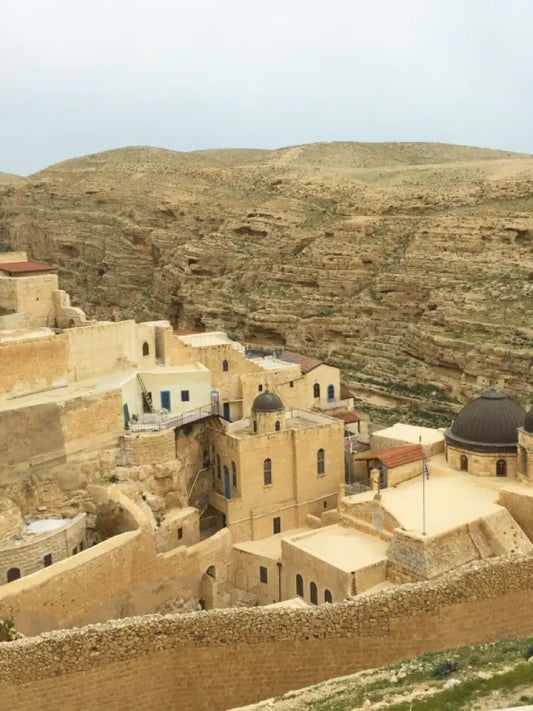
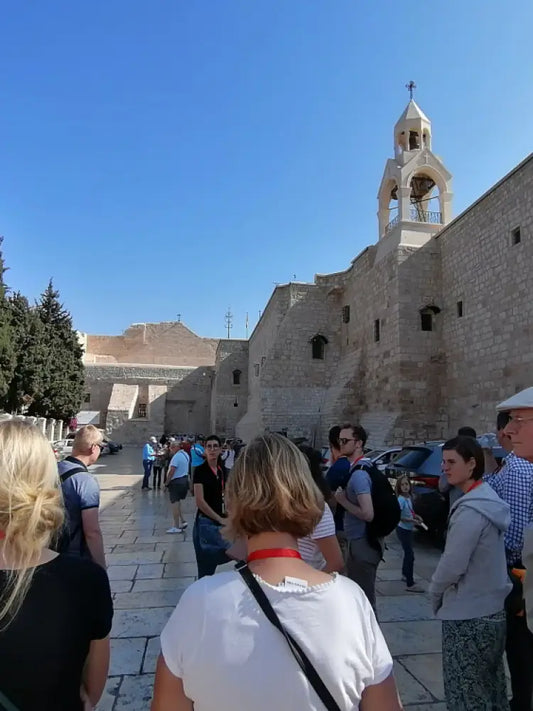
See what I'm getting at?
Having walked these routes with travelers, here's the thing: Most first-time pilgrims need at least 10 days to cover Jerusalem, Bethlehem, and Galilee at a pace that allows any real absorption. Seven days is possible, but something significant gets cut -- almost always Galilee.
As a Bethlehem-based tour guide, I'm not a theologian, but from what I understand, fourteen days is ideal for groups that want depth, flexibility, and side trips beyond the core circuit. That is the honest answer, and everything below is the explanation.
{% raw %}
The Question I Get More Than Any Other
Every group I work with asks some version of the same question before they arrive: "How many days do we really need?"
Most of them ask it too late.
From a local guide's perspective, the flights are already booked. The hotel is already paid. And then they discover, standing at the Via Dolorosa on Day 3, that they have three days left and no time to see Galilee.
I am not saying this to make anyone feel bad. A guide who's been doing this 30 years would explain it better, but it is a genuinely hard question to answer from home, when the Holy Land is still just a map and a list of names. From here, standing in Bethlehem where I grew up, the distances are obvious. From Ohio or Texas or the Philippines, they are not.
So here is my attempt at a real answer. Not a marketing answer. An honest one, from someone who has guided thousands of pilgrims through these sites and watched the difference that time makes. This is the kind of thing that drives me crazy about generic tour packages.
What 7 Days in the Holy Land Actually Looks Like
Seven days is the most common trip length I see booked by first-time visitors. It is also the one most likely to leave people wishing they had stayed longer.
That is not a knock on seven days. You can cover a meaningful amount of ground. But you should know exactly what you are signing up for.
What you can cover in 7 days:
- Jerusalem Old City (church of the holy sepulchre, Via Dolorosa, Western Wall, Mount of Olives, Garden of Gethsemane)
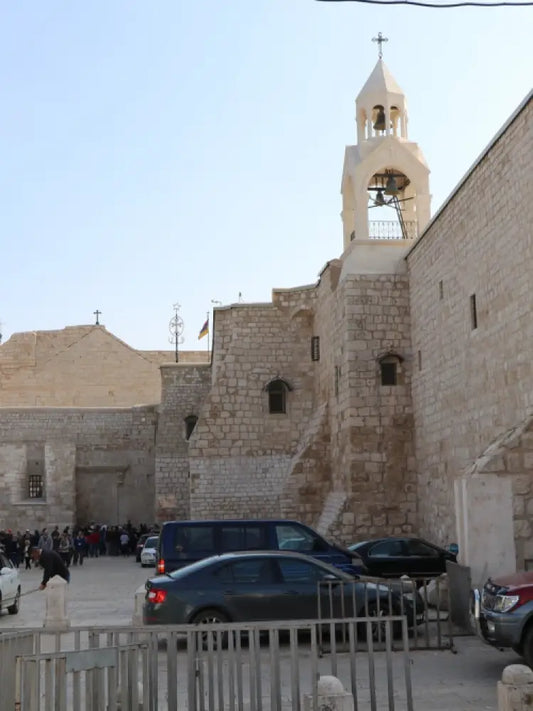
- Bethlehem (Church of the Nativity, Shepherd's Field, Milk Grotto, Star Street)
- One of the following: Dead Sea OR Masada (you will not have time for both)
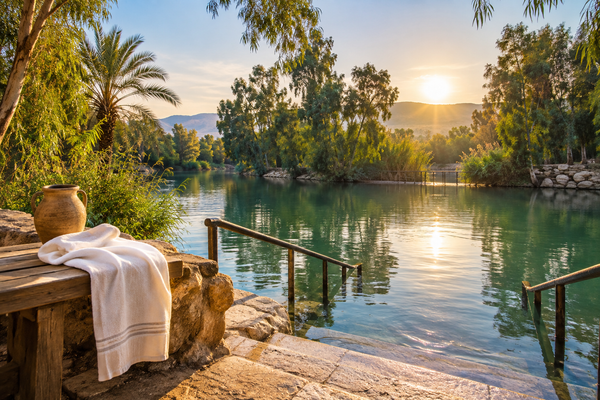
- A half-day in Jericho with a quick stop at the Jordan River baptism site
What 7 days forces you to miss:
- Galilee. All of it. The Sea of Galilee, Capernaum where Jesus lived, the Mount of -- you get the idea
- Petra, if Jordan appeals to you. -- and this is the one most people overlook
- Any real slow time. No sitting quietly somewhere because it moved you. Every morning is an early start and every evening is late.
I had an American couple a couple of years back who booked seven days. By Day 5 we were standing in the Garden of Gethsemane. The husband turned to me and said, quietly, "We should have come for longer." He said it while looking at the ancient olive trees. That garden has a way of making people slow down against their will, which is honestly exactly what happens when you don't have enough time. This is the kind of thing that drives me crazy about generic tour packages.
The 7-Day Itinerary That Actually Works
If seven days is what you have, here is how to make it count:
- Day 1: Arrive at Ben Gurion Airport, transfer to Jerusalem, rest. Do not plan any sightseeing. You will be exhausted.
- Days 2-3: Jerusalem full days. Cover the Jerusalem Old City -- the Church of the Holy Sepulchre, the Via Dolorosa, the Western Wall, the Garden of Gethsemane, and the Mount of Olives panorama. Two days for all of this is tight but workable with a private guide.
- Day 4: Bethlehem. Church of the Nativity, Shepherd's Field, a walk through the old city, and lunch somewhere local.
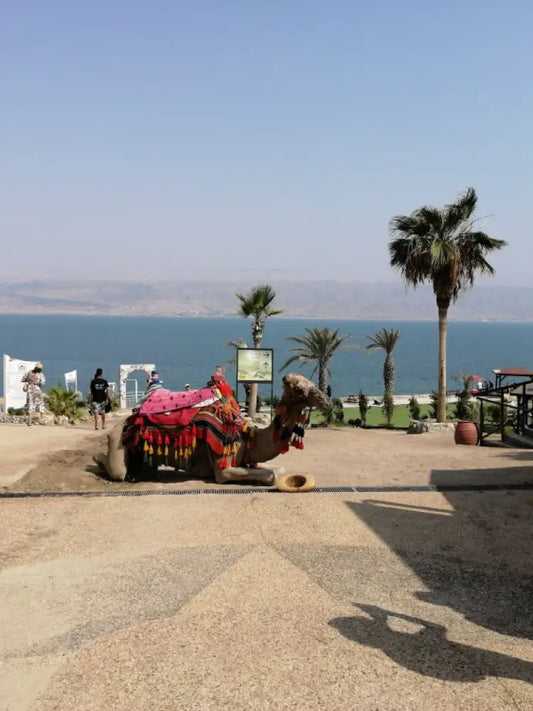
- Day 5: Dead Sea or Masada. Not both. If your group has mobility issues, Dead Sea. If you want the dramatic history, Masada -- but start before 7am to beat the heat. (which, honestly, should be higher on the list)
- Day 6: Jericho and the Jordan River baptism site at Qasr -- you get the idea
- Day 7: Departure.
That is a full schedule. There is no cushion. If someone in your group gets sick or your flight to Tel Aviv arrives late, the whole week shifts.
What Never Makes the 7-Day Cut
Galilee. Every time. And I say this as someone who loves the South -- Jerusalem and Bethlehem are the heart of the Christian story. But so is the North. Capernaum is where Jesus actually lived during his ministry. The Sea of Galilee is where he called his disciples. The Mount of Beatitudes is where he preached the Sermon on the Mount. These are not minor additions. Skipping them on a christian pilgrimage is like reading a book with chapters missing.
I mean, {% raw %}
What 10 Days Feels Like (The Sweet Spot)
Interested in seeing our collection? → Browse Tours to Jerusalem

Jerusalem Old City Panorama , Photo by Anton Mislawsky on Unsplash
This is the length I recommend to almost every first-time pilgrim. Ten days gets you Jerusalem, Bethlehem, and Galilee -- the full triangle of the Christian story -- with enough breathing room that it does not feel like a race.
And that breathing room matters more than people realize before they arrive. By Day 3, most pilgrims are no longer moving through the sites like tourists. Something has shifted. They want to sit longer. They want to ask different questions. They are no longer just visiting the places -- they are starting to inhabit them.
A busy 7-day trip does not leave space for that to happen.
A 10-day trip does.
The 10-Day Structure That Works
If you want the full day-by-day breakdown, we have a detailed 10-day Holy Land itinerary guide that covers logistics, hotel locations, and what to prioritize.
For groups who want a ready-made option, our Holy Land pilgrimage packages are built around this 10-day framework.
Why 10 Days Is the Industry Standard for Pilgrimages
Three reasons, from practical experience:
First, travel fatigue. When you fly long-haul to Israel, the first full day is largely lost to jetlag. You can push through it, but your ability to absorb what you are seeing is significantly diminished. A 10-day trip accounts for this. A 7-day trip does not.
Second, emotional pacing. The Holy Land is not a theme park -- though I should note, every guide in Bethlehem has a slightly different take on the best route, which tells you something about how much history is packed into these streets. The sites land differently than most travelers expect. The Church of the Holy Sepulchre is crowded, noisy, and overwhelming the first time. The Garden of Gethsemane is quieter than people expect and hits harder. Bethlehem requires some adjustment -- the crossing, the sounds, the mix of old stone and modern street life. All of this takes time to process. Ten days provides that time. Seven days moves on before it's had a chance to settle.
Honestly, third, group dynamics. I guide groups of all sizes. And I can tell you with certainty: in every group of more than four people, someone needs a slow morning. Someone gets a blister. Someone wants to return to a site they loved the day before. Ten days has room for that. Seven days does not.
"The pilgrims who seem most changed at the end of a trip are rarely the ones who saw the most sites. They are the ones who stayed longest at the right ones."
What 14 Days Unlocks (For Those Who Can Manage It)

How to Plan a Holy Land Pilgrimage Holy Land Trip Planning
Fourteen days is the trip that changes the way people understand the shape of this land.
I mean, i had a pastor from Virginia bring his congregation for 14 days a few years ago. He had been before himself, several times. On Day 12, we were sitting on the shore of the Sea of Galilee in the late afternoon, and he said: "I finally feel like I understand the geography of all of this." Not the theology. The geography. The actual physical relationship between Bethlehem and Galilee and Jerusalem and the desert. It took 12 days to feel it.
What 14 Days Adds
- Petra, Jordan: A full-day crossing from Eilat is completely worth doing. The rose-red city carved from rock is unlike anything else in the region.
- A second full day in Bethlehem: This is the one I treasure most. The first day, pilgrims see the Church of the Nativity. The second day, they walk Star Street slowly. They sit in the Milk Grotto. They visit the olive wood shop my family has known for thirty years. They eat mansaf at a place no tourist finds on their own.
- Caesarea Philippi and the Golan: In the north, near the foot of Mount Hermon, is the site where Peter declared Jesus as the Christ (Matthew 16:13). Most pilgrims never get there. It is one of my favorite places on earth.
- Qumran: Where the Dead Sea Scrolls were found. For a biblical history angle, it adds enormous context.
- Overnight in Tiberias: Instead of day-tripping to Galilee and back, you stay two nights on the lake. You watch the sun rise over the water in the morning. That is a different experience than arriving by bus. (I could write a whole post just about this)
Who Should NOT Do 14 Days
First-time visitors on a tighter budget: 10 days gets you 90% of the experience. The additions of 14 days are real, but they are incremental, not foundational. Spend the extra money on a better guide or a private vehicle rather than extra nights if the choice is either-or.
Groups with significant mobility limitations: longer trips compound fatigue. Better to do 10 days fully engaged than 14 days with people struggling by the end.
Anyone who plans to come back: if you are already thinking about a return trip, do 10 days now and save the 14-day experience for trip 2. You will come back. Most pilgrims do.
{% raw %}
The Variables That Change Everything
Interested in seeing our collection? → Browse Tours to Bethlehem

How to Plan a Holy Land Pilgrimage Holy Land Trip Planning
Here is something most trip-planning guides do not say plainly: the time of year you travel often matters more than how many days you book.
December in Bethlehem means the Christmas season is operating at full pace. Christmas in Bethlehem is extraordinary, but the crowds at the Nativity Church are significant, and many sights need more time to navigate. If you come in December, add a buffer day. Call me biased, but nothing beats being here in person.
March and April during Holy Week in Jerusalem is the most spiritually intense time to visit. It is also the most crowded. The Via Dolorosa during Good Friday processions is not a place you move through quickly. A 7-day trip during Holy Week is genuinely difficult.
October and November are the sweet spot: mild temperatures, smaller crowds, beautiful light, and the full program is running. This is when I recommend most groups come, especially those who want depth without the pressure of a peak season.
The Mistake Most Groups Make
They book the flights first.
Someone finds an affordable fare to Tel Aviv and locks in 8 nights because that is what fit the deal. Then they try to plan a 10-day spiritual journey inside 8 nights. It does not fit. Sites get cut. Galilee goes. Bethlehem becomes a half-day instead of a full day.
Build your trip around the sites, then find the flights. Not the other way around.
And always add buffer. One day at the front to recover from the flight. One day at the back in case of delays or because you want one more morning somewhere. These two days are not wasted. They are the margin that makes the rest of the trip work.
Private tours help enormously with flexibility.
A private guide with a small group can adapt to what the group needs each day, covering more in less time than a large group bus. Our private Holy Land tours are built around exactly that kind of flexibility -- small groups, your pace, real access.
Key Takeaways
- 7 days covers Jerusalem and Bethlehem but skips Galilee entirely. Tight pace, no buffer for delays or free exploration.
- 10 days is the recommended minimum for a complete Christian pilgrimage -- Jerusalem, Bethlehem, AND Galilee with room to breathe.
- 14 days unlocks Petra, a second Bethlehem day, Caesarea Philippi, and a genuinely relaxed pace that lets the land work on you.
- First-time pilgrims should book at least 10 days. The extra days over 7 are not luxury -- they are where the experience actually happens.
- Build the trip around the sites, not around flight deals. Add at least one buffer day at each end.
- Private tours cover more ground in fewer days than large group buses, because the pace is set by the group, not a packed schedule.
Related Reading

How to Plan a Holy Land Pilgrimage Holy Land Trip Planning
- [Jerusalem Old City Guide 2026: The Four Quarters, -- you get the idea
- The Garden of Gethsemane: What Happened Here, What You'll See, and Why No Pilgrim Should Skip It (I could write a whole post just about this)
- Christmas in Bethlehem 2026: The Complete Guide to Being There on December 25
If you're thinking about coming, and you want help deciding on the right length for your group, feel free to reach out directly. I would rather spend 20 minutes talking it through with you now than have you arrive and wish you had booked differently.
Frequently Asked Questions

How to Plan a Holy Land Pilgrimage Holy Land Trip Planning
How many days do you need to see the Holy Land?
Ten days is the recommended minimum for a complete pilgrimage covering Jerusalem, Bethlehem, and Galilee. Seven days is possible but means cutting Galilee entirely and moving at a pace that leaves most pilgrims wishing they had more time. Fourteen days allows a relaxed pace with room for side trips like Petra and Caesarea Philippi.
Is 7 days enough to visit the Holy Land?
Seven days covers the main Jerusalem and Bethlehem sites but forces you to skip Galilee -- the Sea of Galilee, Capernaum, Nazareth, the Mount of Beatitudes -- entirely.
Honestly, It also leaves no buffer for delays, illness, or simply wanting to sit longer somewhere that moved you. Most pilgrims who come for 7 days wish they had stayed longer. If 7 days is what you have, do it, but go in knowing the constraints.
What is the best month to visit Israel and the Holy Land?
October and November are the sweet spot: mild weather, thinner crowds, and a full tour program running. March and April (Holy Week and Easter) are deeply meaningful but very crowded in Jerusalem. December means the Christmas season in Bethlehem, which is extraordinary but busy. June through August is the hottest period -- doable, but plan early starts and midday rests.
Do you need a tour guide for the Holy Land?
You do not legally need one. But having a licensed local guide is the difference between standing in a famous place and actually understanding what you are looking at. The Church of the Holy Sepulchre is overwhelming without context. Bethlehem is confusing to navigate alone for the first time. A guide who knows the sites, the stories, and the logistics -- and who can adapt the day to your group -- gets you significantly more out of the same number of days.
What does a 10-day Holy Land tour typically include?
A standard 10-day pilgrimage covers: Jerusalem (Old City, Church of the Holy Sepulchre, Via Dolorosa, Garden of Gethsemane, Garden Tomb, Western Wall, Mount of Olives), Bethlehem (Church of the Nativity, Shepherd's Field, Milk Grotto), Galilee (Sea of Galilee boat ride, Capernaum, Nazareth, Mount of Beatitudes), the Dead Sea, Masada, Jericho, and the Jordan River baptism site at Qasr el-Yahud.
How far in advance should you book a Holy Land pilgrimage?
For spring and autumn travel, 3 to 6 months ahead gives you good options for accommodation and tour availability. For Christmas in Bethlehem or Holy Week in Jerusalem, start planning 9 to 12 months in advance. Accommodation near Manger Square at Christmas and in the Old City during Holy Week fills up well before the season.
Can you see the Holy Land in 5 days?
In 5 days you can visit Jerusalem and Bethlehem -- and little else. No Galilee, no Dead Sea, no Masada, no Jericho. Five days is reasonable for a short connecting trip or a follow-up visit when someone already knows the South. For a first-time pilgrimage, it is not enough time to experience what most people come to experience.
Elias Boaz is a licensed tour guide from Bethlehem , birthplace of Jesus Christ , and the founder of Elijah Tours. He has guided thousands of pilgrims through Bethlehem, Jericho, and the Jordan River Valley , and coordinates Holy Land tours with trusted licensed guides across the region. He writes to help visitors truly understand what they're seeing.