
The Complete Guide to Visiting Bethlehem
Bethlehem is not a museum. It is a living city of 28,000 people, where the Church of the Nativity still holds daily Mass, shopkeepers still carve olive wood by hand, and pilgrims from 70 countries still walk the same stones Mary and Joseph walked. This is the complete 2026 guide to visiting — from a guide who was born here, still lives here, and has led more than 10,000 pilgrims through these streets since 2009.
Last updated: April 2026. Sources: Palestinian Ministry of Tourism & Antiquities; Custodia Terrae Sanctae; UNESCO World Heritage List (inscription 1433); my own daily tours.

Elias Boaz — Local Guide, Bethlehem
Born and raised five minutes from Manger Square. Licensed guide since 2009. Over 10,000 pilgrims guided through Bethlehem and the Holy Land. Everything on this page is what I tell my own guests before they arrive.
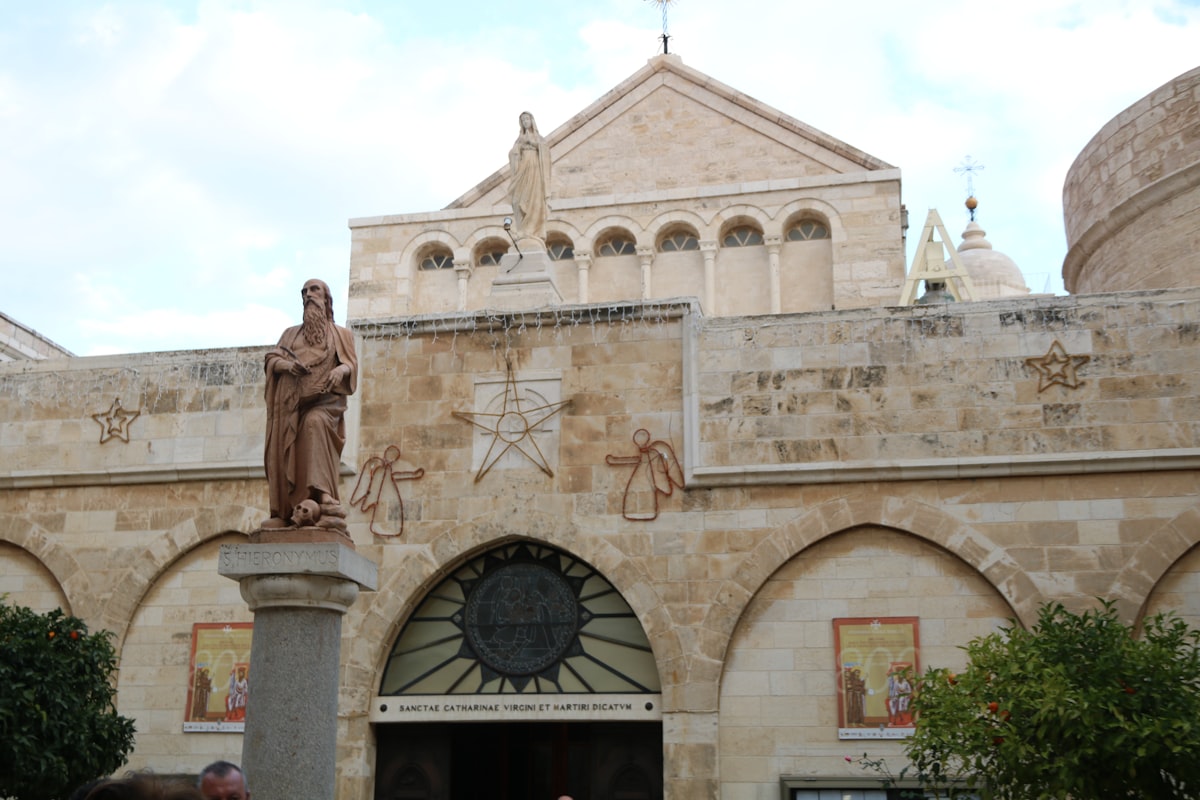
A 5-Minute Introduction to Bethlehem
Bethlehem sits ten kilometers south of Jerusalem, in the West Bank, on a ridge at 775 meters elevation. It has been continuously inhabited for more than 3,500 years — yes, thirty-five centuries. Long before it was the birthplace of Jesus, it was the setting for the Book of Ruth, the birthplace of King David, and the burial place of Rachel. Three stories in one city.
Today Bethlehem is an Arab-majority city in Area A of the Palestinian Territories, administered by the Palestinian Authority. The population is roughly 70% Muslim and 30% Christian, which is itself an extraordinary thing — Bethlehem has the highest proportion of Christians of any city in the Palestinian Territories, and one of the oldest continuous Christian communities on Earth, with unbroken worship in the Church of the Nativity since the 4th century.
Sixteen hundred years of the same prayers. In the same room.
Three things surprise nearly every first-time visitor:
- It is small. You can walk the entire Old City — Manger Square, the Church of the Nativity, the Milk Grotto, Star Street, the olive-wood workshops — in a single morning.
- It is Arab, not Israeli. The street signs are in Arabic. The shops sell knafeh and falafel. The call to prayer echoes five times a day. This is a local Christian city at the edge of the Islamic Arab world.
- It is cold in winter and hot in summer. Bethlehem is in the Judean Hills, not the desert. January mornings can be 5°C with frost. July afternoons can hit 32°C with the dry, stone-heated glare that every pilgrim underestimates.
If you take nothing else from this guide, take this: Bethlehem rewards slowness. The pilgrims who come for 90 minutes on a bus tour from Jerusalem — which is still the most common way people see this city — leave having seen almost nothing. The ones who spend a full day, or better, stay overnight, leave with something they carry for the rest of their lives. Not close. Not even close.
The 10 Sites Every Visitor Should See
These are the ten places I take every first-time pilgrim. In order of significance, not order of visit — the logical walking order is different, and I cover that further down.
Use the map below to orient yourself. As you scroll through the ten sites, pins highlight automatically.
1. The Church of the Nativity
The oldest continuously operated church in the world. You enter through the Door of Humility — a stone opening so low you must bow to pass — and step into a basilica that has been holding services for sixteen centuries. The silver fourteen-pointed star in the Grotto beneath the altar marks the traditional site of the birth of Jesus. Expect lines; come early (before 9 AM) or late (after 4 PM) to avoid groups. The recent restoration revealed hidden golden mosaics on the upper walls — do not leave without looking up.
2. The Grotto of the Nativity
A small limestone cave below the main altar, accessed by stone stairs on either side of the sanctuary. The silver star on the floor bears the inscription: Hic de Virgine Maria Jesus Christus natus est — "Here Jesus Christ was born of the Virgin Mary." Adjacent is the Chapel of the Manger. This is the most visited square meter of real estate in the entire Holy Land. Full stop. Many pilgrims find it overwhelming and move through too fast. If I can, I bring my guests back twice — once in the morning rush and once in the quiet of late afternoon. Different grotto.
3. Manger Square
The large paved plaza in front of the Church of the Nativity, lined by the Mosque of Omar, the Peace Center, and municipal offices. During Christmas, this is where the world sees Bethlehem on television — the giant tree, the midnight Mass procession, the crowds. In normal times it is a public square where local families gather and children chase pigeons. A good place to pause, sit on the edge of the fountain, and simply watch the city be itself.
4. Shepherds' Field (Beit Sahour)
The traditional location where the angels announced the birth of Christ to the shepherds. There are two sites: the Catholic Franciscan field (with a chapel designed by Antonio Barluzzi, shaped like a shepherd's tent) and the Greek Orthodox field with a 5th-century Byzantine church. Olive groves, cave chapels, and a view across the Judean hills that has not substantially changed in 2,000 years. I prefer Shepherds' Field in late afternoon, when the light turns amber and you can actually hear sheep bells in the distance.
5. The Milk Grotto
A small chapel built over a chalky white limestone cave. Tradition holds that Mary nursed the infant Jesus here while they hid before the flight into Egypt, and that a drop of her milk turned the stone white. For centuries, Christian and Muslim women have come here to pray for fertility and for the health of nursing mothers. The cave is quiet, cool, and — unlike the Church of the Nativity — rarely crowded. Many of my guests tell me it is their most unexpectedly moving stop.
6. Star Street (The Pilgrim Route)
The historic processional route that Mary and Joseph are traditionally said to have walked into Bethlehem. Today it is a narrow, winding stone street lined with Ottoman-era houses, small chapels, olive-wood workshops, and bakeries. Walk it slowly. Peer into courtyards. Buy a fresh ka'ak (sesame bread ring) from a street vendor. This street is on the UNESCO-nominated extension of Bethlehem's World Heritage listing, and in my opinion it tells more of the real story of Bethlehem than any single church can.
7. The Separation Wall & Banksy Art
An 8-meter-high concrete barrier built in the early 2000s, now covered in hundreds of political murals — including several originals by the British street artist Banksy (the Flower Thrower, the Dove in Bulletproof Vest, the Girl Frisking a Soldier). Near the wall sits Banksy's own "Walled Off Hotel," a combination hotel, museum, and gallery. This is not a cheerful stop, but it is an honest one. Pilgrims who only see the churches leave with half a story. The wall is part of Bethlehem now. Most of my guests are glad they saw it.
8. The Olive Wood Workshops
Olive-wood carving has been the signature craft of Bethlehem's Christian families for over 400 years. Watching a master carver shape a nativity set, a cross, or a rosary from a single piece of locally-grown olive wood is one of the most human experiences the city offers. I always bring my guests to a working family workshop rather than a tourist showroom — you pay less, you see real craftsmanship, and your money goes directly to a Bethlehem family rather than a middleman.
9. Rachel's Tomb
The traditional burial site of the biblical matriarch Rachel, venerated by Jews, Christians, and Muslims. Today it sits within a fortified Israeli-controlled enclave at the northern edge of Bethlehem, reachable only from the Jerusalem side — which makes visiting from within Bethlehem complicated. For Christian pilgrims, it is usually a Jerusalem-side stop rather than a Bethlehem stop. I mention it because nearly every pilgrim asks about it.
10. Mar Saba Monastery (Day Trip)
A 5th-century Greek Orthodox monastery carved into a cliff face above the Kidron Valley, one of the oldest continuously inhabited monasteries in the world. Men only inside (women can view from the exterior lookout — there is a striking one). The drive out through the Judean wilderness is itself worth it. I put this on any three-day Bethlehem itinerary, and it is almost always the trip the guests talk about years later.
How to Get to Bethlehem
Bethlehem is one of the easiest cities to reach in the region — if you know which route to take. Here is how, from the four most common starting points.
From Jerusalem (most common)
The distance is only 10 km, but you cross a checkpoint between Israeli-controlled and Palestinian-controlled territory. Three options:
- Private driver or licensed guide (recommended): 20-30 min each way, no walking at the checkpoint, flexibility to stop at Shepherds' Field or other sites on the route. This is what I organize for every guest.
- Arab bus 231 from Jerusalem's Damascus Gate: Very cheap (around 8 NIS), drops you near Rachel's Tomb, from where you walk or taxi into the Old City.
- Taxi from Jerusalem: A regular Israeli taxi cannot cross the checkpoint. You will be dropped at the wall, walk through the pedestrian crossing, and pick up a Palestinian taxi on the other side. It works, but it is awkward if you have luggage or limited mobility.
From Tel Aviv / Ben Gurion Airport
Ben Gurion is about 70 km from Bethlehem. A private transfer takes 1.5 to 2 hours depending on checkpoint traffic. There is no direct public transport — you would have to go via Jerusalem. For most international pilgrims, a private transfer booked in advance is the only practical option.
From Amman, Jordan
The Allenby (King Hussein) Bridge crossing is the closest border for pilgrims combining Jordan and the Holy Land. Plan for 3-4 hours total including the crossing, which can be slow. A common itinerary is Amman → Mount Nebo → Allenby Bridge → Jericho → Bethlehem, which breaks the drive into meaningful stops.
From Cruise Ports (Ashdod or Haifa)
Both ports are within 2 hours of Bethlehem by private transfer. Most cruise ship shore excursions include Bethlehem as a half-day component of a Jerusalem tour, though the 90-minute window they allow is, frankly, too short to do the city justice.
When to Visit Bethlehem
Every season has a different character. There is no single "best" time — only the one that matches what you want from the trip. See what I mean? The question itself is wrong.
Bethlehem by Month: Weather, Crowds, Cost
My honest pick: Late October through mid-November. Olive harvest, soft light, small crowds, affordable hotels, 16-26°C weather. Second pick: March. Third pick: Christmas week (expensive, crowded, but you will never forget it).
Spring (March – May)
The best weather: 15-25°C, wildflowers on the hillsides, almond blossoms in the olive groves, clear light. This is the peak Christian pilgrimage season, especially the weeks around Holy Week and Easter. Expect crowded churches but vibrant processions. If you want Easter in Bethlehem, book lodging 6-9 months in advance.
Summer (June – August)
Hot and dry: 28-34°C with almost no rain. The stone city radiates heat by 2 PM. But summer also brings the longest daylight, the largest Christian summer pilgrimage groups from Latin America and the Philippines, and warm evenings in Manger Square that are frankly magical. Drink more water than you think you need.
Fall (September – November)
In my opinion, the best season. Temperatures drop to 18-26°C, light is softer, crowds thin out after the early September groups leave, and the olive harvest begins in mid-October. Watching a Bethlehem family harvest their olive trees — a tradition 2,000 years old — is an experience you cannot buy as a ticket.
Winter (December – February)
Cold, often wet, occasionally snowy. Temperatures can drop to freezing at night. But this is Christmas in Bethlehem — the one season on Earth where the Christmas story is not a decoration but an actual place. Midnight Mass on December 24 at the Church of the Nativity (for Catholics) is one of the most extraordinary experiences a Christian can have. Orthodox Christmas falls on January 7. Armenian Christmas on January 18. Bethlehem does Christmas three times, and all three are real.
Day Trip from Jerusalem or Overnight? How Long Should You Stay?
The single most common planning question I get. Here is the honest comparison.
Half-Day Trip
Most cruise-ship tours, some group bus tours
- + Fits into a packed Jerusalem-centered itinerary
- + Cheapest option
- − 90 min in the Old City is not enough
- − No Shepherds' Field, no Mar Saba
- − You miss the evening, which is the best part
Full Day from Jerusalem
What most pilgrims do
- + Church of the Nativity without rushing
- + Shepherds' Field + olive-wood workshop
- + Lunch in a Palestinian restaurant
- + Manageable for group pilgrimages
- − Still no evening in Manger Square
2-Night Stay
What I recommend for a real pilgrimage
- + Full day 1 + full day 2 with Mar Saba
- + Evening Mass at the Church of the Nativity
- + Dinner in a local restaurant
- + Early-morning quiet time in the Grotto before groups arrive
- − Costs more
Checkpoint 300: What to Expect
Every pilgrim asks about this. So let me address it directly.
Checkpoint 300 is the main Israeli-controlled crossing between Jerusalem and Bethlehem. It sits near Rachel's Tomb at the northern edge of the city. For most visitors arriving in a vehicle with a local Israeli or tourism license, the crossing takes under five minutes. You typically stay in the vehicle. Sometimes you are waved through with a glance; sometimes a soldier checks passports.
If you walk across (common for independent travelers using public bus), you enter a covered concrete corridor, pass a turnstile, show your passport at a window, and exit the other side. The whole process takes 5-20 minutes depending on time of day. Early morning (before 7 AM) can be slow because Palestinian workers commute to Jerusalem. Friday afternoon is also slow because of the weekend shift.
- Bring: Your passport (original, not a copy). Your visa stamp (on a paper slip, usually). Your hotel booking printed.
- Do not bring: Fruit, soil samples, items marked with the logos of certain organizations (a guide will tell you). Drones are forbidden without permits.
- Photography: Not allowed inside the checkpoint. Fine from a distance on either side.
- Tone: Neutral, polite, brief answers. The soldiers are doing their job. So are you.
With a licensed guide in a proper vehicle, the whole crossing is a non-event. For most of my guests, they do not even remember crossing — they realize later they were already in Bethlehem.
Is Bethlehem Safe to Visit Right Now?
I get this question in nearly every email I receive.
The short answer is yes — with the caveat that "safe" in 2026 looks different from "safe" in 2019. Here is the longer, honest answer:
Bethlehem has not experienced direct conflict in the city itself during the current regional situation. Daily life continues. The Church of the Nativity is open. Shepherds' Field is open. Local families still walk to school, work, the grocer, the mosque, the church. What has changed is the tourism ecosystem: fewer group pilgrimages, longer checkpoint waits, fewer international flights, and a general cloud of uncertainty among potential visitors.
For well-prepared travelers with a private guide and a flexible itinerary, Bethlehem is genuinely safe to visit in 2026. The people coming right now are serious pilgrims — and they are rewarded with something extraordinary: the city without the crowds. You can stand in the Grotto of the Nativity and actually reflect, rather than be moved along by a guide herding forty people. Think about that for a second.
For a detailed, plain-language breakdown of what has changed, what has not, practical safety tips, and honest advice on whether this is your moment, read the full safety guide linked at the bottom of this page.
What to Pack for Bethlehem
The packing list is short but specific. Bethlehem has a particular climate (hill-country, not desert, not Mediterranean coast) and specific religious-site dress codes that catch many pilgrims off guard. Every week.
Essentials for Every Season
- Walking shoes with grip. The Old City is cobblestone, uneven, often wet in winter. No heels. No brand-new stiff boots.
- Modest clothing for churches. Shoulders covered. Knees covered. Men: no shorts inside the Grotto. Women: a light scarf for the head is useful but not required at Catholic sites (it is required at Greek Orthodox sites for certain liturgies).
- A refillable water bottle. Bethlehem tap water is safe for locals but I recommend bottled or filtered water for visitors. Every restaurant will refill your bottle.
- Passport (original). You will need it at checkpoints.
- A printed copy of your hotel booking. Useful at the Allenby crossing if you enter via Jordan.
- Cash in small denominations. Both shekels and US dollars are accepted almost everywhere; small olive-wood workshops and street vendors prefer cash.
Seasonal Additions
- Winter: Warm jacket, gloves, small travel umbrella. The churches are unheated stone — inside can be colder than outside.
- Summer: Sun hat with brim, high-SPF sunscreen, light long sleeves for sun protection inside churches, electrolyte tablets.
- Spring/fall: Layers. A light fleece plus a rain shell handles 90% of scenarios.
A Suggested 2-Day Bethlehem Itinerary
One day in Bethlehem is enough to see the headline sites. Two days is enough to actually understand the place. Here is the itinerary I build most often for pilgrims who want depth without rushing.
Day 1: The Birthplace
- 8:00 AM — Arrive at the Church of the Nativity before the tour buses (they typically arrive at 9:30). Enter through the Door of Humility. Quiet time in the Grotto.
- 9:30 AM — Walk to the Milk Grotto. Short prayer or reflection time.
- 10:00 AM — Manger Square. Coffee at one of the cafés on the edge.
- 10:45 AM — Working olive-wood workshop. Watch a carving in progress. Select something meaningful to take home.
- 12:30 PM — Lunch at a local Palestinian restaurant. Maqluba, mansaf, musakhan, or mezze with fresh bread.
- 2:30 PM — Drive to Shepherds' Field (Catholic site). Chapel visit. Walk among the olive trees.
- 4:00 PM — The Separation Wall and Banksy art. A sober, necessary stop.
- 5:30 PM — Return to hotel. Dinner and rest.
Day 2: The Wilderness
- 8:30 AM — Drive to Mar Saba Monastery through the Judean wilderness. Stop at overlooks along the way.
- 10:30 AM — Mar Saba visit. Silence, desert, 1,500 years of continuous prayer.
- 12:30 PM — Lunch in a Bedouin tent near the monastery road.
- 2:00 PM — Return via Herodium (King Herod's fortress-palace-tomb). Views across the Judean desert.
- 4:00 PM — Return to Bethlehem Old City. Walk Star Street slowly. Stop in a bakery.
- 6:00 PM — Evening Mass at the Church of the Nativity if schedules align. Dinner.
Christmas in Bethlehem: Dates, Tickets, What to Know
Bethlehem celebrates Christmas three times.
Not a metaphor. Literally three separate Christmas celebrations, on three different dates, by three different Christian traditions — all in the same city.
- Catholic Christmas — December 24 to 25. Midnight Mass at the Church of St. Catherine (attached to the Basilica of the Nativity), celebrated by the Latin Patriarch of Jerusalem. Televised worldwide. Tickets are free but distributed by the Latin Patriarchate starting in early December and are notoriously hard to obtain; most pilgrims watch on a big screen in Manger Square, which is an extraordinary atmosphere in its own right. Arrive by 6 PM on December 24 to get a spot.
- Greek Orthodox Christmas — January 6 to 7. Celebrated inside the Grotto of the Nativity itself. Smaller, quieter, profoundly beautiful. Patriarch of Jerusalem presides.
- Armenian Apostolic Christmas — January 18 to 19. The third celebration. Armenian Patriarch. The least crowded and in my view one of the most atmospheric — snow is possible at this time.
Book lodging at least 6 to 9 months out for any of the three, but especially Catholic Christmas. December 23-26 hotel prices can triple. Private tour availability gets locked up early.
Palestinian Crafts: What to Buy and Where
Bethlehem has been making religious crafts for pilgrims since the 4th century. Buying directly from a Bethlehem family is one of the most meaningful things you can do here — your money goes straight to a local artisan, not to a middleman.
- Olive-wood carvings. The signature craft. Nativity sets, crucifixes, rosaries, figurines. Look for pieces hand-carved from a single block of Bethlehem olive wood rather than mass-produced pieces from an assembly workshop. Prices range from $5 (a simple cross) to $2,000+ (a museum-grade nativity scene).
- Mother-of-pearl inlay. Crosses, crucifixes, plaques inlaid with Bethlehem mother-of-pearl. A local art form that has survived 400 years in only a handful of family workshops.
- Palestinian embroidery (tatreez). Traditional hand-embroidered textiles. Each village has its own pattern. A thobe, wall hanging, or pillow cover is a beautiful take-home.
- Soaps and cosmetics. Nablus olive-oil soap is regionally famous. Local Bethlehem producers make beautiful versions.
- Ceramics. Armenian-Palestinian tile and pottery from the Old City of Jerusalem travel well and are distinctive.
Where to buy: Ask a local guide to bring you to a working family workshop rather than a tourist showroom. The workshops on the back streets off Manger Square employ second- and third-generation carvers; their pieces are better and cheaper than the glass-fronted stores on the main tourist path. Elijah Tours is happy to include a workshop visit as part of any tour at no extra cost — we do not take kickbacks from the workshops, so the pricing you get is the pricing locals pay.
Where to Eat and Stay
I do not publish a restaurant list because the best places in Bethlehem change, and good guides keep that information current for their guests. That is the honest reason.
But some general guidance:
Food. Bethlehem is Palestinian-Arab cuisine at its best. Do not leave without trying musakhan (sumac chicken on flatbread with caramelized onions), knafeh (cheese pastry in rose syrup), fresh falafel, and za'atar man'oushe (thyme flatbread) from a street oven in the morning. Most restaurants in the tourist zones are acceptable; the great ones are tucked into residential neighborhoods and require someone to take you there.
Hotels. Bethlehem has three tiers: the boutique Christian-pilgrim houses run by religious orders (simple, immaculate, rich in atmosphere); mid-range hotels near Manger Square; and a handful of international-standard properties including one 5-star option. Many pilgrims stay in Jerusalem and day-trip to Bethlehem, which I generally advise against — you miss the evenings, which are the best part. At minimum, stay one night.
Cultural Etiquette & Common Mistakes
A few things that pilgrims regularly get wrong. All of them are easy to get right once you know.
- Greetings matter. "Salaam alaikum" (peace be upon you) works everywhere, with both Christian and Muslim shopkeepers. A slight nod is respectful. Do not offer a handshake to the opposite sex unless it is offered first.
- Bargaining is expected in workshops and markets. Start at 60-70% of the asking price. Laugh. Drink the tea they offer. This is not hostility; it is conversation.
- Photography inside churches. Allowed in the Church of the Nativity; respectful silence during services. Not allowed in some Greek Orthodox chapels. If in doubt, ask.
- Tipping. 10% is generous at restaurants (Palestinian service culture does not assume high tips the way American culture does). 50-100 NIS per day to your guide is customary; more for exceptional service.
- Political conversations. Palestinians are generally open to respectful questions about their lives. What we appreciate is curiosity, not debate. Listen more than you argue.
- Fridays in the Old City. Muslim Friday prayers happen between roughly 11:30 AM and 1:30 PM. Streets near the Mosque of Omar get quiet, then very busy. Plan non-religious visits around that window.
Combining Bethlehem with Jerusalem & the Holy Land
Almost no one visits Bethlehem in isolation. And honestly, they should not. Here are the combinations I build most often, in order of how much time you have:
For a deeper look at the full Holy Land itinerary, see my related guides: A Full Day in Bethlehem, Easter in Bethlehem, and Is It Safe to Visit Bethlehem in 2026?
2 Days — Jerusalem + Bethlehem
Classic pilgrim minimum. Day 1: Jerusalem Old City (Via Dolorosa, Holy Sepulchre, Western Wall). Day 2: Bethlehem. Cramped but workable.
4 Days — Classic Holy Land Core
Jerusalem (2 days), Bethlehem (1 day), Galilee day trip including Nazareth & Sea of Galilee (1 day). The most common package itinerary.
7 Days — The Full Holy Land
Jerusalem (2), Bethlehem (1.5), Galilee & Sea of Galilee (2), Jericho + Dead Sea + Qumran (1), Mount Nebo + Jordan side (0.5). This is the pilgrimage most people remember for the rest of their lives.
10 Days — Deep Pilgrimage
The 7-day itinerary plus Masada, Ein Gedi, Caesarea, Mar Saba, Herodium, Mount of Olives sunrise, and enough unscheduled time to actually pray. For pilgrims who only plan to do this trip once, this is the depth I recommend.
Why Work with a Local Guide
I am a local guide. Of course I am going to say you should hire one. Bias acknowledged. Let me explain why I genuinely believe it anyway, separate from the self-interest.
Bethlehem is layered. The stone in the Grotto is the literal stone. The cave you stand in is a real cave, one of hundreds in this limestone ridge, many of which were used as shelters and stables in the first century. The olive tree in the courtyard of the church dates to roughly the Crusader era. The mosaics under the current floor were laid in the 4th century. Without someone who knows the history, the theology, and the current political reality, you see a church. With the right guide, you see 2,000 years of human meaning layered into one square mile.
A local also solves the practical problems: the checkpoint, the currency, the language, the which-lane-is-faster, the when-does-the-Grotto-close-for-Mass, the what-is-that-siren.
You get time back. You get peace of mind.
And — this matters to me — your tour money goes directly to a Bethlehem family rather than a global operator.
If you are considering a tour, I run private small-group pilgrimages for families, parishes, and individual travelers. Seventeen years of reviews. First-hand knowledge. No pressure. Contact me and I will tell you honestly whether what I offer matches what you need — and if it does not, I will tell you that too.
"Bethlehem is not a place you check off a list. It is a place that asks you to slow down long enough to remember why you came." — Elias Boaz, Bethlehem, 2026
Plan Your Bethlehem Pilgrimage with a Local Guide
Private tours with Elias. Small groups. Real stories. 17 years guiding pilgrims and travelers in the Holy Land.
See Tours & Book