Written by Elias Boaz, a local guide born in Bethlehem. This is not a report from a news desk. It is what I see from my window every morning.
Every week, I receive the same message from pilgrims around the world: "Is it safe to come to Bethlehem right now?"
It is the most honest question anyone can ask. And you deserve an honest answer from someone who actually lives here — not a headline, not a travel advisory written from a desk in London or Washington.
So here is the truth, as I see it from Bethlehem today.
The Current Situation in Bethlehem (2026)
Bethlehem is located in the West Bank, approximately 10 kilometers south of Jerusalem. It is separate from Gaza, which is where the main conflict has been focused. These are two very different places, and that distinction matters enormously for travelers.
Since October 2023, Bethlehem has experienced significant disruption to tourism, but not due to direct conflict in the city itself. The challenges have been:
- The closure of Ben Gurion Airport to international flights for extended periods
- The cancellation of group pilgrimages by tour operators in Europe and North America
- General fear and uncertainty among potential visitors
- Increased checkpoint procedures and wait times
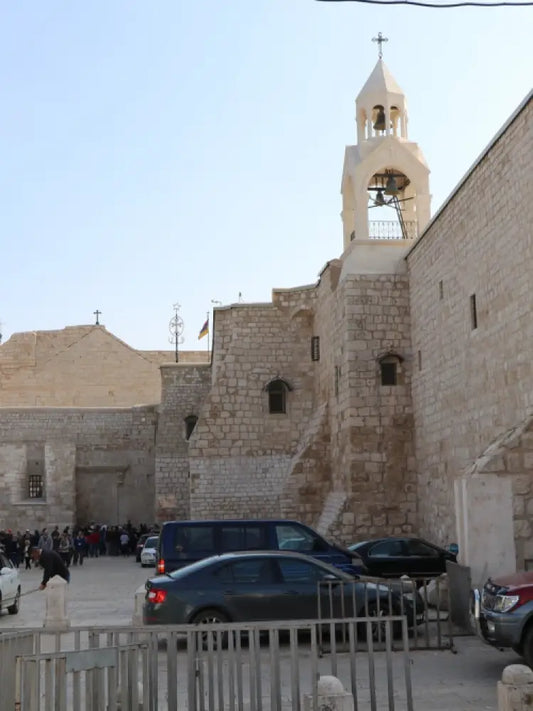
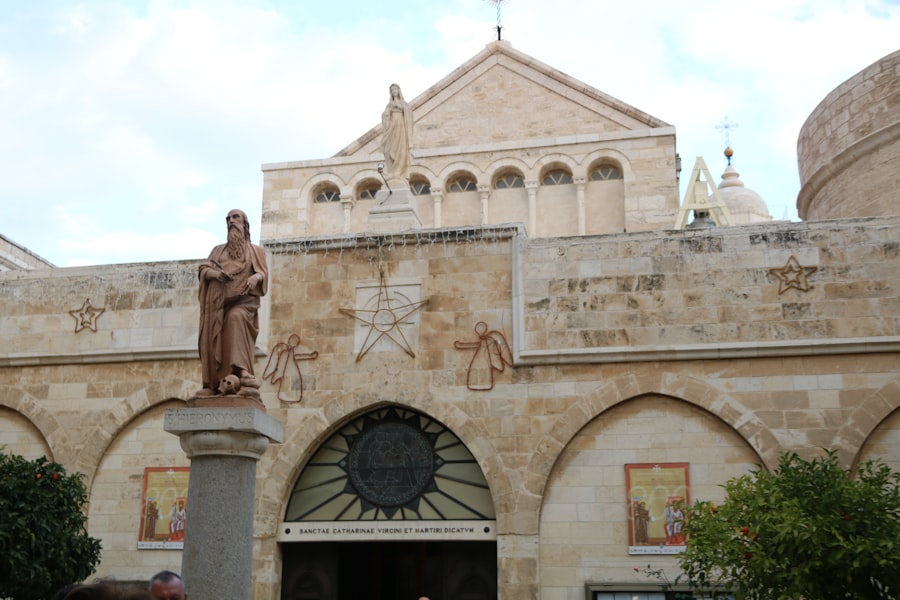
Daily life in Bethlehem continues. The Church of the Nativity stands as it has for 1,700 years. The streets of Manger Square still fill with local families on weekends. The olive wood workshops still operate. People still gather, pray, and go to work.
This is not a city under siege. It is a city waiting for the world to return.
What Has Actually Changed for Visitors
I want to be specific, because vague reassurances help no one. Here is what is genuinely different for visitors coming to Bethlehem in 2026 compared to before October 2023:
What Is Different
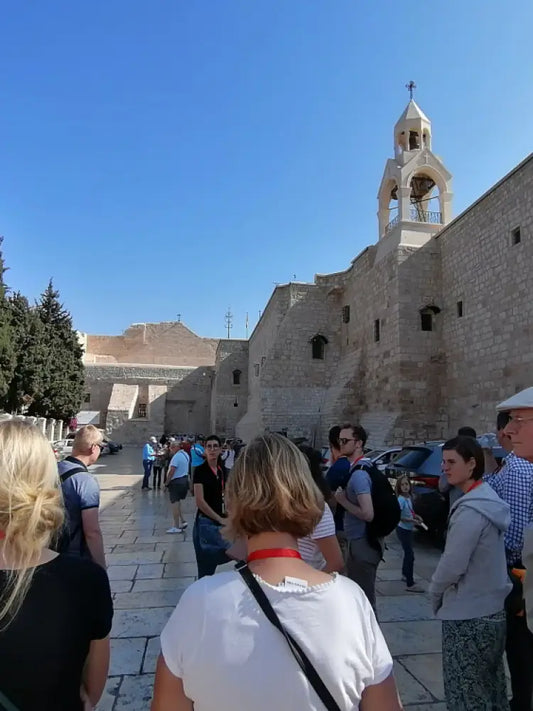
- Fewer crowds. The Church of the Nativity, which once had queues stretching over an hour, can now be visited in calm and quiet. If you have always wanted to stand at the spot where Jesus was born without being rushed by a crowd, this is actually the moment.
- Extended checkpoint waits. The checkpoint at the entrance to Bethlehem occasionally has longer processing times. Build 30–45 extra minutes into your schedule.
- Some businesses have reduced hours. Tourism is the lifeblood of this city. With fewer visitors, some restaurants and shops have reduced their hours or temporarily closed.
- No large group tours. Most large Catholic pilgrimage operators have paused their group tours. Private and small-group tours with local guides are still operating and, in my view, offer a far better experience anyway.
What Has Not Changed
- The Church of the Nativity is open and accessible.
- Shepherd's Field is open and peaceful.
- The Milk Grotto is open.
- Local guides are available and eager to show you the city they love.
- The warmth and hospitality of the Bethlehem people — this has not changed at all.
Who Is Coming to Bethlehem Right Now?
Despite the headlines, Bethlehem is not empty. Throughout 2025 and into 2026, I have been guiding visitors from the United States, Canada, the United Kingdom, Germany, Italy, Brazil, South Korea, and the Philippines.
These are not reckless travelers. They are pilgrims who did their research, made an informed decision, and came. Most of them tell me afterward that it was the most meaningful trip of their lives — in part because of the quiet. Because they could stand in the Grotto of the Nativity and actually reflect, rather than being moved along by a guide herding 40 people.
The ones who come now are serious pilgrims. And they are rewarded for their courage.
Practical Safety: What to Know Before You Visit
Let me give you the practical information you need to make a confident decision.
Getting to Bethlehem
Most international visitors fly into Ben Gurion Airport near Tel Aviv, or alternatively into Amman, Jordan. From Ben Gurion, the drive to Bethlehem takes approximately 1.5 to 2 hours depending on checkpoint traffic. From Amman, you cross the Allenby Bridge border crossing into the West Bank — plan for 3–4 hours total including the crossing.
I strongly recommend using a licensed private guide for your entire trip, not just for the tour itself. A local guide navigates checkpoints efficiently, knows the current situation on the ground, and can adjust plans instantly if anything changes.
What to Carry
- Your passport (always — the original, not a copy)
- A printed or saved copy of your accommodation booking
- Your guide's phone number saved and accessible offline
- Travel insurance that explicitly covers the West Bank (check your policy — many standard policies exclude it)
The Question Behind the Question
When people ask me "Is it safe?" what they are often really asking is something deeper: Is this trip worth it? Will I regret going?
I have guided over 10,000 tours since 2009. I have seen pilgrims arrive uncertain and leave transformed. I have watched people weep silently in the Grotto — not from sadness, but from the weight of standing somewhere they have believed in their whole lives.
That does not change based on what is happening in the news. The stones of the Church of the Nativity do not change. The star that marks the birthplace of Christ does not move. The experience of pilgrimage — of walking where the story of your faith actually happened — is as powerful today as it was before any of this started.
Is there uncertainty right now? Yes. But uncertainty is different from danger. And the people who understand that difference are the ones who come, and who leave with something they carry for the rest of their lives.
My Honest Recommendation
If you are asking me directly: yes, I believe it is safe to visit Bethlehem in 2026 for well-prepared travelers with a private guide.
But I will not tell you it is without complexity. It requires more planning than it did in 2019. You need to check entry requirements carefully, confirm your flight and insurance situation, and work with someone on the ground who knows the current reality — not a global tour operator working from a spreadsheet.
If you are ready to come, contact us. I will tell you honestly whether the timing works for your specific situation, what to expect at every step, and how to make the most of your time here. If I do not think it is the right moment for your particular group or circumstances, I will tell you that too.
That is what a local guide does. That is what I have done for 17 years.
"We are a city that has welcomed the world for 2,000 years. We are still here. We are still welcoming. And we are waiting for you." — Elias Boaz, Bethlehem, 2026
Plan Your Holy Land Tour
Questions about this route or current visiting conditions? Elijah Tours can help you plan a private itinerary around your dates and interests.