"There are places in the Holy Land where you feel the centuries compress. Wadi Qelt is one of them. A canyon cut through white limestone, a spring that has never run dry, and a monastery clinging to a cliff where monks have prayed since the fifth century. Most pilgrims drive past it on the way to Jericho. That is the one thing I would tell them not to do."
Having walked these routes with travelers, Wadi Qelt is a dramatic canyon in the Judean Desert, cutting east from Jerusalem toward Jericho through white limestone hills. Saint George's Monastery, also called Deir Mar Jiryis or the Monastery of Saint George of Choziba, is a Greek Orthodox monastery built directly into the canyon's cliff face. Founded in the 5th century CE, it is one of the oldest continuously inhabited monasteries in the Holy Land, and most pilgrims pass within two kilometers of it without ever going down.
What Is Wadi Qelt?
From years of guiding visitors here, most people on the road from Jerusalem to Jericho are looking at their phones. That bothers me a little. Because that road runs along the rim of a canyon that has been carrying water and harboring holy men for thousands of years.
In my experience leading tours, Wadi Qelt is a canyon fed by three perennial springs, Ein Qelt, Ein Fawar, and Ein Fawwar, that flow east toward the Jordan Valley.
Here's something worth knowing: The water runs year-round, even through the driest summers, which is honestly part of why this place has never been empty. Desert wadis with permanent springs become magnets for life. And in this part of the world, they become magnets for prayer.
The road above the canyon is the ancient route from Jerusalem to Jericho. Jesus walked it. In Luke 10:25-37, he set the Parable of the Good Samaritan on this exact road. When you stand at the bottom of the canyon and look up at the route snaking along the ridge, the parable stops being abstract. You can see exactly where someone could have been left on the side of the road. You understand the distance involved. The help that came, and the help that did not.
There is also the tradition, held by pilgrims and monks here for centuries, that this is the brook Cherith where Elijah the Prophet hid and was fed by ravens (1 Kings 17:3-6).
Scholars debate the exact location; the Bible describes the brook as east of the Jordan, which places it in a different region. But standing next to the spring in this canyon, with ravens actually circling overhead sometimes, you understand why the connection took hold.

Saint George's Monastery: Sixteen Centuries on a Cliff
The monastery was not built so much as carved into the rock.
The first Christian monks arrived here around 420 CE. John of Thebes, an Egyptian hermit, established a small community in the natural caves of the canyon wall. Later, in the 7th century, a monk named George of Choziba lived here as an ascetic. He gave the monastery its enduring name. The community grew, the church was built into the cliff, and the place became a destination for pilgrims traveling between Jerusalem and the Jordan River.
Then came the Persian invasion of 614 CE. The monks were killed. Their skulls are still here, in a small ossuary chapel, arranged on shelves. Not a display. A memorial.
The Crusaders rebuilt parts of the monastery in the 12th century. It fell into ruin again. In the late 19th century, the Greek Orthodox Patriarchate of Jerusalem undertook a full restoration, and the monastery that stands today is the result of that work, though much of the original stonework and the cave cells above date to the early centuries.
A small community of Greek Orthodox monks lives here now. They keep the hours of prayer, maintain the church, and receive visitors with the quiet hospitality that monasteries do. They are not tour guides. They are not performing. They are living a life that has been lived in this canyon for sixteen hundred years. I've seen people tear up just standing in the doorway.
Two Ways to Visit: The Hike vs. The Drive
Interested in seeing our collection? → Browse Tours to Jerusalem

Mount of Olives Jerusalem Sunrise , Photo by David Holifield on Unsplash
This is the first question people ask me when I mention Wadi Qelt. And both options are legitimate. They give you different things.
The hike begins near Ein Qelt spring, accessed off Route 1, the Jerusalem-Jericho road. The trail follows the north wall of the canyon, passing the spring pools and stands of oleander before arriving at the monastery. It is rocky in places. There are sections where the path narrows and you are holding yourself against the cliff. Not technical climbing, but not a stroll either. Good shoes with ankle support are important.
The drive option means taking the road that descends toward the monastery from the Jericho side. You park near the canyon rim and walk a paved, stepped path down to the monastery forecourt. Fifteen minutes instead of two and a half hours.
One thing I want to be direct about. August in this canyon is brutal. I mean 40-plus Celsius in direct sun, no shade for long stretches of the trail. I have taken people on the hike in summer. I do not recommend it. If you are visiting in July or August, use the drive-and-walk. Bring more water than you think you need. Go early in the morning before the day fully heats.
If it is October, or March, or any cool month? The hike is worth every minute.
What You'll Actually See at the Monastery

What to See in Bethlehem Church of the Nativity
The view comes first.
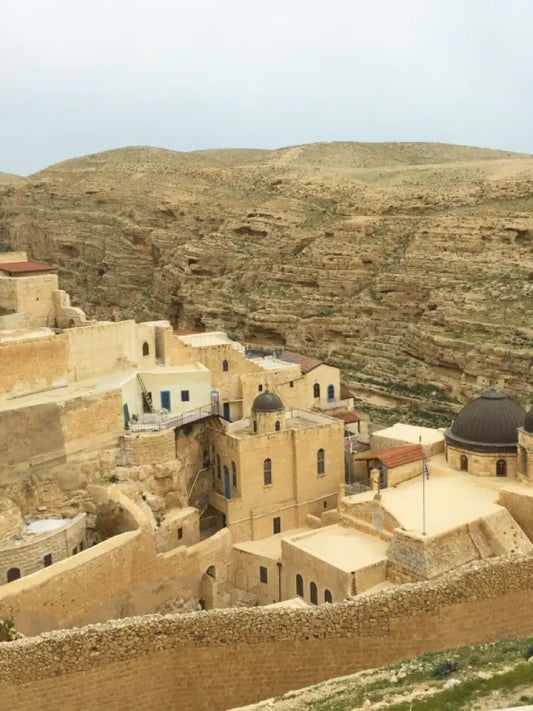
You are on the path, you round a corner, and there it is: a monastery plastered against a vertical cliff face, white and rust-colored and old in a way that photographs never fully capture, because photographs flatten depth. Here the depth is the whole point. The cliff is real. The structure built into the cliff should not be possible, and it has been there for sixteen centuries.
The forecourt is small.
The monks who are present will acknowledge you with a nod. Move quietly.
Things you will actually see:
- The main church: dedicated to the Prophet Elijah and Saint George, small and dark, lit by oil lamps, covered in icons. If monks are at prayer when you arrive, you wait outside or in the narthex. That is appropriate.
- The cave cells: carved into the cliff above the church, where hermit monks once lived in near-total silence. You can see them from below but not reach them. The inaccessibility is part of the point.
- The ossuary: a side chapel containing the skulls of the monks killed in 614 CE, arranged on shelves. Not everyone wants to go in. But for those who do, it does something. It makes the history concrete in a way that dates on a plaque cannot.
- The water: channels from the canyon spring run through the monastery courtyard. You can hear it before you see the monastery. In a desert landscape, the sound of running water is something.
- The view back up: standing in the courtyard and looking up at the canyon walls is the image that stays with most visitors longer than any of the interiors.
Photography is fine in most exterior areas. Inside the church, and near the altar, ask first. Never photograph the monks without their permission.

Practical Guide: Everything You Need Before You Go
Interested in seeing our collection? → Browse Tours to Bethlehem

What to See in Bethlehem Church of the Nativity
Here is the straightforward part.
Getting there. From Jerusalem, take Route 1 east toward Jericho. The monastery approach and viewpoint are approximately 28 km from Jerusalem, a 30 to 35-minute drive. From Jericho, drive west on Route 1, about 10 km. GPS: search "Wadi Qelt" or "Saint George's Monastery Wadi Qelt."
Hours. Generally open daily except Sundays, from approximately 9am to 1pm. Hours can shift during major religious holidays. I always tell clients to verify the day before if they are traveling outside the regular tourist season.
Dress code. This is non-negotiable at an active Greek Orthodox monastery. Covered shoulders and knees for everyone. Women should wear long pants or a skirt and a sleeved top. Men, no shorts. Carry a light shawl in your bag.
What to bring: - At least 1.5 liters of water per person (more if hiking) - Hat and sunscreen - Closed-toe shoes with grip if you are hiking; sandals are acceptable for the drive-and-walk - A camera, though your phone is fine
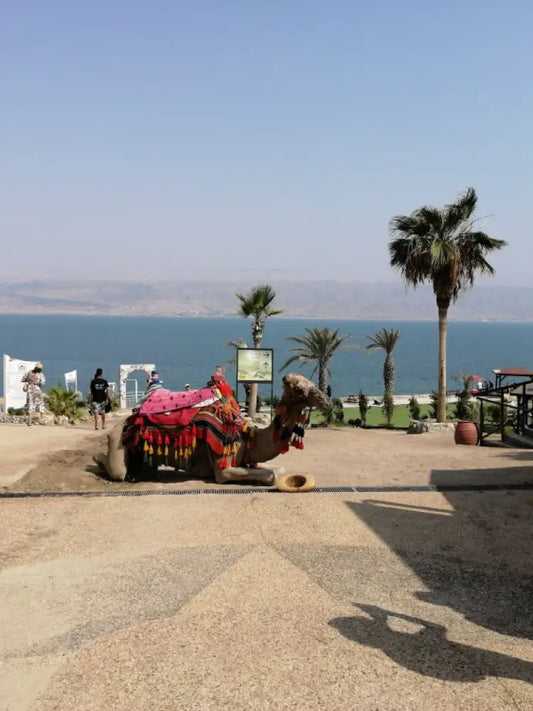
How to combine this with other sites. Wadi Qelt pairs naturally with Jericho, which is 15 minutes away. The combination of the monastery, authentic tell es-sultan, and the Zacchaeus sycamore tree fills a good morning. If you want to add a float in the Dead Sea, the Dead Sea shore is about 30 minutes south of Jericho. Many pilgrims do the full Wadi Qelt, Jericho, Dead Sea day and it works well. For how to fit this into a longer trip, see our 10-day Holy Land itinerary guide.
If you would rather not navigate the route yourself, we run private tours from Jerusalem and Bethlehem that include Wadi Qelt, and we can build the day around your group's pace. Wadi Qelt is also included in several of our day tours to the Judean Desert and Jericho.
What This Site Means for Christian Pilgrims

What to See in Bethlehem Church of the Nativity
The Holy Land has no shortage of biblical sites. I have stood at most of them, many hundreds of times.
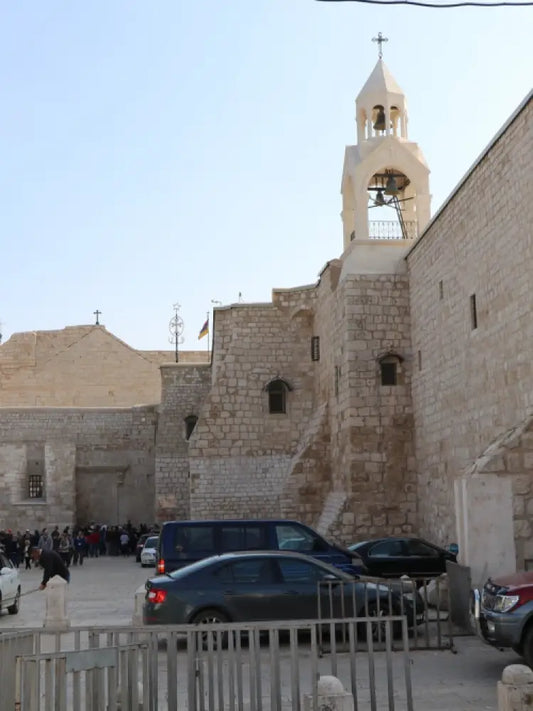
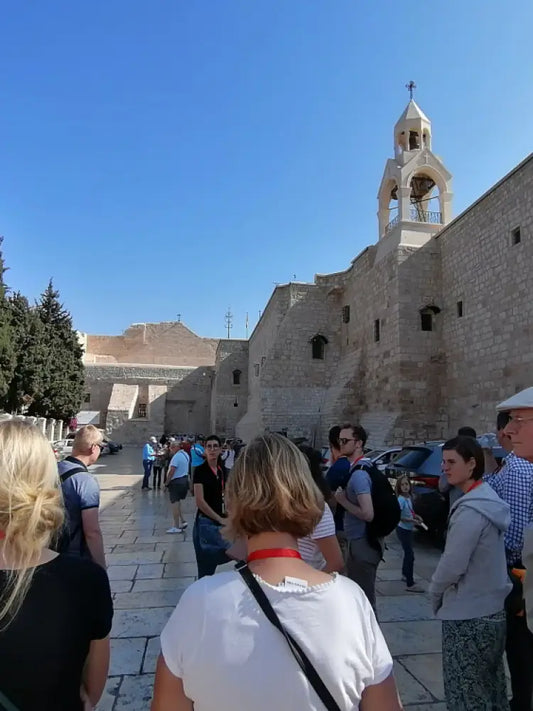
What Wadi Qelt offers that the bigger sites often cannot is space. The Garden of Gethsemane is extraordinary, but it is surrounded by tour buses most mornings. The Church of the Nativity in Bethlehem is profound, but you may spend most of your visit in a queue. Wadi Qelt is mostly empty. You can stop. You can actually stop and sit with what you are looking at.
The biblical connections here are layered without being forced. Elijah's brook. The Good Samaritan road. The route Jesus himself walked on his journey to Jerusalem. And above all of that, sixteen centuries of monks praying in a cliff-face chapel in the middle of the Judean Desert, maintaining a practice that has outlasted every empire that has passed through this land.
"I am a guide, not a theologian. But from what I have seen, standing beside hundreds of different pilgrims at the monastery forecourt and watching what happens when they look up at that cliff and the church built into it: something shifts. It is quiet, and then it is not quiet in the way that matters."
I had a couple from Columbus, Ohio with me last year. They had already done Jericho and the Dead Sea, and at the end of the day they asked: "Is there anything we are probably going to miss because most guides don't bother?" I drove them to Wadi Qelt at 4pm. We took the drive-and-walk down. The light was going golden on the canyon walls.
The husband sat on the stone steps outside the monastery for twenty minutes without saying a word. When they finally walked back to the car, he said, "I don't think I've ever been anywhere that felt this old."
There was nothing to add to that.

Key Takeaways
- Wadi Qelt is a Judean Desert canyon between Jerusalem and Jericho, with a 5th-century Greek Orthodox monastery built into its cliff face.
- Saint George's Monastery is generally open daily except Sundays; modest dress (covered shoulders and knees) is required.
- Two visit options: a full canyon hike from Ein Qelt spring (best October to April, approx. 5 km one way) or a short drive-and-walk accessible year-round.
- No entrance fee for the monastery; small parking charge at the trailhead.
- Best combined with Jericho (15 min away) and/or the Dead Sea for a full day.
If you are planning your Holy Land itinerary and want to talk through how to include Wadi Qelt, reach out to us here. We have been guiding pilgrims through this canyon for years and know it in every season.
Frequently Asked Questions

What to See in Bethlehem Church of the Nativity
What is Wadi Qelt and why do pilgrims visit it?
Wadi Qelt is a canyon in the Judean Desert running from Jerusalem to Jericho, fed by three perennial springs and home to Saint George's Monastery, a Greek Orthodox monastery built into the cliff face and founded in the 5th century CE. Christian pilgrims visit for its biblical connections (the Good Samaritan road runs along the ridge above, the Elijah tradition is associated with its springs), for the 1,600-year history of unbroken Christian monastic life, and for the rare combination of dramatic desert landscape and a living faith community.
Is Saint George's Monastery open to visitors?
Yes. The monastery is generally open to visitors daily except Sundays, from approximately 9am to 1pm. Hours can shift during major Greek Orthodox religious holidays, so it is worth verifying if you are visiting outside the regular tourist season. Modest dress is required. There is no entrance fee to enter the monastery.
How hard is the Wadi Qelt hike?
The hike from Ein Qelt spring to the monastery is approximately 5 km one way, taking 1.5 to 2.5 hours depending on pace. The terrain is rocky and uneven, with some narrow sections along the canyon wall. It is rated moderate to strenuous. Fit walkers with good closed-toe shoes handle it well. It is not suitable in summer heat (July to September). In the cooler months from October to April, it is one of the best walks in the entire Holy Land.
Can I visit Saint George's Monastery without hiking?
Yes. A much easier option is to drive along Route 1 toward Jericho and descend a paved, stepped path from the canyon rim. This walk takes 10 to 15 minutes from the parking area and is accessible for most visitors. This option works year-round, though you should still bring water and sun protection in warmer months.
When is the best time to visit Wadi Qelt?
October to April is the ideal window. Temperatures are manageable, the spring vegetation is green, and the full hike is safe. From May through September, especially July and August, canyon temperatures regularly exceed 40 degrees Celsius. Summer visits are possible with the drive-and-walk option and an early morning start, but the full hike is not advisable.
How do I get to Saint George's Monastery from Jerusalem?
Drive east on Route 1 (the Jerusalem-Jericho road) for approximately 28 km, which takes 30 to 35 minutes. The viewpoint and the approach road toward the monastery are signed. From Jericho, drive west on Route 1 for about 10 km, about 15 minutes. For GPS, search "Wadi Qelt" or "Monastery of Saint George of Choziba." Right?
What should I wear to Saint George's Monastery?
Modest dress is required and strictly observed at this active monastery. Both men and women must have covered shoulders and covered knees. Women should wear a skirt or long pants and a sleeved top. Men should not wear shorts. Carrying a light shawl in your bag is useful if you are in summer clothes and want to be sure you are covered at the entrance.
Can I combine Wadi Qelt with Jericho and the Dead Sea in one day?
Yes, and it works well as a full day. A typical structure from Jerusalem: Wadi Qelt and the monastery in the morning (2 to 3 hours total), then Jericho for Tell es-Sultan and lunch (around 2 hours), then a float in the Dead Sea in the afternoon (2 to 3 hours). It is a full day but a realistic one for a group with a private driver or guide. Contact us here and we can help you plan the timing around your group.
Elias Boaz is a licensed tour guide from Bethlehem , birthplace of Jesus Christ , and the founder of Elijah Tours. He has guided thousands of pilgrims through Bethlehem, Jericho, and the Jordan River Valley , and coordinates Holy Land tours with trusted licensed guides across the region. He writes to help visitors truly understand what they're seeing.