From a local guide's perspective, I'm no expert in this, but planning a church group pilgrimage to the Holy Land requires 9 to 18 months of lead time, a clear itinerary, a licensed local guide, and realistic expectations about logistics. The sites are open, tours are running, and a group of 10 to 40 pilgrims can have a deeply meaningful experience, if the groundwork is done right. Call me biased, but nothing beats being here in person.
I say that because I have watched the difference play out hundreds of times. Groups that arrive organized, spiritually prepared, and with a local they trust have a completely different experience from groups who booked six months out on a package tour with no one on the ground who actually knows the place.

How Far in Advance Should You Start Planning?
As local guides often point out, Nine to twelve months is the minimum. For authentic christmas in bethlehem or Easter in Jerusalem, you need 12 to 18 months, and I am not exaggerating.
Having grown up in Bethlehem, every year, without fail, I get calls in October from pastors who want to bring their congregation to Bethlehem for Christmas. Sometimes we can help, if there is still space in hotels and flexibility on flights. Sometimes I have to tell them to aim for next year. Hotels in the center of Bethlehem and East Jerusalem fill early for December. Flights during holy seasons are expensive and limited. The later you start, the more you pay and the fewer options you have.
Here is what most church travel coordinators underestimate: it is not just flights. It is every moving piece at once.
Hotels in Bethlehem and Jerusalem during peak seasons, a licensed guide who speaks your language and knows the sites, a coach and driver, site reservations where they are needed, and the administrative work of collecting passports, dietary needs, and medical information from 20 or 30 people. That all takes time.
Start early. A year is enough for most seasons. A year and a half is comfortable for Christmas or Holy Week.
Choosing the Right Itinerary for a Church Group
Look, this is the question I get most often from pastors and church coordinators.
How long should we come? The honest answer is that it depends on what you want to walk away having seen, and how fast your group moves.
The 7-Day Group Itinerary (The Minimum That Still Means Something)
Seven days is the shortest I would recommend for a first-time church group. It is tight, but it is workable if you focus.
Honestly, In seven days, a group can realistically cover: the Jerusalem Old City (church of the holy sepulchre, Via Dolorosa, Mount of Olives, Garden of Gethsemane), Bethlehem (Church of the Nativity, Manger Square, Milk Grotto), the Galilee region (Sea of Galilee, Capernaum, Mount of Beatitudes, Tabgha), and one day for the Jordan River baptism site. This is the kind of thing that drives me crazy about generic tour packages.
What you are seriously giving up at seven days: Masada, the Dead Sea, Jericho, and Nazareth. For a lot of groups, that is acceptable. For groups that have specific biblical study goals, it may not be.
If your congregation is planning a 7-day trip, I would point you toward our 7-Day Holy Land Pilgrimage Itinerary guide for how to allocate those days wisely.
The 10-Day Itinerary (The Sweet Spot for Most Church Groups)
Ten days is the length most church groups land on, and there is a reason for that.
Ten days gives you Jerusalem and Bethlehem with breathing room, two full days in Galilee, time at the Dead Sea and Masada, a visit to Jericho, the Jordan River baptism, and usually Nazareth. More than that, it gives your group time to process. That is the thing people forget when they plan an itinerary. Sitting in a church and feeling something real takes longer than standing in front of it. Groups that push 12 sites in 7 days often leave having seen everything and felt nothing.
For a full breakdown of how to structure those ten days, our 10-Day Holy Land Itinerary guide covers every region in practical detail.
14 Days and Beyond
Fourteen days suits churches that want an unhurried pilgrimage, or groups adding Petra in Jordan across the border. It is also the right choice if your congregation wants deeper biblical study time at each site, morning devotionals built into the schedule, and a pace that lets people actually absorb where they are.
Some larger congregations split into two smaller groups at this length, one following a different itinerary thread and reconvening at key sites.
What Each Trip Length Covers

Do You Need a Licensed Local Guide for a Church Group?
Interested in seeing our collection? → Browse Tours to Jerusalem

Jerusalem Old City Panorama , Photo by Anton Mislawsky on Unsplash
Yes. And I say that as someone who would not say yes to everything just to sell a service.
Here is the difference. When a group arrives at the Church of the Holy Sepulchre on a busy morning without a local, they stand at the entrance and try to figure out which corridor goes where, why there are three different Christian communities managing different parts of the building, and whether the line for the Edicule will take twenty minutes or two hours. That is not a spiritual experience. That is crowd navigation.
When a group arrives with a licensed guide who has been inside that church several hundred times, they move through it in a way that makes sense. The guide knows which moments to slow down for, which corridor to take to avoid the crowd, and when to step back and let the site do its work. This is the kind of thing that drives me crazy about generic tour packages.
Licensed guides in Israel and the Palestinian territories carry government certification. Not every "tour leader" who travels with a church group from home is a licensed local guide. Some pastors lead self-guided groups and do it well. But for a church group's first visit to the Holy Land, having someone who actually lives here is the difference between a good trip and a great one.
My phone is blowing up with messages from a group I guided last month -- they want to come back already. That's honestly the best feedback there is.
For an honest look at the full comparison, see our post on Private Holy Land Tour vs Group Tour in 2026.
If your congregation wants dedicated private group service, our private tours are built specifically for groups who want a licensed guide with them through every stop.
Jerusalem, Bethlehem, and Galilee: Planning Each Region

How to Plan a Holy Land Pilgrimage Holy Land Trip Planning
Jerusalem (Allow 3 to 4 Days for Groups)
Jerusalem is dense.
The Old City is about one square kilometer, but trying to move a group of 25 people through the Christian Quarter on a Friday morning and then reach the Western Wall and then get to the mount of olives from Bethlehem all in one day is asking too much.
Allow at least two full days in Jerusalem, and three is better. A good rhythm for most church groups: Day 1 in the Old City (Church of the Holy Sepulchre, Via Dolorosa, Christian and Armenian quarters). Day 2 for the Mount of Olives, Garden of Gethsemane, and the Kidron Valley. Day 3 for the Western Wall, the Jewish Quarter, and Yad Vashem if the group wants to include it.
The Jerusalem Old City Guide 2026 breaks down the four quarters and what to expect at each major site.
The Garden of Gethsemane deserves its own mention. I have been there with hundreds of groups and it is still the site that catches people the most off guard. You expect the church, which is small and formal. What you do not expect is the garden itself, with the ancient olive trees, the quiet, and the weight of what happened there. Allow time to stop. Read from Luke 22 before you arrive.
For what to expect in the garden specifically, the Garden of Gethsemane guide is worth reading before your trip.
Bethlehem (Half a Day to a Full Day)
Bethlehem is about ten kilometers from Jerusalem. Most groups do it as a day trip, which works, but some groups (especially those coming at Christmas) choose to sleep in Bethlehem and experience the city in the evening when the day visitors are gone.
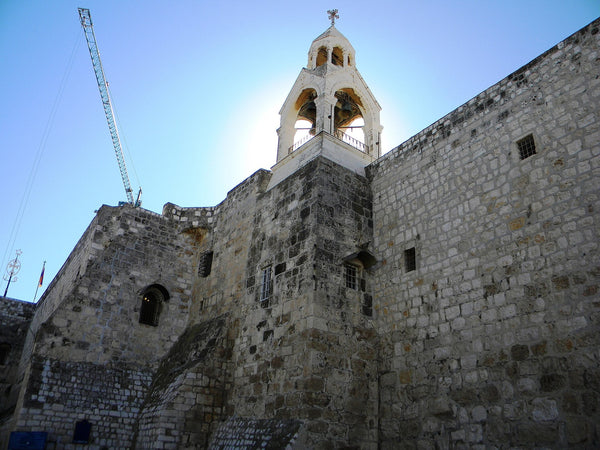
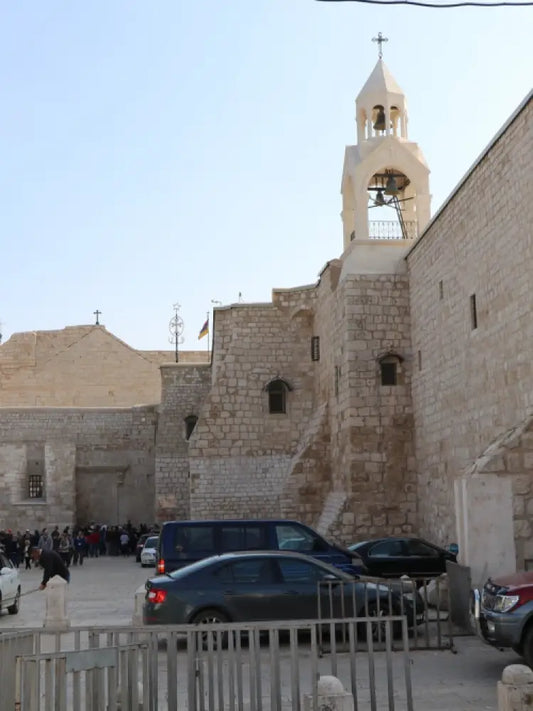
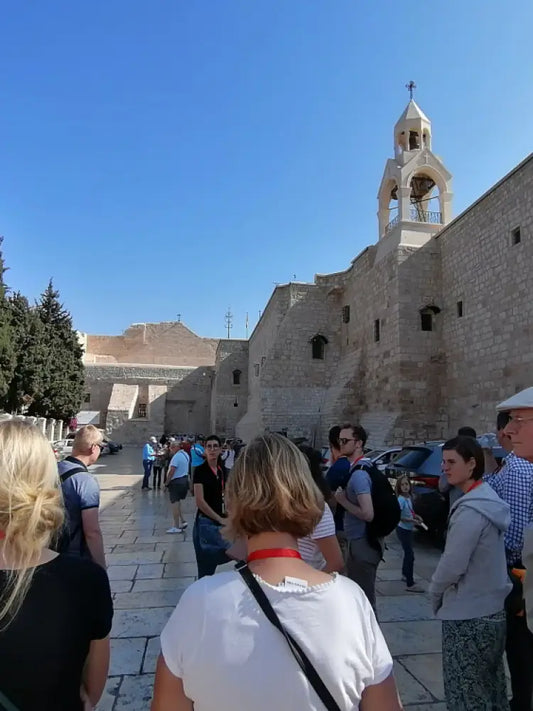
Look, the Church of the Nativity is the obvious centerpiece. But the Manger Square in the morning, the Milk Grotto just around the corner, and lunch at one of the local restaurants on Star Street, that is the visit that actually shows your congregation what Bethlehem is.
Groups need to allow extra time for the crossing between Jerusalem and Bethlehem. It is routine with a guide who knows the logistics. Do not let it intimidate your planning.
A few families I know on Star Street run olive wood workshops. Some groups arrange a quick stop there so pilgrims can watch the work being done and buy something made by hand in Bethlehem. Those are the souvenirs people still have on their shelves ten years later.
Galilee (Two Days Is Ideal)
The Galilee region is a two-to-three-hour drive north of Jerusalem. Most groups stay overnight in Tiberias, on the western shore of the Sea of Galilee, and use it as a base for two days.
Honestly, what those two days typically cover: a boat ride on the Sea of Galilee (which moves people, every time), the mount of beatitudes from Bethlehem, Capernaum (where Jesus lived and preached), Tabgha with its mosaic church, and Yardenit on the southern Jordan River for baptism renewals.
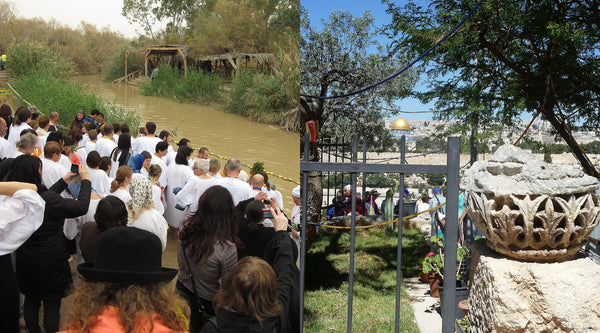
If your group is planning baptism renewals at Yardenit, build in at least an extra hour for groups over 20 people. The changing rooms are limited and you will want time to do it properly, without rushing. I've seen people tear up just standing in the doorway.

Logistics Every Church Travel Coordinator Needs to Handle
Interested in seeing our collection? → Browse Tours to Bethlehem

How to Plan a Holy Land Pilgrimage Holy Land Trip Planning
Flights and Arrival
Ben Gurion Airport near Tel Aviv is the standard entry point for most Holy Land pilgrimages. If your trip includes Petra and Jordan, some groups fly into Amman instead, which gives a different starting point for the itinerary.
Plan a light arrival day. When a group of 30 people lands after a transatlantic flight, clears customs, loads luggage, and reaches the hotel in Jerusalem, it is usually late afternoon. Rest that evening. Start the pilgrimage the next morning. Trying to fit a site visit on Day 1 is the mistake that sets everyone up for exhaustion by Day 3.
Hotels for Church Groups
Jerusalem has solid group hotel options near Jaffa Gate and in the Old City area, as well as hotels in East Jerusalem that work well for groups focused on the Christian sites. Some groups specifically ask to stay in Bethlehem, in hotels near Manger Square, and that experience, waking up in the city itself, adds something.
In Galilee, the Tiberias waterfront hotels are most practical for group logistics. The town is well-connected, the hotels are accustomed to large pilgrim groups, and the lake is right there.
Ground Transportation
A private coach, either 25-seat or 50-seat depending on group size, is standard for church group pilgrimages.
The driver and licensed guide travel together throughout the trip. The coach handles everything: airport pickup, inter-city drives, site drop-offs, and hotel arrivals.
This is the part most people overlook: If you are considering group options, our day tour offerings give a sense of how routes and itineraries are structured.
Budget Planning
I will not give you specific prices because they change, and a figure I quote today may not match what you find when you reach out to quote your trip. But the main line items are: international flights, hotels (the largest variable), your licensed guide's fee, the coach and driver, site entry fees, and meals (some included, some not).
Build in a contingency of 10 to 15 percent above your quoted total. Groups almost always have a couple of unplanned additions, an extra lunch stop, a boat that wasn't on the itinerary but made sense, an entrance fee that went up. That buffer removes the stress.
Spiritual Preparation: The Work That Happens Before You Book Anything

How to Plan a Holy Land Pilgrimage Holy Land Trip Planning
Look, This part gets skipped too often. The groups that move me are the ones where the pastor has been leading a Bible study for three months before the trip, one session per site the group will visit. When a group arrives at the Sermon on the Mount site and someone has actually read Matthew 5 that week, the silence after the reading is different. The questions people ask are different.
Pilgrims who arrive prepared are not looking to be impressed. They are looking to understand what they're standing in -- this actually reminds me of a conversation I had with a first-time pilgrim named Susan who came back a second time just because of this, but I'll save that for another post. That is a completely different relationship with a place.
Not gonna lie , Some suggestions by site (brief, not exhaustive): - Church of the Nativity, Bethlehem: Luke 2:1-20, Micah 5:2 - Garden of Gethsemane: Luke 22:39-46, Matthew 26:36-56 - Sea of Galilee: Matthew 4:18-22, John 21:1-14 - Church of the Holy Sepulchre: John 19-20, Luke 24:1-12 - Yardenit / Jordan River: Matthew 3:13-17, Romans 6:3-4 - Mount of Beatitudes: Matthew 5-7
One more thing: manage expectations honestly with your congregation before you go. The Holy Land is not a movie set. The Church of the Nativity is a working church with crowds, incense, and competing religious communities managing different chapels. The Via Dolorosa goes through an active market. That is not a flaw. That is what makes it real. But pilgrims who arrive expecting a serene, cinematic experience sometimes need a moment to adjust. Prepare them.
Key Takeaways
- Church groups need 9 to 18 months of lead time for flights, hotels, and guide booking. Christmas and Easter travel requires the longer end of that range.
- The most common trip length for church groups is 10 days, covering Jerusalem, Bethlehem, Galilee, and the Jordan River with enough time to process each stop.
- A licensed local guide (certified by the Ministry of Tourism) makes a measurable difference for group trips. Pastoral leadership from home does not replace on-the-ground expertise.
- Spring (March to May) and autumn (September to November) are the most comfortable seasons for group travel. Summer is hot but workable. December and Easter are the most meaningful but the most logistically demanding.
- Bethlehem is included in nearly every Holy Land pilgrimage itinerary and is accessible year-round. The crossing from Jerusalem is straightforward with an experienced guide.
A Baptist group from Tennessee visited a few years ago. Their pastor had spent two years planning the trip, committee meetings, fundraising letters, the whole process. When we arrived at the Garden of Gethsemane, one of the older women in the group, she was maybe 70, just stopped walking. She told me quietly that she had prayed in that garden in her mind for 40 years and never thought she would actually stand there.
This is the part most people overlook: The whole group got quiet around her without anyone saying anything. That is the moment they will talk about when they get home. Not the itinerary. Not the hotel. Not the coach. That one minute in the garden, where all the planning dissolved and something real took its place.
That is what you are planning when you organize a church group pilgrimage. Not a trip. A door.
If you want to bring your congregation here, reach out to us at Elijah Tours and we can start building the itinerary together. The planning is the easy part. What happens here, you can't schedule.
Frequently Asked Questions

How to Plan a Holy Land Pilgrimage Holy Land Trip Planning
How far in advance should we start planning a church group pilgrimage to the Holy Land?
Plan at least 9 to 12 months out for most travel seasons, and 12 to 18 months for Christmas or Easter. Hotels in Jerusalem and Bethlehem fill early during holy seasons, and group flights at peak times need to be booked well in advance to find reasonable fares and seat availability.
How many days does a church group Holy Land pilgrimage typically take?
And this part matters , Most church groups travel for 10 days, which allows time to cover Jerusalem, Bethlehem, Galilee, the Jordan River, Masada, and the Dead Sea without feeling rushed.
Seven days is the minimum to do justice to the main sites. Fourteen days allows a deeper pace or the addition of Petra in Jordan.
Do we need a licensed local guide or can our pastor lead the group?
Your pastor provides spiritual leadership and pastoral care, but a licensed local guide provides something different: site knowledge, logistics management, crowd navigation, and language fluency.
The two roles complement each other. A licensed guide certified by the Ministry of Tourism knows the buildings, the access points, the hours, and the stories in a way that comes only from years of work on the ground.
What is the best time of year for a church group to visit the Holy Land?
Spring (March to May) and autumn (September to November) offer cooler temperatures, manageable crowds, and good travel logistics. Summer is hot, especially in Jerusalem and Jericho, but groups come year-round. Christmas and Easter are the most spiritually resonant times but require the most planning lead time and carry the highest hotel and flight prices.
Is Bethlehem included in most Holy Land pilgrimages, and is it safe to visit?
Yes on both counts. Bethlehem is part of nearly every Christian pilgrimage itinerary. The Church of the Nativity, Manger Square, the Milk Grotto, and Shepherd's Field are all within easy reach. The crossing from Jerusalem into Bethlehem is a routine part of group travel and is managed smoothly by experienced local guides. Groups visit Bethlehem regularly throughout the year.
Elias Boaz is a licensed tour guide from Bethlehem , birthplace of Jesus Christ , and the founder of Elijah Tours. He has guided thousands of pilgrims through Bethlehem, Jericho, and the Jordan River Valley , and coordinates Holy Land tours with trusted licensed guides across the region. He writes to help visitors truly understand what they're seeing.