A Jerusalem Old City tour usually means several hours on foot over uneven stone, slopes, steps and crowded lanes. The exact distance matters less than the route. Jaffa Gate, the Via Dolorosa, the Western Wall and the Church of the Holy Sepulchre sit at different levels, and a thoughtful guide can reduce unnecessary climbing and add rests.
📝 In This Article
- Why the Old City Feels Harder Than the Distance Suggests
- Where the Walking Becomes Demanding
- A Realistic Old City Route Matrix
- How a Guide Can Reduce the Walking
- Planning by Mobility Level
- What to Wear and Carry
- Questions to Ask Before You Book
- What You Should Know
- Related Reading
- Frequently Asked Questions
Why the Old City Feels Harder Than the Distance Suggests
People often ask, "How many miles will we walk?" It sounds like the right question. In the Old City, it is only half the question.
One mile on a flat promenade is not the same as one mile on polished limestone with a slope under your feet and a crowd moving around you. Standing and waiting can be as tiring as walking. Some stones are worn smooth; others have deep joints or awkward edges.
That is why I would never judge an Old City route only by a line on a map. The better questions are these: Which gate are we using? Which sites matter most? How many unavoidable stairs are there? Where can we sit? Can the vehicle meet us at a different gate?
Where the Walking Becomes Demanding
Jaffa Gate and the Christian Quarter
Jaffa Gate is a practical entrance for the Christian and Armenian Quarters. It is also close to areas outside the walls where a driver can usually arrange a drop-off or pickup. From there, however, the route toward the Church of the Holy Sepulchre passes through busy lanes that descend and narrow.
There is more than one way through. A guide who knows the group's ability can avoid pointless backtracking and choose a gentler approach where possible. But "gentler" does not mean perfectly flat. The final approach and the church itself can involve crowds, thresholds and changes in level.
If the Church of the Holy Sepulchre is your priority, read our complete visitor guide before deciding which interior areas matter most to you.
The Via Dolorosa
The traditional Via Dolorosa begins near the eastern side of the Old City and ends at the Church of the Holy Sepulchre. The physical challenge is not just the length. You are moving through active market streets, over uneven paving and through changing gradients while stopping at the Stations of the Cross.
For a comfortable walker, this is manageable with sensible pacing. For someone with limited balance or stamina, the repeated stopping and starting can be the harder part. A cane may help on the stone, but only if it is already familiar. Tour day is not the day to experiment with a new mobility aid.
Our Via Dolorosa guide explains the traditional route and the Stations. If mobility is the main concern, tell the guide which Stations are essential rather than assuming the entire route must be completed in one continuous walk.
The Western Wall and the Jewish Quarter
Gate choice makes a large difference here. Dung Gate provides a close and comparatively level approach to the Western Wall plaza. Entering from Jaffa Gate or Zion Gate can create a longer route with more changes in level, depending on the streets and stairs used.
Jerusalem's visitor information describes Zion Gate as a short walk from the Western Wall through the Jewish Quarter. That can be useful for a regular walker. It does not automatically make it the best choice for someone using a wheelchair or struggling with slopes. Shorter and easier are not always the same thing.
The Western Wall guide covers the site itself. For a mobility-adjusted day, a Dung Gate arrival can make the Western Wall the anchor of a shorter route rather than the midpoint of a long crossing.
Inside Sacred Sites
This is the detail many tour descriptions miss. A route through the streets can be adapted, yet a crypt, chapel or historic stairway inside the destination may still be inaccessible.
At the Church of the Holy Sepulchre, for example, seeing the church's main level is different from reaching every traditional location within the building. Narrow passages, queues and steps can change what is realistic. The honest plan names the exact interior stops. "We visit the church" is not enough information for a traveler with limited mobility.
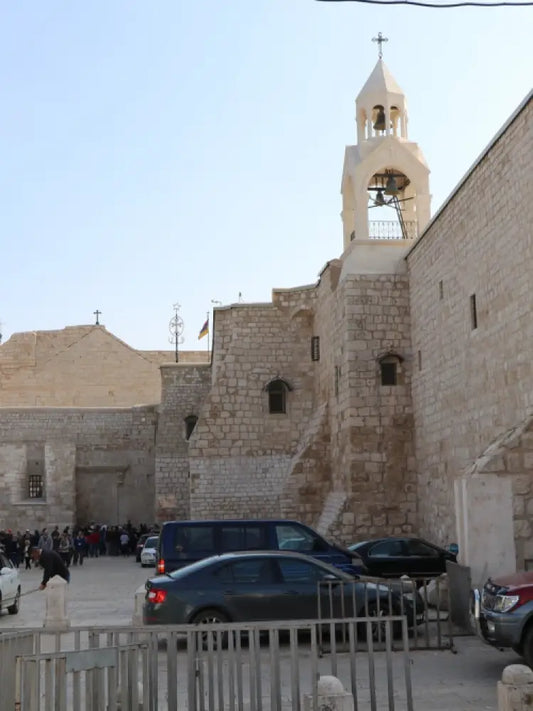
The same principle applies at the Church of the Nativity in Bethlehem, the Mount of Olives in Jerusalem and other historic sites: ask about the final approach and interior, not only the vehicle ride.
A Realistic Old City Route Matrix
Religious services, security arrangements, construction and crowd flow can change the usable path, so a guide should have a second route in mind.
How a Guide Can Reduce the Walking
The biggest saving is not speed. It is sequence.
A poorly planned day crosses the same area twice, climbs out for lunch, returns through another gate and discovers too late that the pickup point is on the opposite side of the walls. A well-planned day moves in one sensible direction and ends near the vehicle.
Here are the adjustments that actually help:
- Start at the right gate. Use the gate nearest the priority site, not the gate that appears in every standard itinerary.
- Choose two or three essential sites. It is better to experience them properly than to rush past six while watching the ground for the next step.
- Build in seated breaks. A five-minute standing pause is not a rest for someone with knee or back pain.
- Use outside-the-walls transfers. When practical, a driver can move the group between gate areas instead of forcing one long crossing.
- Keep a shorter backup route. Heat, crowds and fatigue can change the day. Cutting one stop early is better than making the final hour miserable.
This is where a private tour earns its value for a family with mixed mobility. The pace, gate and stop list can be built around the actual travelers. Our broader Jerusalem tour options are useful if everyone is comfortable with a more standard walking day.
Planning by Mobility Level
If You Are a Comfortable Walker
Wear supportive shoes, carry water and expect to be on your feet for much of the visit. Regular walking before the trip helps, especially if slopes and stairs are not part of your normal routine. And do not race. Jerusalem rewards attention.
If You Have Limited Stamina or Balance
Ask for a shortened route with a fixed seated break, not a vague promise to "take it slowly." Slow walking without sitting can still exhaust someone.
Tell the guide what causes difficulty. Is it stairs, distance, standing, heat, balance or pain on downhill sections? These are different problems. A traveler who can walk a long flat corridor may still struggle on three polished steps. Another may handle steps but need a chair every 20 minutes.
Consider skipping one difficult interior area while the rest of the group visits it. That is not missing Jerusalem. It is protecting enough energy to be present for the places that matter most.
If You Use a Wheelchair or Walker
Ask for a continuous step-free route by name. Do not accept "the Old City is accessible" as the entire answer.
Official Jerusalem visitor information lists accessible Old City routes, including accessible versions of the Via Dolorosa, Jewish Quarter, Temple Mount compound, Mount Zion Gate to Jaffa Gate and a Second Temple period route. That is good evidence that meaningful routes exist. It is not evidence that every doorway, chapel, market lane or restroom on a custom itinerary is step-free.
Wheelchair width, the need for assistance on slopes, battery range for a power chair and accessible vehicle arrangements all need to be discussed in advance. If a traveler cannot transfer from the chair, say so clearly. It changes which vehicles and interiors are possible.
What to Wear and Carry
Good shoes matter more than expensive shoes. Choose a closed, supportive pair with grip, and wear it before the trip. Smooth soles and loose sandals are poor choices on polished stone.
Carry water, sun protection and a light layer suitable for sacred sites. Keep the day bag small enough that it does not pull you off balance in a crowd.
Summer heat raises the effort. Rain makes worn stone more slippery. Holy Week and major feast periods can add crowd pressure and longer standing. The same route can feel very different in different conditions, so the guide should adjust the pace on the day.
Questions to Ask Before You Book
Interested in seeing our collection? → Browse Tours to Jerusalem
Send these questions in writing. Clear answers prevent disappointment:
- Which gate will we enter, and where will the vehicle meet us afterward?
- Which exact sites and interior areas are included?
- Are any stairs unavoidable, and approximately how many at one time?
- Where is the first guaranteed seated rest?
- Can the route be shortened without losing the main Christian sites?
- Is there a step-free backup if a lane or entrance is closed?
- Can the guide accommodate a wheelchair, walker or cane throughout the entire route?
Notice what is missing: "Is this tour easy?" Easy is too subjective. A useful answer describes the ground, steps, standing time and alternatives.
Key Takeaways
- A Jerusalem Old City tour involves uneven stone, slopes, standing and crowds, even when the map distance looks short.
- Gate choice changes the effort. Dung Gate is the practical closer approach for a Western Wall focused visit, while Jaffa Gate serves the Christian and Armenian Quarters well.
- A street route can be step-free while a chapel, crypt or other sacred-site interior still requires stairs.
- The safest accessibility plan names the exact route, entrances, rest stops and vehicle pickup point before the tour begins.
Related Reading

- Jerusalem Old City Guide 2026
- How to Walk the Via Dolorosa
- Church of the Holy Sepulchre Visitor Guide
Frequently Asked Questions

How many miles do you walk on a Jerusalem Old City tour?
There is no honest universal mileage because tours enter through different gates and include different interiors. Ask for the exact route and a tracked estimate from the operator, then judge it together with the number of stairs, standing time and rest stops.
Is Jerusalem's Old City wheelchair accessible?
Parts of Jerusalem's Old City are wheelchair accessible, and official visitor information identifies several accessible routes. The whole Old City is not uniformly step-free, so confirm every priority site, entrance, slope and interior area in advance.
Which Old City gate involves the least walking?
No single gate is shortest for every itinerary. Dung Gate is the closer practical choice for the Western Wall, while Jaffa Gate is useful for the Christian and Armenian Quarters. Choose the gate around the main site, not around a standard tour script.
Is the Via Dolorosa suitable for seniors?
Yes, many seniors walk the Via Dolorosa, but age alone does not determine suitability. Balance, knee pain, stamina, heat and the ability to stand are more useful measures. A shortened route with a seated break can be a better experience than forcing every Station.
Can a Jerusalem tour include regular rest stops?
Yes. A private or mobility-adjusted tour can include planned seated breaks and a shorter stop list. Ask where the guaranteed seats are, because pausing while standing in a lane is not the same as resting.
What shoes should I wear in Jerusalem's Old City?
Wear closed, supportive shoes with reliable grip. Break them in before the trip, and avoid smooth soles or loose sandals on worn stone, slopes and steps.
Elias Boaz is a licensed tour guide from Bethlehem — birthplace of Jesus Christ — and the founder of Elijah Tours. He has guided thousands of pilgrims through Bethlehem, Jericho, and the Jordan River Valley — and coordinates Holy Land tours with trusted licensed guides across the region. He writes to help visitors truly understand what they're seeing.