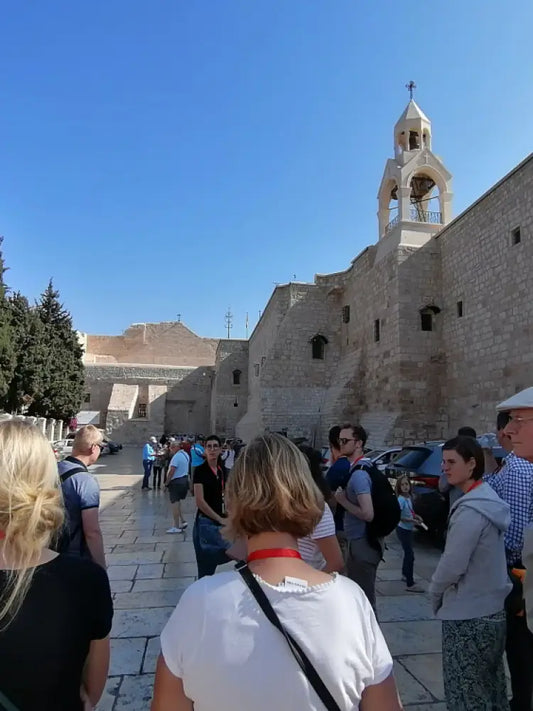
Most pilgrim itineraries give Bethlehem one to two hours. You arrive through Checkpoint 300, walk to the Church of the Nativity, descend into the Grotto, buy an olive wood cross, and get back on the bus. That is a visit. But it is not Bethlehem. The city has Star Street, the Milk Grotto, a living Old City market, and the village of Beit Sahour right next door. A full day here changes what you take home.
{% include 'image-embed', query: 'bethlehem manger square old city stone', alt: 'Bethlehem Old City near Manger Square' %}
The Church of the Nativity Is Not the Beginning. It's Just the First Stop.
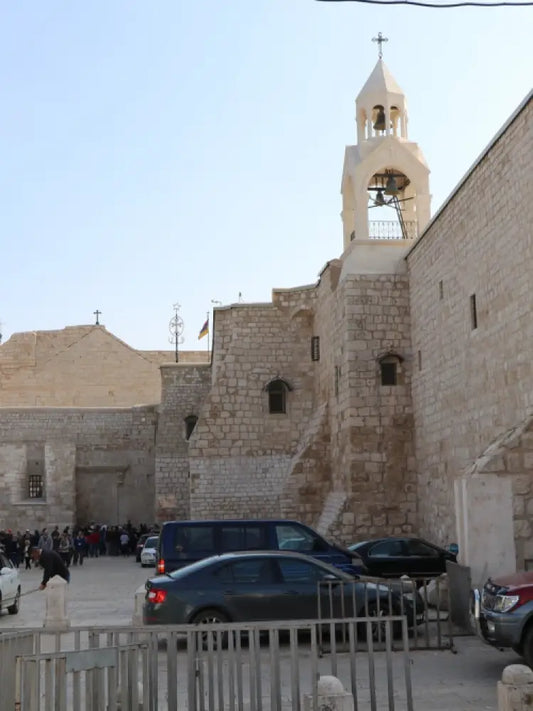
Having walked these routes with travelers, let me say something that might seem strange coming from a Bethlehem guide: the Church of the Nativity is not the most interesting thing in Bethlehem. Not by itself.
After guiding many groups through the Holy Land, it's the most significant. There's a difference.
What You're Actually Looking At Inside
Having grown up in Bethlehem, Three Christian denominations share the Church of the Nativity under an arrangement called the Status Quo, a centuries-old agreement that governs who controls which inch of the floor, which lamp, which pillar. The Greek Orthodox, the Franciscans (Roman Catholic), and the Armenian Apostolic Church each have their sections. You can feel the tension sometimes. Or the strange cooperation, depending on the moment.
The Grotto of the Nativity is below the main altar. That silver fourteen-pointed star marks the spot where tradition holds Jesus was born. The star has been fought over, stolen, and replaced. What most visitors don't know is that the original star's removal in 1847 was one of the flashpoints that contributed to the Crimean War. History embedded in metal on a cave floor. I've seen people tear up just standing in the doorway.
If you're planning a visit around Christmas, our full guide to Christmas in Bethlehem 2026 covers what that season is actually like, crowds and all.
Why Ninety Minutes Is Never Enough
I've taken groups that arrived at the Nativity Church, walked through in forty-five minutes, and then stood blinking in Manger Square asking what to do next. Not their fault. That's the itinerary they were sold.
And I've taken groups that actually came back a second time. Not to the Nativity Church specifically. They came back for the city. If you ask me, this is what makes the Holy Land different from any other destination.
The point is: the Church of the Nativity is where you start. What comes after is the part most people never reach.
Star Street: The Road Pilgrims Have Walked for Two Thousand Years
Here's what most visitors don't realize about arriving in Bethlehem.
There's a road called Star Street (Shari' al-Najma in Arabic) that runs from the northern edge of the city down toward Manger Square. Ottoman-era stone archways frame the route, and the paving stones are old enough that you feel them unevenly under your feet.
And I want to be clear about this - This is the road that pilgrims took into Bethlehem for centuries. It's the path Mary and Joseph would have come down to find the city crowded during the census described in Luke 2. Caravans of traders, travelers, and later Christian pilgrims walked it.
Today, almost nobody on a standard tour walks it.
The shops along Star Street are not the tourist-facing stalls near Manger Square. These are family workshops. Olive wood carving families who have worked the same trade for generations. I know the man who runs the workshop halfway down. His father ran it before him. His grandfather started it. They don't export much. They sell to people who find them. If you ask me, this is what makes the Holy Land different from any other destination.
Walk slowly here. Look up at the arches. Stop when something catches your eye. This is one of the few places in Bethlehem where you can feel the texture of the city rather than just passing through it.
When you're planning how to get here from Jerusalem, the practical details are all in our From Jerusalem to Bethlehem 2026 guide, including checkpoint timing and transport options.
{% include 'image-embed', query: 'bethlehem star street olive wood shop stone arch', alt: 'Star Street in Bethlehem with olive wood workshops' %}
The Milk Grotto: The Site That Gets Under People's Skin
Two minutes on foot from the Church of the Nativity, almost always quieter, almost always overlooked.
The Milk Grotto Church sits in a small square off the main pilgrim route. According to Christian tradition, Mary sheltered here with the infant Jesus during the flight to Egypt, and while nursing him, a drop of her milk fell on the stone floor, turning the rock white. That white limestone is still there. The Franciscan chapel built around it is small, cave-like, and intimate in a way the Nativity Church rarely is.
Outside the chapel, there's a small box where pilgrims leave petitions and prayer cards. Photos of children, folded notes, handwritten names. Families who pray here for fertility, for sick children, for things I don't ask about. I'm a guide, not a theologian. But I've watched people walk into the Milk Grotto barely paying attention and walk out changed. Not dramatically. Just quieter. Like something settled.
I've stopped trying to explain that.
For a full account of the site's history and what to expect when you visit, the Milk Grotto in Bethlehem 2026 guide covers it in proper depth.
The Old City Market: What Bethlehem Actually Smells Like
Interested in seeing our collection? → Browse Tours to Jerusalem
The market just off Manger Square is not designed for tourists. Don't quote me on the exact number, but that's exactly why you should go.
Fresh sesame bread stacked outside a bakery. Bins of za'atar, sumac, dried figs. Palestinian embroidery folded on shelves. Olive oil soap, handmade, the kind you don't find at the airport. This is where people in Bethlehem actually shop. It's narrow, it's a little chaotic, and it smells like cardamom and bread.
What to buy here:
- Za'atar mix: the local blend is stronger than anything you'll find exported. Buy a bag and take it home.
- Olive wood items from family shops: the rule is simple. If it's hand-carved, the grain will be slightly irregular and the weight will surprise you. If it's uniform and light, it came from a factory.
- Palestinian embroidery (tatreez): each village historically had its own pattern. The women who make it in Bethlehem are keeping a craft alive that has nothing to do with tourism.
- Olive oil soap: cold-pressed, unscented. Sold by weight in some shops.
"After every bethlehem tour from Bethlehem I end at the same place, Abu Shanab's, for knafeh. Hot, sweet, the cheese still pulling apart. I've had pilgrims from forty countries eat their first knafeh right there on Manger Square. Several told me it was the best food of their entire trip. Better than the restaurant their hotel recommended."
For food, walk away from Manger Square toward the market lanes. The restaurants that face the square and hang menus outside for tour groups are not the same as the places locals go. Look for a small place with plastic chairs and a handwritten menu. That's where the meal is.
Beit Sahour: The Shepherd's Village Five Minutes Away

Jerusalem Old City Panorama , Photo by Toa Heftiba on Unsplash
People ask me where I'm from. I say Beit Sahour. They say: where's that? I say: that's where the angels made the announcement. That usually lands.
Beit Sahour sits immediately east of Bethlehem, a five-minute drive or a twenty-minute walk. The name means something close to "House of the Vigilant" in Arabic. I'm not a theologian, but from what I understand, the village is where the shepherds in Luke 2 were watching their flocks when the angel appeared to them.
There are two Shepherd's Field sites in Beit Sahour: one maintained by the Greek Orthodox Church, one by the Franciscans. They are close to each other. Both have chapels. The Greek Orthodox site has a cave chapel that is genuinely old, carved from the rock. The Franciscan site has a modern chapel but the grounds are spacious and quiet.
What most pilgrims never find: there is a small Byzantine chapel within the Greek Orthodox grounds, half-hidden from the main path, where early Christians gathered to worship in secret. I'm not a theologian, but from what I understand, almost nobody outside the local community knows it's there. The mosaic fragments on the floor are original. You can stand on them.
I grew up in this village. The fields are still there. Development has crept in, but in the right corner of the right field, you can still see what the shepherds would have seen: open sky, dark limestone hills, and at night, extraordinary stars.
{% include 'image-embed', query: 'shepherds field beit sahour bethlehem pastoral hills', alt: "Shepherd's Field in Beit Sahour near Bethlehem" %}.
The Walled-Off Hotel Area: Bethlehem's Most Unusual Stop

Bethlehem Day Trip Jerusalem Old City Visit
Not for everyone. But worth mentioning.
Near one of the entry points into Bethlehem, Banksy opened a hotel and decorated the surrounding barrier wall with his work. It's become one of the more photographed spots in Bethlehem, particularly by younger travelers and those who want to understand the city beyond its biblical sites.
The art is striking. The hotel itself is small and deliberately unusual. Some of the pieces are pointed; some are wry. Whether this fits your pilgrimage depends on you. Some groups skip it entirely. Others find it gives them context for the modern city they've been walking through.
I don't tell people what to think about it. I just make sure they know it's there.
How to Actually Plan a Full Day in Bethlehem
Interested in seeing our collection? → Browse Tours to Bethlehem

Bethlehem Day Trip Jerusalem Old City Visit
The Right Order to See Everything
A full day in Bethlehem works best if you plan the order carefully.
- Arrive before 9 am. The Church of the Nativity is least crowded in the first hour.
- Walk down Star Street on your way in, before the market wakes up fully.
- Enter the Nativity Church, descend into the Grotto, and take your time in the Franciscan section.
- Walk to the Milk Grotto (five minutes from the Nativity, signposted).
- Return through the market for lunch. Allow forty-five minutes to explore the stalls.
- Drive or walk to Beit Sahour in the early afternoon. Both Shepherd's Field sites are nearby.
- Optionally, pass by the Banksy wall area on your way back to the checkpoint.
- Aim to leave by 4:30 pm. Checkpoint traffic builds in the late afternoon.
What You Need to Know About Getting Here
Checkpoint 300 is the main pedestrian crossing from the Jerusalem side into Bethlehem. Bring your passport. For most international pilgrims, crossing takes between ten and thirty minutes. On the Bethlehem side, taxis are easy to find, and the drivers know the area well.
I should mention -- Star Street is quiet today. Fridays are like that. But the messages from last month's pilgrims keep coming in, so I keep writing.
Bus 231 runs from Damascus Gate in Jerusalem to Bethlehem and is a legitimate option if you're comfortable with the route. It drops you near Manger Square.
Our Bethlehem tours include the crossing logistics and a full guided day in the city so you don't have to piece it together yourself.
Going Alone vs. With a Guide
Self-guided is absolutely possible in Bethlehem. The sites are close together and most are signposted. But here's the honest difference: without context, the Grotto is a cave with a star. The Milk Grotto is a small church. Star Street is a street with shops.
With a guide who actually knows this city, those same places become layered, specific, real.
If you want to go deeper, our private tours can be structured around a full day in Bethlehem and Beit Sahour, at whatever pace suits your group. This is the kind of thing that drives me crazy about generic tour packages.
Key Takeaways
- Bethlehem has far more than the Church of the Nativity: Star Street, the Milk Grotto, the Old City market, and Beit Sahour are all worth your time.
- Star Street is the ancient pilgrimage road into Bethlehem, lined with family-run olive wood workshops, and almost no standard tour walks it.
- The Milk Grotto is a two-minute walk from the Nativity Church and is almost always quieter than the main church.
- Beit Sahour, the village where the Shepherd's Field is located, is five minutes from Bethlehem and is where I grew up. Most pilgrim itineraries skip it entirely.
- A full day in Bethlehem is enough to cover the city well; ninety minutes is enough to miss most of it.
Bethlehem at a Glance: Sites Beyond the Nativity Church

Bethlehem Day Trip Jerusalem Old City Visit
If you're thinking about coming and want to talk through how to structure the day, including how to combine it with Jerusalem or other sites, reach out at our contact page. A good day here isn't about ticking boxes. It's about actually being in the city.
A pastor from South Carolina told me once, at the end of a full day here, that he'd visited Bethlehem twice before on group tours and never seen any of this. The market, the Milk Grotto, Star Street. "We always rushed," he said. I told him that wasn't his fault. That was the itinerary talking.
Come with enough time to let the city show itself.
Frequently Asked Questions

Bethlehem Day Trip Jerusalem Old City Visit
What is there to do in Bethlehem besides the Church of the Nativity?
Bethlehem has Star Street (an ancient pilgrimage road with olive wood family workshops), the Milk Grotto (a two-minute walk from the Nativity Church, usually much quieter), the Old City market, and the village of Beit Sahour with the Shepherd's Field just five minutes away. A full day gives you time to reach all of them.
How long should I spend in Bethlehem?
A minimum of four to five hours if you want to see more than the Nativity Church. A full day, roughly eight hours, lets you walk Star Street, visit the Milk Grotto, explore the market, and reach Beit Sahour. Most standard group tours allocate ninety minutes, which is enough to see one site.
What is Star Street in Bethlehem?
Star Street, known locally as Shari' al-Najma, is the historic road that runs from the northern edge of Bethlehem down toward Manger Square. It has Ottoman-era stone archways and is lined with family-run craft workshops, particularly olive wood carvers. It's the route pilgrims have taken into Bethlehem for centuries, and most modern tours don't include it.
Is the Milk Grotto worth visiting?
Yes, and it's free to enter.
The Milk Grotto is a Franciscan chapel built around a cave where Christian tradition holds that Mary sheltered with Jesus during the flight to Egypt. It's two minutes on foot from the Church of the Nativity and almost always far less crowded. Many pilgrims who visit describe it as one of the most affecting sites of their trip.
Can I visit Bethlehem on a day trip from Jerusalem?
Yes. Bethlehem is approximately 10 km from Jerusalem. Bus 231 runs from Damascus Gate, or you can arrange a private driver or guided tour. The crossing at Checkpoint 300 typically takes between ten and thirty minutes for international tourists. Plan to arrive before 9 am and leave by 4:30 pm to avoid checkpoint delays.
Where do locals eat in Bethlehem?
Walk away from the tourist-facing restaurants around Manger Square toward the market lanes. Small restaurants with handwritten menus and plastic chairs are generally where locals eat.
For dessert, knafeh from a local pastry shop near Manger Square is worth stopping for specifically; it's one of those things that doesn't travel well in description but makes sense immediately when you taste it.
What should I buy in Bethlehem?
Za'atar from the market (stronger than exported blends), hand-carved olive wood from family workshops on Star Street (look for irregular grain and real weight), Palestinian embroidery (tatreez), and cold-pressed olive oil soap sold by weight. Avoid uniform, lightweight olive wood items near the main square; they're mass-produced.
Is Bethlehem safe for Christian tourists in 2026?
Bethlehem continues to receive pilgrims and tourists in 2026. Groups visit regularly, including private tours and organized pilgrimages from Europe, North America, and beyond. Check current government travel advisories from your home country before traveling, as they are updated regularly and will give you the most accurate picture for your specific nationality.
Elias Boaz is a licensed tour guide from Bethlehem , birthplace of Jesus Christ , and the founder of Elijah Tours. He has guided thousands of pilgrims through Bethlehem, Jericho, and the Jordan River Valley , and coordinates Holy Land tours with trusted licensed guides across the region. He writes to help visitors truly understand what they're seeing.