Saint Gerasimos Monastery Near Jericho: History, Faith, and What Visitors Discover
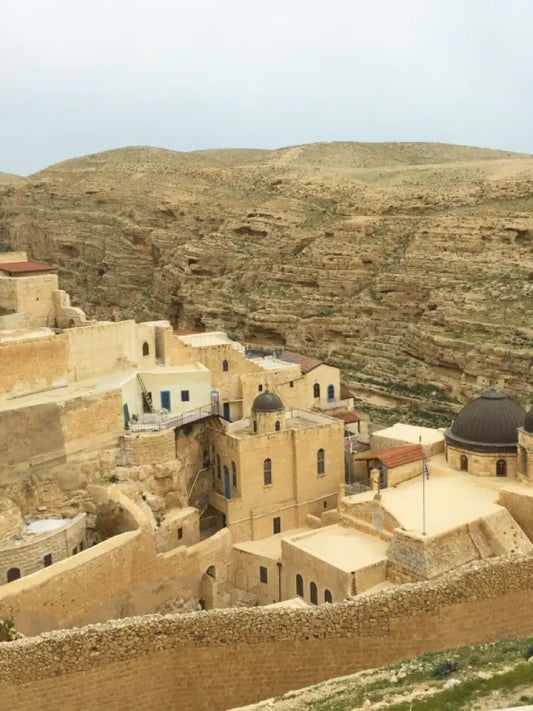
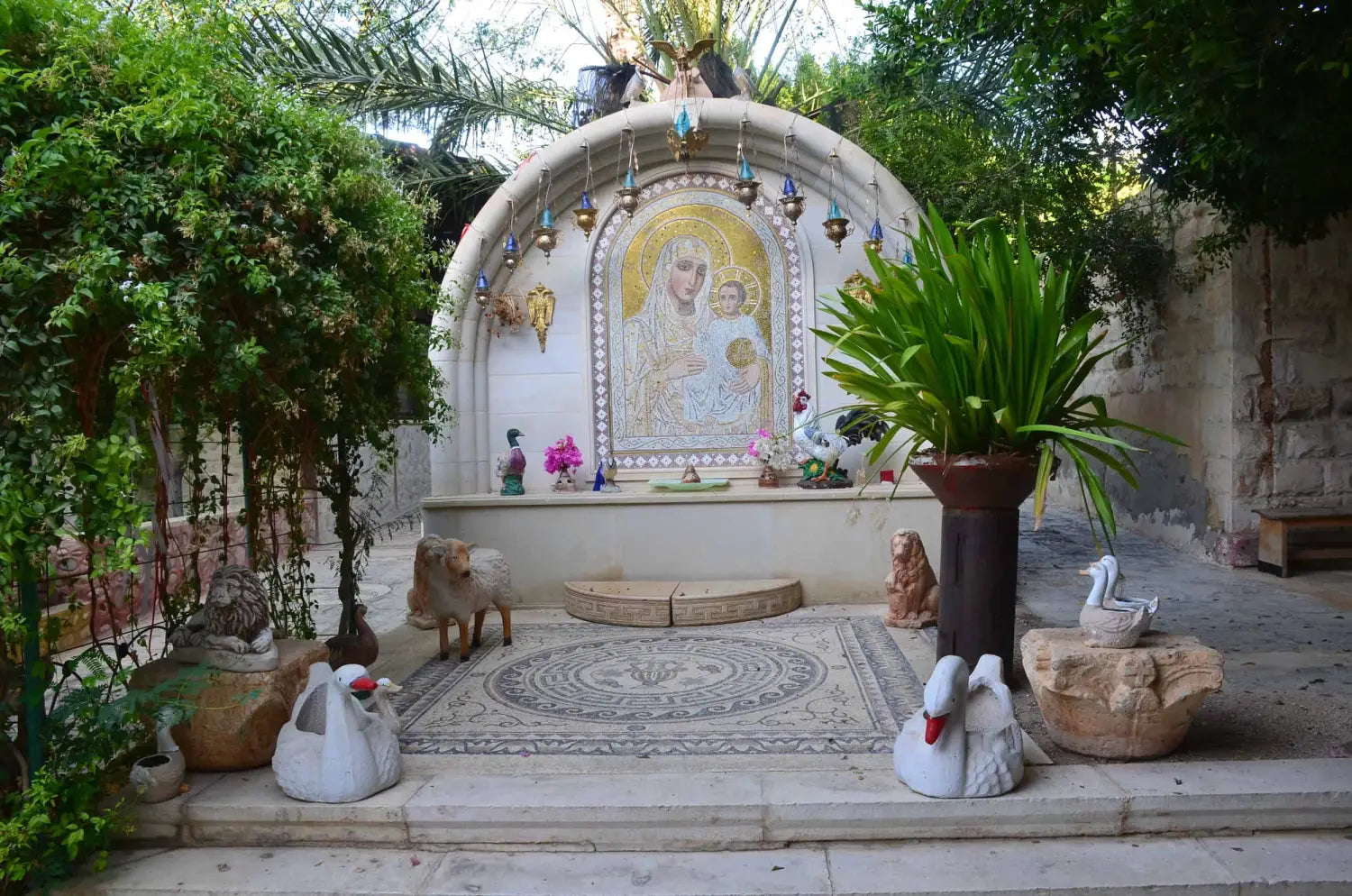
Set against the quiet landscape of the lower Jordan Valley, the Saint Gerasimos Monastery is one of the oldest and most evocative monasteries of the Judaean Desert. It is named in honor of Saint Gerasimos of the Jordan, a pioneering monastic figure often depicted in icons beside a gentle lion, a symbol of compassion and humility.
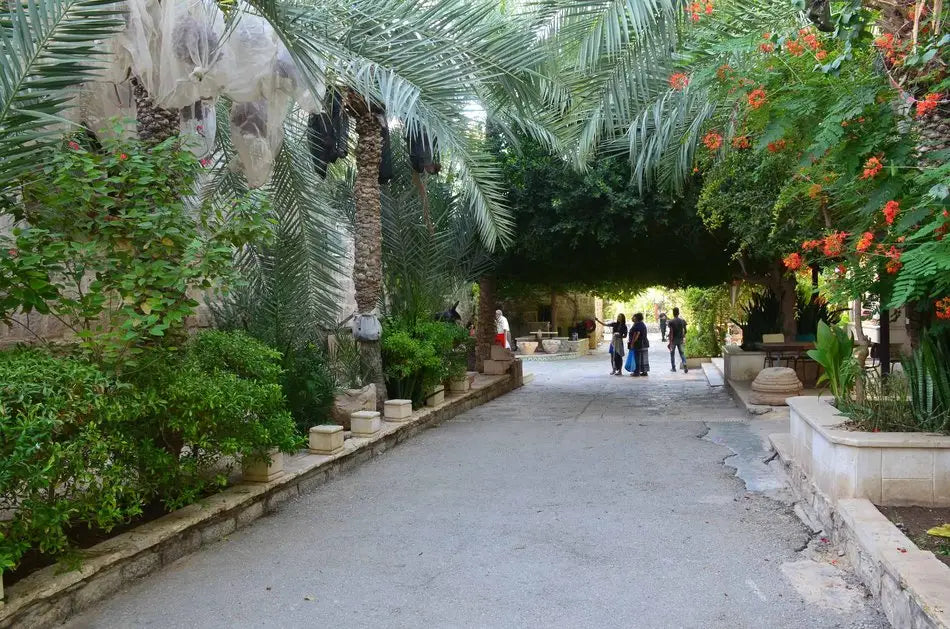
Today, the monastery feels like a green and welcoming oasis. Fruit trees, flowers, and birdsong surround its golden domes, offering a striking contrast to the dry desert that stretches in every direction. Located just east of Highway 90, north of the Beit Ha’aravah junction and about seven kilometers southeast of Jericho, it is an easy and rewarding stop for pilgrims and travelers exploring the Jordan Valley.
A Place Linked to the Holy Family
Across the Jordan River lies Bethany Beyond the Jordan, the traditional site of the baptism of Jesus. Yet Saint Gerasimos Monastery commemorates an earlier and deeply moving moment in the life of Christ.
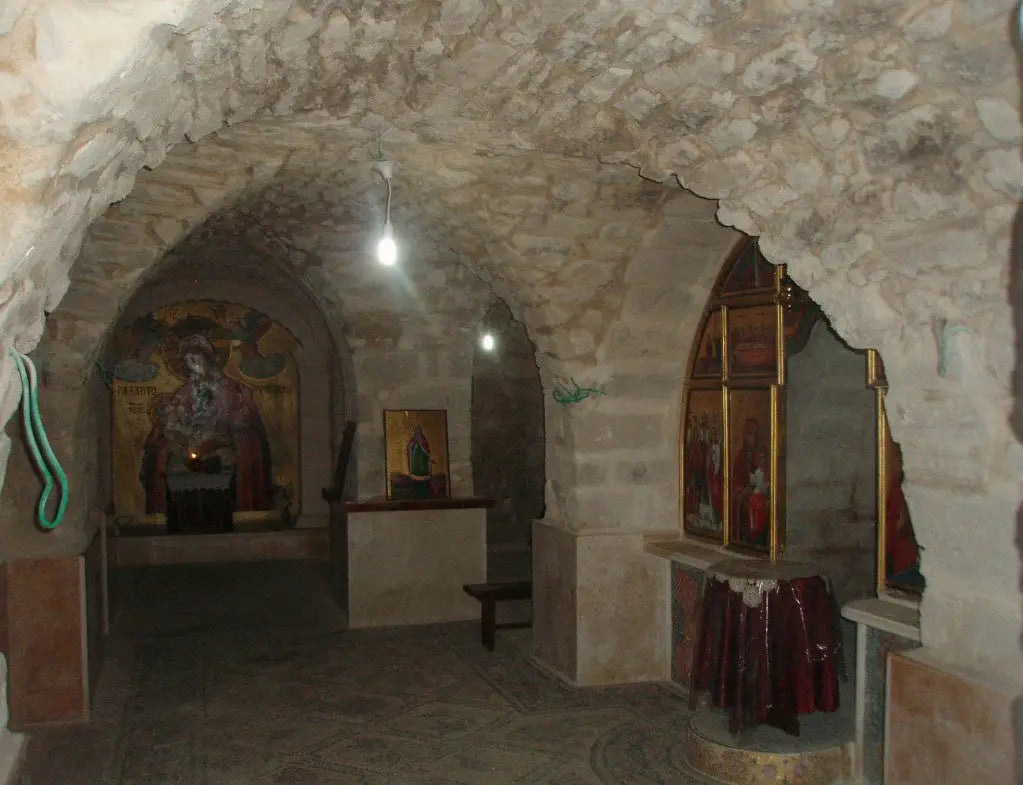
According to ancient Christian tradition, this is the place where Mary, Joseph, and the infant Jesus found shelter in a cave while fleeing from King Herod. This event, known as the Flight of the Holy Family into Egypt, is remembered in the monastery’s ground-floor crypt. Visitors can see an icon illustrating the journey and a large, tender painting showing the young Jesus resting peacefully in the arms of his mother Mary.
Standing in this quiet space, many visitors feel a powerful sense of closeness to the Gospel story and to the human vulnerability of the Holy Family.
Inside the Monastery Church
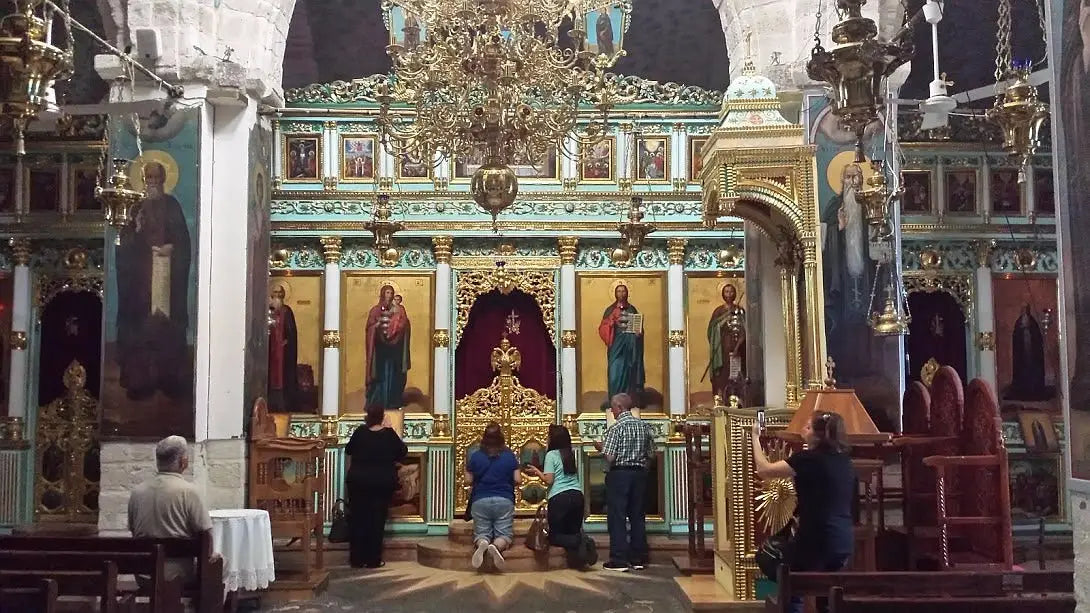
The upper-floor church of the monastery is filled with holy icons and frescoes that reflect centuries of Christian devotion. Among them are images of Saint Gerasimos and the lion, reminding visitors of the saint’s gentleness and care for all creation.
In the crypt below, cabinets preserve the bones of monks who were killed during the Persian invasion of 614. Their presence adds a solemn reminder of the sacrifices made by early monastic communities who chose prayer and solitude in the harsh desert environment.
A Long and Remarkable History
Founded in the fifth century, the monastery was originally dedicated to Our Lady of Kalamon, a Greek name meaning “of the reeds,” reflecting the vegetation once found near the Jordan River. It was later renamed in honor of Saint Gerasimos, who had established a nearby monastery that was eventually abandoned.
Over the centuries, the monastery experienced repeated cycles of destruction and renewal. It was destroyed in 614, rebuilt during the Crusader period, abandoned once again, restored in the medieval era, rebuilt in 1588, destroyed around 1734, and finally re-established in 1885. Each reconstruction added another layer to its story, making the site a living witness to perseverance and faith.
In Arabic, the monastery is known as Deir Hajla, meaning “Monastery of the Partridge,” a bird common in the surrounding area.
Life as the Desert Monks Knew It
Saint Gerasimos played a key role in shaping monastic life in the Judaean Desert. The monastery functioned as a laura, a unique form of monastic community. Hermits lived alone in caves during the week, devoting themselves to prayer and simple work such as making ropes and baskets. On Saturdays and Sundays, they gathered at the monastery for Divine Liturgy, shared meals, and fellowship.
Their lifestyle was intentionally strict. During the week, monks survived on dry bread, dates, and water. Only on weekends did they eat cooked food and drink wine. Their personal belongings were minimal, usually no more than a mat and a drinking bowl.
Even today, visitors can still see the hermits’ caves carved into the cliffs about a kilometer east of the monastery, offering a vivid glimpse into the lives of the early desert monks.
Saint Gerasimos and the Lion
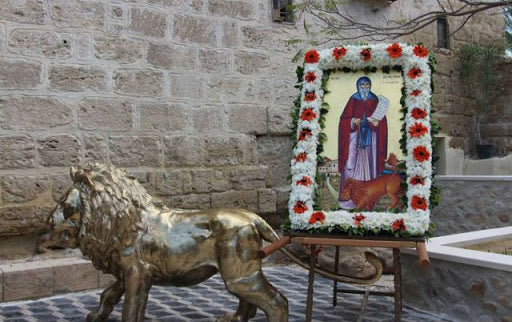
One of the most beloved stories connected to Saint Gerasimos explains why he is often shown with a lion. According to tradition, he encountered a lion in the desert suffering from a thorn lodged in its paw. Gerasimos gently removed the thorn and cared for the wound.
From that moment on, the lion remained devoted to the saint, helping the monastery and even retrieving a donkey stolen by thieves. When Saint Gerasimos died in 475, the story says the lion lay by his grave and died of grief, a powerful symbol of loyalty, mercy, and harmony between humanity and creation.
Why Visitors Are Drawn Here
Saint Gerasimos Monastery is more than a historical site. It is a place where history, faith, and silence come together. Pilgrims come to pray, tourists come to learn, and many leave with a sense of calm they did not expect.
For anyone visiting Jericho or traveling through the Jordan Valley, this monastery offers a meaningful encounter with early Christian history, biblical tradition, and the enduring spirit of the desert monks. It is a place that invites visitors not only to look, but to pause, reflect, and listen.
Plan Your Holy Land Tour
Questions about this route or current visiting conditions? Elijah Tours can help you plan a private itinerary around your dates and interests.